What Should You Pack for a Udzungwa Hiking Safari?
For a Udzungwa hiking safari you need boots with real grip, quick drying clothing, at least two litres of water capacity, a rain shell in any season, insect repellent and a swimsuit for the waterfall pools. Multi day treks add a warm sleeping bag and layers for cold nights on the plateau. Udzungwa Mountains National Park in south central Tanzania is walked rather than driven, so what you carry matters more here than on a standard game drive trip.
The two things people get wrong most often are footwear and warmth. This is a rainforest, so nobody expects to be cold, and then they camp at altitude in July.
Footwear for Udzungwa Hiking Trails
Grip is the whole issue. The Sanje Waterfall trail climbs about 450 metres over roots, loose stone and stream crossings, and after rain those root covered sections turn genuinely slippery. Trainers with worn tread are how people fall.
Boots already broken in are best for anything beyond the short walks, and ankle support helps on the descent, which punishes tired legs more than the climb does. Sturdy trail shoes work fine for the Sonjo and Prince Bernhard routes. Pack something light for camp or the lodge in the evening, and spare socks in a dry bag, because wet feet are close to guaranteed if you cross the Njokamoni or Moyer streams.
Clothing for Rainforest Trekking in Udzungwa
Quick drying beats cotton every time. Humidity in the lower forest means you will sweat through whatever you wear within an hour, and cotton stays wet for the rest of the day.
Long trousers save your legs from scratches and reduce insect contact. Long sleeved shirts do the same and are more comfortable than they sound in the heat. Colours are not a concern the way they are on a savannah walk, though muted tones make you less obvious to primates. Bring one warm layer even for day hikes, since the top of the Sanje climb sits in shade and spray, and add a fleece and a hat for anything reaching the plateau where nights drop towards nine degrees between June and September.
Wet Weather Gear for the Udzungwa Forest
Carry a rain shell whatever the month. The southeastern slopes of this range take up to two or three thousand millimetres of rain a year, and even in the dry season from June to October, mist and light rain occur at higher elevations because the forest generates its own weather.
A lightweight packable jacket is enough for day walks. On multi day treks add waterproof trousers and, more usefully, dry bags for everything inside your pack. Pack covers are less reliable than lining the bag itself. Between March and May the long rains make all of this compulsory rather than optional.
Water, Snacks and Trail Food
Two litres per person is the minimum for a half day and three is better for the full Sanje circuit or the Hidden Valleys trail. There is nowhere safe to refill along the way, and the lower forest is hot enough that people drink faster than they expect.
Bring salty snacks alongside sweet ones. Lodges near the gate prepare picnic lunches for the longer trails, which is worth arranging the night before rather than on the morning. On multi day treks the crew handles all meals and draws water from streams for treating, so you carry only the day’s supply.
What to Pack for Swimming at the Waterfalls
Swimming is allowed here, which is unusual in a Tanzanian national park, so a swimsuit belongs in the daypack for any waterfall trail. The plunge pool below the upper tier at Sanje is the main spot, and there is a warmer, larger pool at the base of the lower fall reached by a short detour.
Bring a small quick drying towel. Almost nobody does, and almost everybody wishes they had. Water shoes or sandals help on the wet rock around the pools. A dry bag or sealed plastic sleeve for a phone matters more than people expect, since spray from the falls carries much further than it looks from the path.
Camera and Optics for Forest Wildlife
Forest photography is hard. Light under closed canopy is low and contrasty, monkeys sit high against bright sky, and autofocus struggles through leaves. A fast lens helps and so does accepting high ISO rather than fighting it.
Binoculars matter more than a long lens for most people. Around 400 bird species live here and the primates are usually thirty metres up, so eight by forty two or ten by forty two glass changes the day completely. Carry a lens cloth, because humidity fogs everything the moment you step from forest into open air. Spare batteries too, since charging at the camp runs off solar and is not instant.
Health and Insect Protection Kit
Travel insurance covering hiking, and evacuation cover if you are trekking, is worth reading properly. There is no road into the interior of this park.
Camping Gear for Multi Day Udzungwa Treks
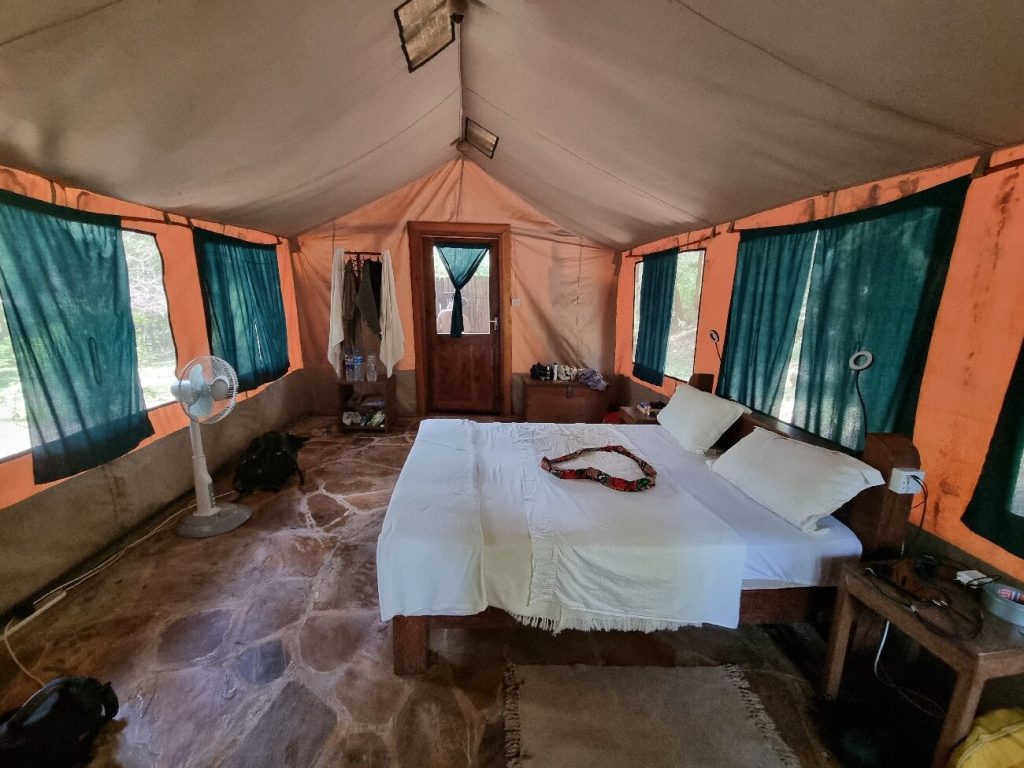
Operators and the forest camp at the boundary supply tents, cooking equipment, food, porters and a cook as part of a trekking package. What they often do not include is a sleeping bag and mat, so check that carefully when you book rather than assuming.
Nights on the Mwanihana plateau get cold between June and September, dropping towards nine degrees, and a liner will not do. Add a headtorch with spare batteries, a small towel, and trekking poles, which help far more on the descent than on the way up. Keep your daypack light, since porters carry the loads but you carry water, layers and camera for the whole walking day.
Documents and Money at the Park Gate
Bring your passport, since identification is required at the gate. Fees are paid through the government electronic payment system and cards work at the headquarters, though network coverage is unreliable and there is no dependable place to draw cash in Mang’ula.
Carry Tanzanian shillings in small denominations for tuk tuks to the trailheads, drinks, and tips for guides, rangers and porters at the end of a trek. Tipping sits outside any quoted package price and is customary.
What Not to Bring on a Udzungwa Trek
Leave the heavy camera bag at the lodge unless you are certain you want it on a six hour climb. Skip single use plastics, which the park discourages. Do not bother with a big pack for day walks; a twenty litre daypack is ample.
Anything you would not want soaked should either stay behind or go in a dry bag. And leave food unattended nowhere, since yellow baboons around the forest edge have long since worked out what a rucksack is.
How to Pack a Daypack for the Trail
Weight distribution matters on a climb like Sanje. Put water against your back rather than in a side pocket, keep the rain shell at the top where you can reach it without unpacking, and stow anything electronic in a dry bag near the middle.
Keep one small item accessible for the whole walk: repellent, since you will want it at every stop. Everything else can live buried. Twenty litres is ample for a day hike and a larger bag simply invites you to carry things you will resent by the third hour.
Seasonal Differences in What to Pack
Frequently Asked Questions About Packing for Udzungwa
Can I hire or buy gear at the park?
Camping equipment for multi day treks is hired through the forest camp at the boundary or your operator, and that cost sits inside a trek price of roughly 400 to 500 US dollars per person for the Mwanihana route. Personal items such as boots, rain gear and sleeping bags are not available locally, so bring your own. Mang’ula village stocks basics only.
Do I need hiking boots or will trainers do?
Trainers with good tread are acceptable for the short Prince Bernhard and Sonjo walks. For Sanje, Njokamoni, Hidden Valleys or any multi day trek, proper boots with grip and ankle support are the sensible choice, particularly on the descent and after rain.
How much water should I carry?
Two litres minimum for a half day walk, three for the full Sanje circuit or Hidden Valleys. There is no safe refill point on the trails. On multi day treks the crew treats stream water in camp, so you carry only what you need between stops.
Is a sleeping bag included on treks?
Often not. Tents, cooking equipment, food, porters and a cook are standard in trekking packages, while sleeping bags and mats are frequently excluded. Ask about it directly when booking. Nights on the plateau between June and September are genuinely cold and this catches people out every season.
Do I need a swimsuit?
Yes, if you are walking to any of the waterfalls. Swimming is permitted in the plunge pools at Sanje and in the pool at the top of the Njokamoni trail, which is one of the pleasures of this park. Bring a small towel as well, since almost nobody does.
Should I bring cash to the gate?
Bring some, though fees go through an electronic system and cards are accepted at the headquarters. Network problems happen and there is no reliable cash point at Mang’ula. Shillings in small notes cover tuk tuks, drinks and tips, which are not part of any package price.
Booking Your Udzungwa Trip
The safari companies and tour operators listed on this website put trips like this together for a living and know which camps, guides and routes actually deliver. We are an independent guide to Udzungwa; we do not book or sell tours ourselves.
When you are ready, arrange your safari, tour or holiday with one of the recognised operators listed here. Tell them your dates and what matters most, and a real person, not a form, will handle the itinerary, park bookings and logistics for you.