Which Primates Can You See in Udzungwa?
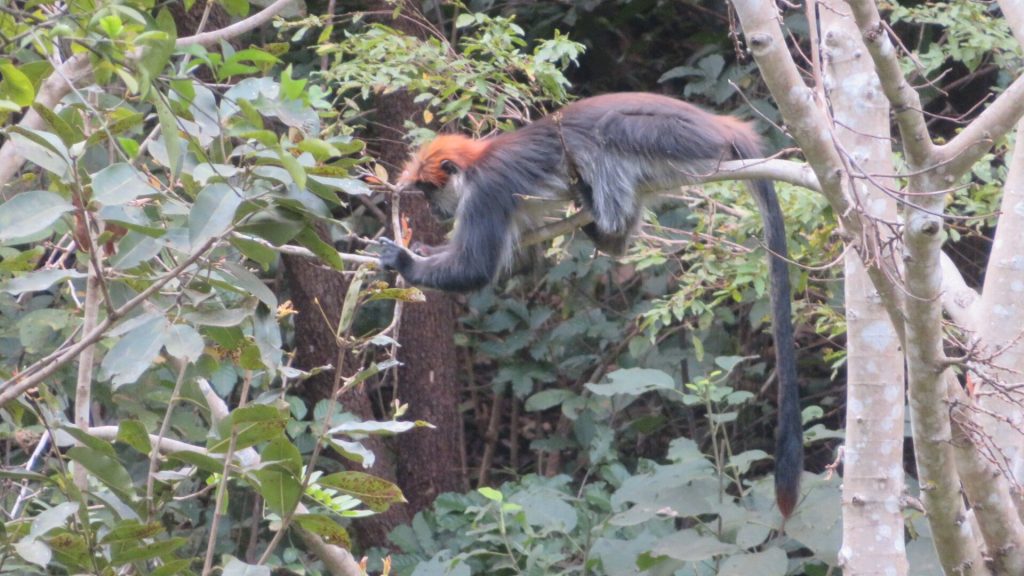
Twelve primate species live in Udzungwa Mountains National Park, six of them active by day and six of them galagos that come out after dark. The two you cannot see anywhere else on earth are the Udzungwa red colobus and the Sanje mangabey, both found on guided forest walks from the Mang’ula gate. Udzungwa sits in south central Tanzania and holds one of Africa’s most important primate communities, which is why the park is sometimes called Tanzania’s primate park.
Everything here is watched on foot. There are no roads inside the boundary, so primate viewing means walking quietly under canopy and looking up a lot.
Udzungwa Red Colobus Tracking Safaris
The Udzungwa red colobus, also called the Iringa red colobus, is the primate you are most likely to see and one of only two found solely in this mountain block. Estimates put the total population somewhere between thirty and forty thousand, with the bulk of it inside the park.
They prefer lower altitude forest, which puts them squarely on the short trails near the headquarters. Troops feed along the Sanje, Sonjo, Prince Bernhard and Njokamoni routes, and they visit the grounds of the camp on the park boundary often enough that guests watch them from the breakfast table. Look for movement in the mid canopy and listen for fruit dropping onto the path.
Their preference for low ground is also their problem, since low ground is what people farm.
Sanje Mangabey Watching in the Mwanihana Forest
The Sanje mangabey was unknown to science until the late nineteen seventies and recognised as a distinct species in 1986. Thought to number around two thousand, it lives in two separated populations within the range, one in the Mwanihana forest above Mang’ula, and it forages on the forest floor as much as in the trees.
Shyness makes it the hardest of the diurnal species to find. On the busy Sanje path it usually stays out of sight, so the better odds are on the quiet Njokamoni trail, on the Hidden Valleys circuit, or high on the Mwanihana trek. Park staff have worked with one troop to habituate it to people, which has improved viewing considerably, so ask at the headquarters whether that group is currently accessible.
Angolan Black and White Colobus on the Forest Trails
The Angolan black and white colobus is the one most visitors photograph, mainly because it sits still. Long white shoulder mantles, black body, a habit of resting high in the canopy for long stretches without moving, which means people miss them entirely until a guide points upward.
They occur throughout the park’s forest and are common on the Sanje trail. They also range far beyond Udzungwa, so this is not an endemic sighting, but it is a reliable and good looking one. Both colobus species are frequently seen on the same walk.
Blue Monkeys and Sykes Monkeys in the Understorey
Blue monkeys work lower and faster than the colobus, moving through the understorey in small groups and crossing paths at head height. In this part of Tanzania they are often called Sykes monkeys, and the naming varies between guides depending on which subspecies convention they were taught.
They are curious rather than shy and often the first monkeys a visitor sees, sometimes within minutes of leaving the trailhead. Where forest meets the camp grounds and village edges, they become bold enough to raid whatever is left unattended.
Yellow Baboons Along the Park Boundary
Yellow baboons occupy the transition zone where miombo woodland, farmland and forest meet, which makes them the species you meet on the road and around the villages rather than deep in the canopy. Troops are large and noisy and easy to watch.
Baboons are frequently seen on the Prince Bernhard trail near the headquarters. They are also the primate most likely to cause a problem, since they associate people with food, so keep bags closed and do not leave a picnic unattended at the falls.
Vervet Monkeys at the Forest Edge
Vervets occur in the lower and drier parts of the wider Udzungwa area, including forest blocks like Nyanganje outside the park boundary, and along the cultivated edges of the Kilombero Valley. They are less a forest species than an edge one.
Most visitors see them from the vehicle on the drive in rather than on a trail. Alongside the baboon, this is one of the two primates here that a traveller arriving from the northern circuit will already recognise.
The Kipunji in the High Ndundulu Forest
The kipunji was found in Ndundulu Forest in 2004, described independently by two research teams and placed in a genus of its own, the first primate discovery of that scale in more than eighty years. It is shaggy, brown, almost entirely arboreal and restricted to cold high altitude forest, with a second population on Mount Rungwe in the Southern Highlands.
Wild numbers are thought to run to only a few hundred. Reaching its habitat means a Luhombero expedition of five to seven days, and even then a sighting is a genuine long shot. Most people who have seen one were doing fieldwork rather than hiking.
Galagos and Night Primates of the Udzungwa Forest
Six species of galago, or bushbaby, live in these mountains, which is an unusual concentration and one of the reasons researchers rate the range so highly. The mountain galago found here may prove to be a distinct form on the basis of its calls, and the taxonomy is still unsettled.
Seeing them takes luck and a torch. They are heard far more often than seen, and the calls that carry through the forest after dark from the camp at the boundary belong partly to them and partly to tree hyrax, which are not primates at all but sound far more alarming.
Which Trails Give the Best Primate Sightings
The camp grounds on the park boundary deserve a mention of their own. Four species are seen there regularly without walking anywhere, and visitors have recorded three of them from the restaurant.
How to Watch Primates Without Disturbing Them
These are unhabituated animals apart from one mangabey troop, so behaviour on the trail changes what you see more than equipment does. Stop when the guide stops. Keep voices low. Avoid pointing directly at animals, which reads as a threat to some species, and never feed anything.
Give troops space when they cross the path rather than pressing closer for a photograph. Baboons in particular should not be approached at all near the villages. Guides set the distance and the pace, and following them is the difference between watching a troop feed for ten minutes and watching it move away.
Best Time for Primate Tracking in Udzungwa
Primates are present year round, so the seasonal question is really about how easily you can walk to them. June through October gives firm trails and comfortable conditions, which matters most for the higher routes where mangabey odds are best.
Early morning is the productive time in any season, since the canopy goes quiet through the middle of the day.
Getting to Udzungwa for a Primate Walking Safari
The park headquarters at Mang’ula sit on the road between Mikumi town and Ifakara, about 60 kilometres and ninety minutes from Mikumi. Dar es Salaam is five to six hours away via Chalinze, Morogoro and the highway through Mikumi National Park, with the last 24 kilometres on graded dirt from Kidatu. Iringa lies two to three hours to the southwest.
The TAZARA train stops at Mang’ula station and Ifakara buses pass the gate. Register at the headquarters, pay the fee and a guide is assigned there.
Frequently Asked Questions About Udzungwa’s Primates
How much does primate tracking in Udzungwa cost?
There is no separate permit as there is for gorillas or chimpanzees. You pay the standard park conservation fee of 30 US dollars per person for 24 hours for non resident adults, about 35.40 with value added tax, plus a compulsory guide at around 20 dollars per day charged per guide rather than per head. Children between five and fifteen pay roughly 10 dollars. That is the whole cost of a day spent looking for monkeys.
How many primate species live in Udzungwa?
Twelve in the range, six active by day and six nocturnal galagos. Two are strict endemics, the Udzungwa red colobus and the Sanje mangabey, and the kipunji is near endemic, shared only with Mount Rungwe in the Southern Highlands.
Which primate is easiest to see?
The Udzungwa red colobus, comfortably. It favours the lower altitude forest that all the short trails pass through, and troops regularly visit the grounds of the camp on the park boundary. Black and white colobus and blue monkeys come close behind.
Are sightings guaranteed?
No. This is unhabituated forest wildlife on foot, not a tracked gorilla group with a fixed permit. Most visitors see two or three species on a half day walk, and quiet groups moving slowly see considerably more than talkative ones. The mangabey in particular is a matter of luck on any given morning.
Do I need a permit to see the mangabey?
No separate permit exists. Ask at the headquarters when you register whether the habituated troop is currently accessible and which trail the guides recommend that week, since troop movements change month to month.
Can I see nocturnal primates?
Guided night walks are not a standard offering in the way they are in some parks, and galagos are heard far more often than seen. Your best chance is around the lodge grounds after dark with a torch. Ask your guide, since arrangements vary and some will take interested guests out for an hour.
Booking Your Udzungwa Trip
The safari companies and tour operators listed on this website put trips like this together for a living and know which camps, guides and routes actually deliver. We are an independent guide to Udzungwa; we do not book or sell tours ourselves.
When you are ready, arrange your safari, tour or holiday with one of the recognised operators listed here. Tell them your dates and what matters most, and a real person, not a form, will handle the itinerary, park bookings and logistics for you.