Luhombero Peak (highest)
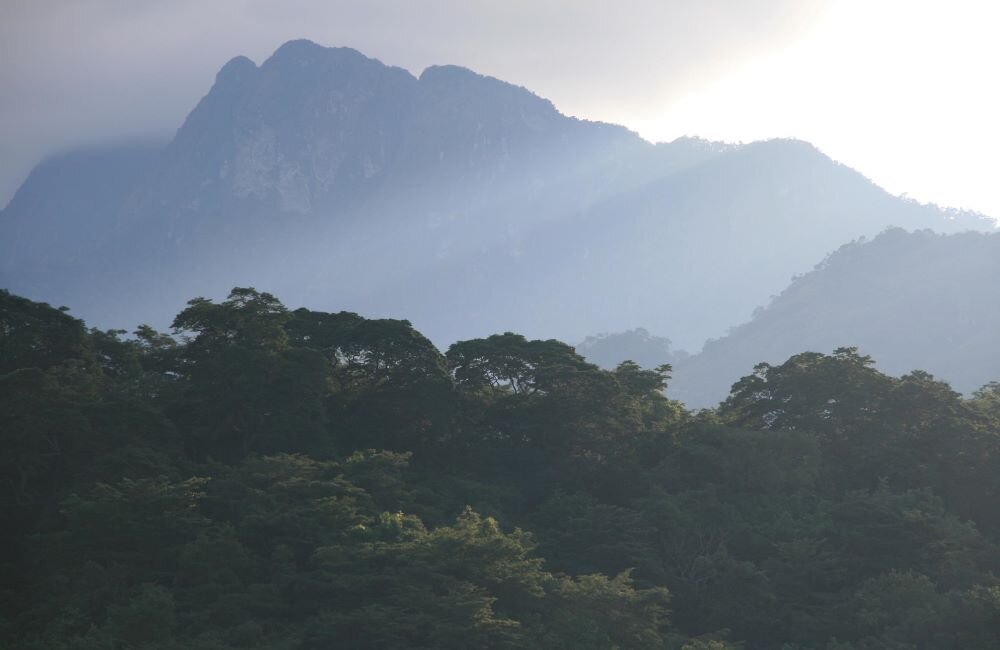
Luhombero Peak is the highest point in Udzungwa Mountains National Park at roughly 2,576 metres, reached only on a full trekking expedition of five to seven days with porters, a cook and an armed ranger. Very few visitors attempt it, and those who do usually start from Dabaga on the Iringa side rather than from the park headquarters. Udzungwa sits in south central Tanzania and is the largest block in the ancient Eastern Arc chain.
If you are weighing this against Kilimanjaro, understand what you are choosing. There are no huts, no queues and no summit certificate. There is forest, a narrow ridge in a clearing, and days of walking where you will meet nobody.
Luhombero Peak Trekking in the Udzungwa Mountains
A Luhombero trekking expedition is the most demanding thing on offer in this park, and it sits well beyond the day hikes that bring most people here. The route crosses remote forest with no permanent infrastructure, so everything you eat, sleep in and drink from is carried. Camps are wherever the team can find flat ground and water.
Operators quote five to six days for the shorter versions, and one longer itinerary from Dabaga near Iringa runs to seven. Length depends heavily on where you start, because the peak sits deep in the range rather than near any gate. This is expedition trekking with a support crew rather than a hiking holiday.
How High Luhombero Peak Is and Where It Sits
The figure quoted almost everywhere is 2,576 metres. Some sources round to 2,579, and mapping databases occasionally give lower readings because the summit is a narrow ridge in a forest clearing rather than a distinct cone. Either way it is the high point of the Udzungwa range and one of the highest summits in the entire Eastern Arc.
Geographically it lies in the central part of the range, well inside the park, with the Kilombero Valley falling away to the southeast and the plateau running northwest towards the Great Ruaha catchment. The Udzungwa massif as a whole covers something like 16,000 square kilometres, of which the national park protects 1,990. Luhombero sits in the wild middle of that.
The Route to Luhombero Peak From Dabaga and Iringa
Two ways in are used. The longer and better known starts from Dabaga, in the highlands south of Iringa, and works east and downhill into the forest before climbing to the summit ridge. That version takes around seven days. The alternative crosses from the Mbatwa ranger post side and can be combined with a descent towards Sonjo, which some operators run as a six day traverse taking in Mwanihana on the way.
Both routes involve long days on faint paths. Navigation is entirely the guide’s job, since much of the trail is not marked and grows over between seasons. Water sources dictate where camps go, and the crew plans the daily distance around them rather than around your preferences.
Ndundulu and Nyumbanitu Forests on the Luhombero Trekking Route
The forests around Luhombero carry names that matter to biologists far more than to tourists. Ndundulu and Nyumbanitu sit in this part of the range, and the Luhombero and Ndundulu forest block covers something over 230 square kilometres between roughly 1,100 and 2,520 metres. That altitude spread, held in one continuous stretch of forest, is why the area is treated as one of the most important in Africa for endemic species.
Very little of it is walked. Camera trapping and survey work have produced most of what is known, and trekkers passing through are among the few people who see the interior at ground level.
Kipunji Tracking on the Way to Luhombero
The kipunji was found in Ndundulu Forest in 2004, described by two research teams working independently, and placed in a genus of its own. It was the first primate discovery of that magnitude in more than eighty years. A second population lives on Mount Rungwe in the Southern Highlands, and total wild numbers are thought to run to only a few hundred.
It is shaggy, brown, almost entirely arboreal and lives at high altitude. Seeing one on a trek is possible and rare. Do not plan the expedition around it. The realistic primate list on this route includes Udzungwa red colobus, black and white colobus and Sykes monkeys, with mangabeys lower down and the kipunji as a genuine long shot.
What the Summit Ridge of Luhombero Is Like
Not dramatic, in the way summits usually are. The top is a narrow ridge in a small clearing surrounded by montane forest, and on a misty day you would walk over it without noticing much. Clear mornings open views across the plateau and down towards the Kilombero plain, but cloud sits on this altitude for a large part of the year.
What gets to people is the isolation. There is no path in from any road, no shelter, no phone signal and no other group. Trekkers who have done Kilimanjaro often describe this as the quieter and more affecting of the two, which says nothing about the height and everything about the setting.
Expedition Support Needed for a Luhombero Trek
The crew is large relative to the group. A lead guide, an armed ranger because elephant and buffalo range through the interior, porters carrying tents, food and cooking equipment, and a cook. Water is drawn from streams and treated. Resupply is impossible once you are in, so food for the whole route goes in on day one.
Who a Luhombero Trekking Expedition Suits
Experienced hikers who want wilderness rather than scenery, and who are comfortable being a long way from help. There is no evacuation road. Anyone with knee trouble, a tight schedule or a low tolerance for wet kit should look at Mwanihana Peak instead, which delivers a summit, a plateau and forest camping across two or three days for a fraction of the effort and cost.
Naturalists and researchers make up a decent share of the people who do go. So do trekkers collecting the high points of the Eastern Arc. Almost nobody does it as their first walk in Tanzania.
Best Season for a Luhombero Peak Expedition
June through October, and realistically only then. The interior routes need dry ground, water crossings need to be low, and a week of camping in the long rains is grim work. Nights at this altitude drop well below what people expect of Tanzania, so cold weather kit is not optional.
Getting to the Luhombero Trailheads
For the Dabaga route, Iringa is the staging town, reached by road from Dar es Salaam in seven to eight hours or from Mbeya from the southwest. Dabaga lies south of Iringa in the highlands, and the last stretch needs a vehicle with clearance.
Routes starting nearer the park headquarters use Mang’ula, five to six hours from Dar es Salaam via Chalinze, Morogoro and the highway through Mikumi National Park, or ninety minutes from Mikumi itself. Whichever end you start, permits and staff are cleared through TANAPA in advance, and the operator handles that rather than you turning up at a gate.
Frequently Asked Questions About Luhombero Peak
How much does a Luhombero Peak trek cost?
Expect 800 to 1,200 US dollars per person for the full expedition, covering guide, armed ranger, porters, cook, all equipment, food and park fees. Larger groups pay less per head because staff costs divide. Underlying that total, conservation fees run at 30 US dollars per person for each 24 hour period for non residents, about 35.40 with value added tax, and wilderness camping inside the park is charged per person per night.
How high is Luhombero Peak?
About 2,576 metres, sometimes given as 2,579. It is the highest point in Udzungwa Mountains National Park and one of the highest in the Eastern Arc chain. Mwanihana, the park’s second summit, stands around 2,150 metres.
How many days does the trek take?
Five to six days on most routes, and around seven if you start from Dabaga near Iringa. A traverse taking in Mwanihana on the way out runs to about six. The variation comes from the start point rather than the summit itself, since the peak sits deep inside the range.
Is Luhombero harder than Kilimanjaro?
Lower and less punishing in terms of altitude, but harder in other ways. There are no huts, no established campsites on much of the route, no porters queuing at a gate and no rescue road. Kilimanjaro is a managed climb. This is a self contained forest expedition, and it demands more self sufficiency even though the summit is a kilometre lower.
Will I see the kipunji?
Possibly, and probably not. The kipunji was described from Ndundulu Forest in this part of the range, but the population is small, high dwelling and shy. Treat any sighting as a bonus. Udzungwa red colobus, black and white colobus and Sykes monkeys are far more likely along the way.
Can I do this trek independently?
No. Every trail in Udzungwa requires a licensed park guide, the interior routes require an armed ranger, and the logistics of a week of food and water in trackless forest are beyond what an individual can arrange at the gate. It has to be booked through an operator with the crew and permits in place.
Booking Your Udzungwa Trip
The safari companies and tour operators listed on this website put trips like this together for a living and know which camps, guides and routes actually deliver. We are an independent guide to Udzungwa; we do not book or sell tours ourselves.
When you are ready, arrange your safari, tour or holiday with one of the recognised operators listed here. Tell them your dates and what matters most, and a real person, not a form, will handle the itinerary, park bookings and logistics for you.