Mwanihana Peak
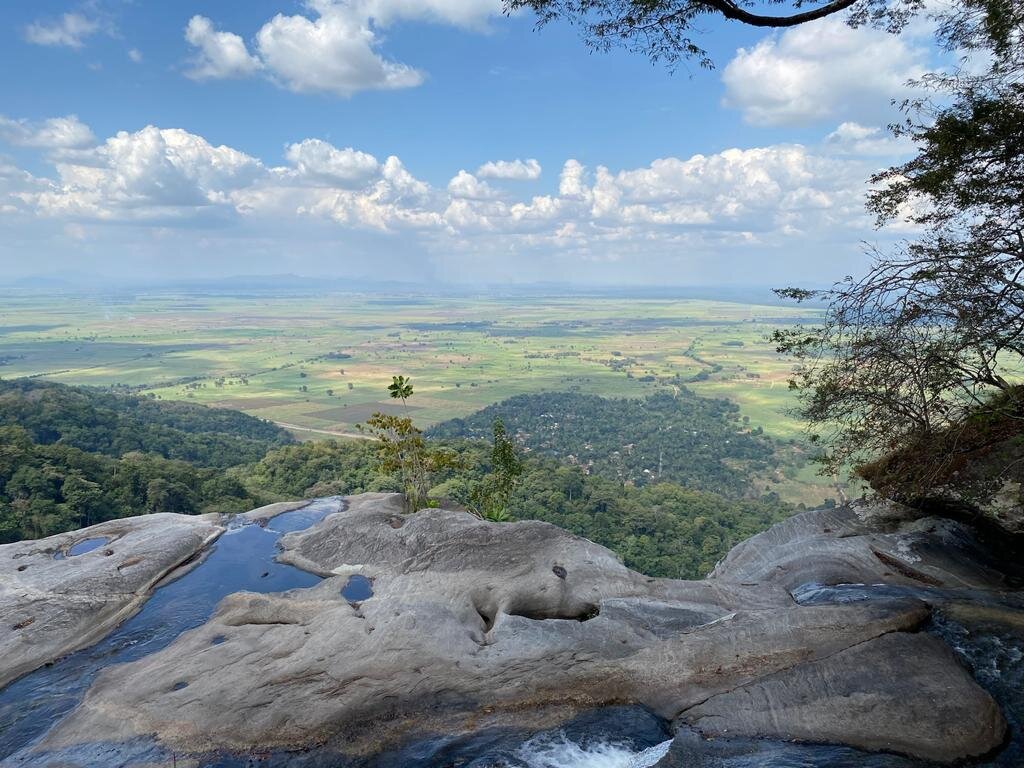
Mwanihana Peak is the second highest summit in Udzungwa Mountains National Park, standing at roughly 2,150 metres and reached on a guided trek of two or three days from Sonjo village. An armed ranger, porters and forest camping are all required, since elephant and buffalo use the high ground. Udzungwa lies in south central Tanzania, part of the Eastern Arc chain, and holds one of the most species rich forest blocks in Africa.
This is the trek people take when a day at Sanje Waterfall has left them wanting the rest of the mountain. It is not technical. It is long, humid and steep in places, and it ends somewhere very few travellers ever stand.
Mwanihana Peak Trekking in Udzungwa Mountains National Park
A Mwanihana Peak trek is the park’s flagship multi day walk. The full round trip covers about 38 kilometres and climbs from around 300 metres at the trailhead to roughly 2,150 at the summit, which means most of the altitude gain happens on your feet with a pack behind you carried by someone else.
Two schedules exist. One night in the forest makes a hard, fast trek with a long summit day. Two nights spreads the same distance across three days and gives you time in the upper forest, which is where the walking actually becomes interesting. Guides recommend the longer version to anyone not already used to consecutive days on trail.
Everything is arranged at the park headquarters at Mang’ula or through the forest camp on the boundary, which handles tents, food, cook and porters as a package.
How High Mwanihana Peak Stands in the Eastern Arc
Figures vary between sources, which happens with peaks that sit on a broad forested ridge rather than a clean point. The commonly quoted height is 2,150 metres, with some operators listing 2,140 and others 2,111. What is not in dispute is its ranking: it is the second highest point in the national park, behind Luhombero at around 2,576 metres, and it is among the higher summits in the entire Eastern Arc.
Height alone undersells it. The Eastern Arc ranges have stood as isolated forest islands for something like thirty million years, and the altitude band Mwanihana passes through carries species that evolved in that isolation. Walking from 300 metres to the summit crosses more ecological ground in two days than most safaris cross in two weeks.
The Bamboo and Heather Zone Below the Mwanihana Summit
The last stretch before the top is the part trekkers talk about afterwards. Montane forest gives way to glades of bamboo that creak and rattle in wind, then to open heather and bare rock at the summit itself. The transition happens quickly, over a few hundred metres of climbing, and the temperature drops with it.
Mist sits in this zone for much of the year. Some mornings the bamboo is dripping and visibility runs to twenty metres. Other mornings it burns off by nine and the whole valley opens below. Nobody can promise which you will get, and guides are honest about that at the briefing.
Views from Mwanihana Peak Over the Kilombero Valley
On a clear morning the summit gives you the Kilombero Valley laid out flat to the southeast: rice, sugar cane, the river threading through, and the plain running on towards Nyerere National Park. Some claim the Indian Ocean is visible on exceptional days. Take that as folklore unless you see it yourself.
Behind you the plateau rolls away northwest into forest that has no roads, no trails and almost no human presence. That view matters more than the valley one. It is the moment the size of this park stops being an abstraction.
Weather permitting, of course. Cloud wins often enough that guides tell groups to enjoy the walk on its own terms.
Wildlife on the Mwanihana Peak Climb
Elephants are seen on this trail regularly. They use the grassy plateau sections and the streams, and their tracks and dung are unmissable even when the animals are not. Buffalo are present too. Both are the reason an armed ranger walks with every group, and why rangers set the rules about noise and spacing on the open stretches.
For primates, the odds here are good. The Sanje mangabey, which lives only in this mountain block, is more reliably found on the quiet upper trails than on the busy waterfall paths. Udzungwa red colobus, black and white colobus and blue monkeys are all present through the forest zones. Red duiker and bushbuck cross the trail. Birds thin as you climb but the specialists get better, with Eastern Arc species restricted to these altitudes.
None of it is guaranteed. Rainforest hides things, and a group that walks quietly sees perhaps twice what a talkative one does.
Fitness and Difficulty of a Mwanihana Peak Trek
Moderate to hard, depending on the schedule. There is no scrambling and no exposure, so the challenge is endurance rather than nerve. Expect six to eight hours of walking on the middle day, humidity in the lower forest that does not ease until you gain altitude, and a descent that is harder on the body than the ascent.
Trekking poles help on the descent. Boots that have already been broken in matter more here than on any other trail in the park.
Camping on a Mwanihana Peak Trekking Safari
The trail passes three campsites. The first, at Njia Panda, sits at around 900 metres and is roughly three hours in from Sonjo village, beside a ranger post. Groups doing the two night version usually sleep higher on the way up and drop back to a lower camp on the way down. Researchers are often staying at the second site, which makes for good conversation over dinner.
Camps are basic: tents pitched under canopy or at the edge of grassland, a cook working over a fire, water carried or drawn from streams and treated. The forest at night is loud. Tree hyrax calls carry a long way and startle people on the first evening. By the second, most sleep through it.
Who Should Attempt a Mwanihana Peak Trekking Trip
Walkers, mainly. If your idea of a good day involves several hours on foot and you do not mind sleeping under canvas, this trek delivers something no game drive can. If you are travelling with young children, short of time, or hoping for comfort at the end of each day, the shorter trails serve you better and there is no shame in that.
Groups of three or four work best. Guide, ranger and porter costs divide across the party, and a small group moves quietly enough to actually see wildlife. Solo trekkers pay a lot more per head and should expect that.
Best Time for a Mwanihana Peak Trek
June through October, without much argument. The plateau sections drain, the steep forest pitches stop being hazardous, and the odds of a clear summit morning rise considerably. Nights at altitude get cold in these months, down towards nine degrees, so a proper sleeping bag matters.
Getting to the Mwanihana Trailhead at Sonjo Village
Registration happens at the park headquarters at Mang’ula, on the road between Mikumi town and Ifakara. From there you transfer a short distance north to Sonjo village, where the trail begins and where porters usually join the group.
Reaching Mang’ula takes five to six hours from Dar es Salaam via Chalinze, Morogoro and the highway through Mikumi National Park. From Mikumi itself it is about 65 kilometres and ninety minutes. Iringa lies two to three hours southwest. The TAZARA train stops at Mang’ula station, and buses towards Ifakara pass the gate. Arrive the day before the trek so the briefing and the pack check are not rushed.
Frequently Asked Questions About Mwanihana Peak
How much does a Mwanihana Peak trek cost?
Reckon on 400 to 500 US dollars per person for a two or three day trek covering guide, armed ranger, porters, cook, camping equipment, food and all park fees. Group size moves the number a lot, since staff costs divide while conservation fees do not. Those fees run at 30 US dollars per person per 24 hours for non residents, about 35.40 with value added tax, and camping inside the park adds roughly 35.40 per person per night.
How high is Mwanihana Peak?
Around 2,150 metres, with some sources quoting 2,140 or 2,111 depending on where the measurement was taken on the ridge. It is the second highest point in the national park after Luhombero, which stands at about 2,576 metres and needs a much longer expedition to reach.
How long does the Mwanihana trek take?
Two days and one night for the compressed version, or three days and two nights at a comfortable pace. The full round trip is roughly 38 kilometres. Most guides push for the three day option because the summit day on the shorter schedule runs very long.
Do I need an armed ranger?
Yes, this is a park requirement rather than an optional extra. Elephant and buffalo both use the plateau and the forest streams, and meeting one at close range in thick cover is the reason the rule exists. The ranger fee is charged per day, in the region of 20 US dollars, alongside the guide fee.
How fit do I need to be?
Fit enough to walk six to eight hours on uneven ground on consecutive days. There is no climbing or scrambling involved. Humidity in the lower forest tires people more than the gradient does, and the descent is where sore knees show up. Anyone who hikes regularly at home will manage.
What is the chance of seeing elephants on the trek?
Reasonable, and higher than on any day walk in the park. Elephants use the grassy plateau sections and are seen fairly often by groups on this route. Tracks and dung are almost certain even when the animals are not. Your ranger sets the distance and the rules, and those are not negotiable.
Booking Your Udzungwa Trip
The safari companies and tour operators listed on this website put trips like this together for a living and know which camps, guides and routes actually deliver. We are an independent guide to Udzungwa; we do not book or sell tours ourselves.
When you are ready, arrange your safari, tour or holiday with one of the recognised operators listed here. Tell them your dates and what matters most, and a real person, not a form, will handle the itinerary, park bookings and logistics for you.