Eastern Arc Ancient Rainforest
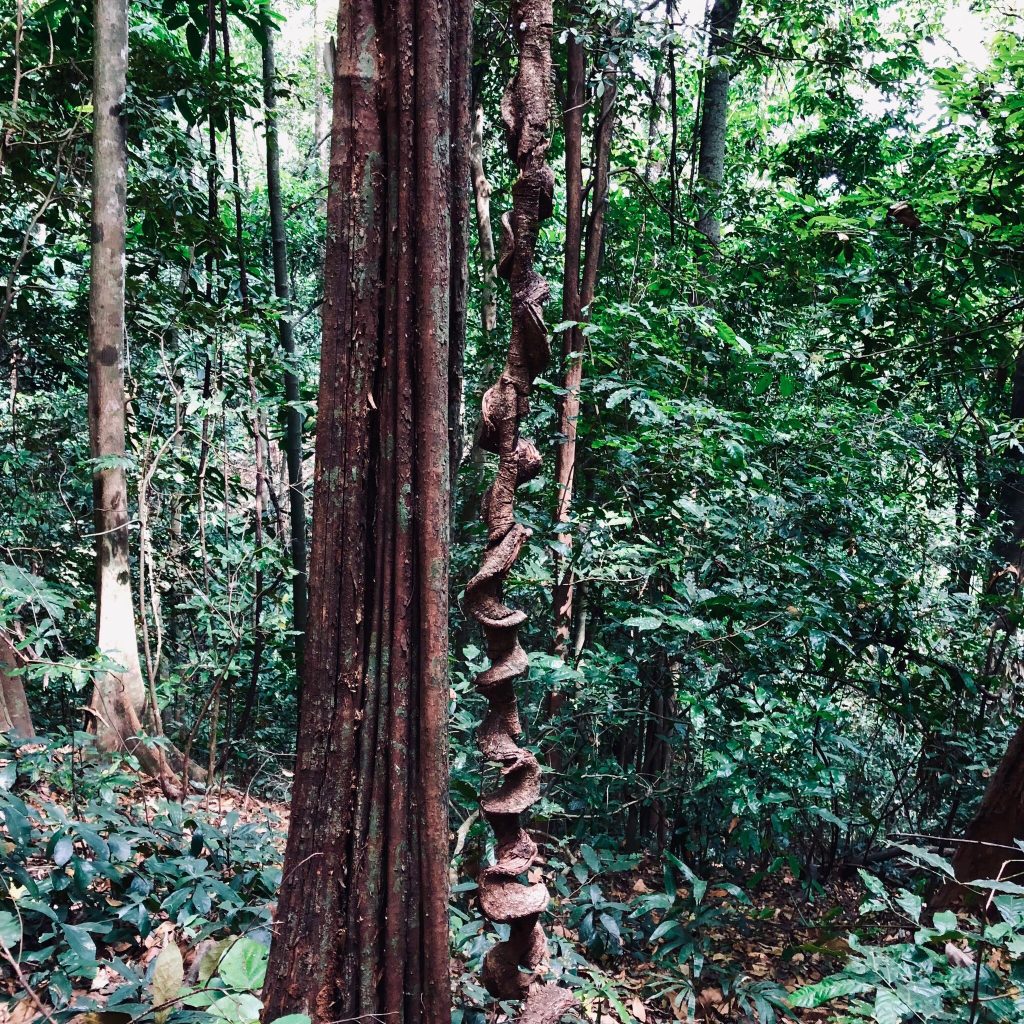
The Eastern Arc ancient rainforest is a chain of isolated mountain forests running from the Taita Hills in Kenya down through Tanzania, and Udzungwa Mountains National Park protects the largest surviving block of it. Guided forest walks and multi day treks are the only way in, since the park has no roads. These forests have stood as separate highland islands for roughly thirty million years, which is why so much of what lives here lives nowhere else.
People arrive expecting a rainforest and find something stranger: a mountain range that has been quietly running its own evolutionary experiment since long before the Serengeti plains existed in their current form.
Eastern Arc Rainforest Hiking Safaris in Udzungwa
Every visit here is an Eastern Arc rainforest hiking safari in the literal sense, because walking is the only option. There are no game drive tracks inside the 1,990 square kilometre park, and a licensed guide is compulsory on every trail. That single rule changes the pace of a visit entirely.
Trails run from twenty minute strolls near the headquarters to the five day Lumemo route. The Sanje Waterfall trail takes four to six hours and climbs through several forest types. The Mwanihana trek covers 38 kilometres over two or three days and crosses miombo, lowland forest, grassy plateau, montane forest, bamboo and heather. Both give you a proper sense of what the word ancient is doing in the phrase.
How Old the Eastern Arc Forests Actually Are
The Eastern Arc mountains are fault bounded blocks of Precambrian basement rock, gneiss and quartzite and schist, uplifted along rift lines and standing as isolated highlands for something in the order of thirty million years. Forest has persisted on them through climate swings that stripped it from surrounding lowlands repeatedly.
That continuity is the whole story. Species trapped on these mountains had no route out and no arriving competition, so they diverged. The comparison people reach for is the Galapagos, and for once the comparison holds: isolated blocks, long timescales, unusual results. Udzungwa is the largest of the Eastern Arc ranges, covering roughly 16,000 square kilometres of which the national park protects a portion.
Why Indian Ocean Moisture Keeps the Forest Alive
The mountains sit close enough to the Indian Ocean to intercept moist air moving inland. That air rises against the escarpment, cools and drops its water, which is why the southeastern slopes receive up to two or three thousand millimetres a year while the northwestern side, sitting in the rain shadow, gets closer to six hundred.
Two consequences follow for anyone walking here. Waterfalls keep flowing through the dry months because the forest generates its own moisture rather than depending on seasonal rain. And mist sits on the upper slopes for much of the year, so summit views are a matter of luck rather than planning.
The Unbroken Altitude Gradient from 250 to 2,576 Metres
Most tropical mountain forests survive in fragments, with the lowland belt cleared for farming and only the high ground left standing. Udzungwa is one of very few places in Africa where forest still runs continuously from near the valley floor at around 250 metres to the summit of Luhombero at roughly 2,576.
Species move up and down that gradient with the seasons. Genetic exchange between altitudes continues in a way it cannot in a fragmented range. For a walker, the practical result is that a single trail changes character every few hundred metres of climbing, from hot miombo to closed lowland forest to montane forest to bamboo, which is a rare thing to be able to do on foot in a day and a half.
Endemic Plants of the Eastern Arc Ancient Rainforest
Around 2,500 plant species have been recorded in the park, with roughly a quarter of them found only in the Eastern Arc. Wild African violets grow in this range, which surprises people who only know them as houseplants. Orchids sit on mossy trunks and mostly go unnoticed. Something like thirty six tree species are Eastern Arc endemics or near endemics.
Guides trained through the park’s programmes can name the medicinal species used in the villages below and will explain what each is for. That part of a forest walk often holds attention longer than the wildlife, particularly for visitors who came expecting monkeys and stayed for the botany.
Endemic Animals Found Only in These Forests
The headline species are primates. The Udzungwa red colobus and the Sanje mangabey occur nowhere else on earth, the mangabey unknown to science until the late nineteen seventies. The kipunji, a monkey placed in a genus of its own, was described from Ndundulu Forest in this range in 2004, the first primate discovery of that scale in more than eighty years. Six species of galago live here too, which makes the range unusually rich in nocturnal primates.
Beyond primates, the Udzungwa forests hold forty six Eastern Arc endemic vertebrates, twenty of them restricted to this block alone. The grey faced sengi, a giant elephant shrew, was described in the last two decades. The Udzungwa forest partridge, found in 1991, has its closest relatives among the hill partridges of Asia. Around 400 bird species are recorded overall, with roughly twenty five restricted to these mountains.
Forest Walks That Show the Ancient Rainforest Best
For a first look, the Sanje trail climbs through several forest zones on the way to a waterfall of about 170 metres, and includes a viewpoint over the Kilombero Valley that puts the whole range in context. Prince Bernhard Falls, a kilometre from the headquarters, gives you closed lowland forest in half an hour if time is short.
For the real thing, walk the Mwanihana trekking route over three days, or the Hidden Valleys circuit, which is the longest single day hike in the park at six to seven hours and climbs above 1,300 metres through country used by elephant and buffalo. The Lumemo Trail, 65 kilometres over five days from beyond Ifakara, takes you deepest of all.
Conservation Pressure on the Eastern Arc Forest
Being ancient is not the same as being safe. The park boundary is under real pressure from expanding villages in the Kilombero Valley, and the main threats are clearing for farmland, illegal logging, charcoal burning, bushmeat hunting and fire. Lowland forest patches outside the park have already been badly reduced, and Magombera, at the eastern foot of the range, now holds one of the few healthy red colobus populations outside the park itself.
TANAPA works with surrounding communities through buffer zone programmes and revenue sharing, the Tanzanian Forest Service manages adjacent reserves, and long term monitoring runs out of an ecological research centre at Mang’ula. International bodies including the World Wide Fund for Nature support that work. The forest’s dependence on a stable moisture regime also makes it unusually exposed to a shifting climate.
Best Time for an Eastern Arc Rainforest Trek
June through October gives the firmest trails, the coolest walking and the clearest chance of a view from altitude. From November to May the forest is greener, butterflies peak, migrant birds arrive and the steep sections get slippery, with the long rains from March to May making multi day treks hard work.
Getting to the Eastern Arc Forests at Udzungwa
The park headquarters at Mang’ula, on the road between Mikumi town and Ifakara, is where every visit begins. Dar es Salaam is five to six hours away by road through Chalinze, Morogoro and the highway that crosses Mikumi National Park. From Mikumi it is about 65 kilometres, roughly ninety minutes, which is why the two parks are so often paired. Iringa lies two to three hours southwest.
The TAZARA railway stops at Mang’ula station and Ifakara buses pass the gate. Two airstrips, Msolwa and Kilombero, serve chartered flights. Accommodation sits along the road at Mang’ula, with a solar powered forest camp on the park boundary and simpler guesthouses in the village.
Frequently Asked Questions About the Eastern Arc Rainforest
How much does it cost to visit the Eastern Arc forest at Udzungwa?
Non resident adults pay a conservation fee of 30 US dollars per person for 24 hours, about 35.40 with value added tax. A compulsory guide adds roughly 20 dollars per day, charged per guide rather than per person. Children between five and fifteen pay around 10 dollars and under fives are free. Multi day treks with porters and a ranger run 400 to 500 dollars per person for the Mwanihana route and 800 to 1,200 for the full Luhombero expedition.
How old is the Eastern Arc rainforest?
The mountains have existed as isolated highland blocks for roughly thirty million years, and forest has persisted on them through repeated climatic shifts that removed it from the surrounding lowlands. That is the source of the endemism: species were cut off long enough to become distinct.
What makes Udzungwa different from other Eastern Arc forests?
Size and continuity. Udzungwa is the largest block in the chain and one of the few places where forest still runs unbroken from around 250 metres to over 2,500. Elsewhere in the Eastern Arc, the lowland belt has largely been cleared and only fragments of high forest remain.
Which species are found only in these mountains?
The Udzungwa red colobus and the Sanje mangabey among primates, the grey faced sengi among mammals, and the Udzungwa forest partridge among birds. Twenty Eastern Arc endemic vertebrates are restricted to this block alone, and roughly a quarter of the park’s 2,500 plant species are found only in the Eastern Arc.
Can I see the forest without a long trek?
Yes. Prince Bernhard Falls sits about a kilometre from the headquarters and takes thirty to forty five minutes return, passing through closed lowland forest. The Sonjo trail is another short option at about three kilometres. Both give a real sense of the habitat without committing to a full day.
Is the forest under threat?
Yes. Clearing for farmland, logging, charcoal production, hunting and fire all press on the boundary, and lowland forest patches outside the park have already been heavily reduced. Park revenue sharing, buffer zone work and long term ecological monitoring at Mang’ula are the main responses. Visitor fees feed directly into that, which is worth knowing when you pay at the gate.
Booking Your Udzungwa Trip
The safari companies and tour operators listed on this website put trips like this together for a living and know which camps, guides and routes actually deliver. We are an independent guide to Udzungwa; we do not book or sell tours ourselves.
When you are ready, arrange your safari, tour or holiday with one of the recognised operators listed here. Tell them your dates and what matters most, and a real person, not a form, will handle the itinerary, park bookings and logistics for you.