Birdwatching in Udzungwa National Park
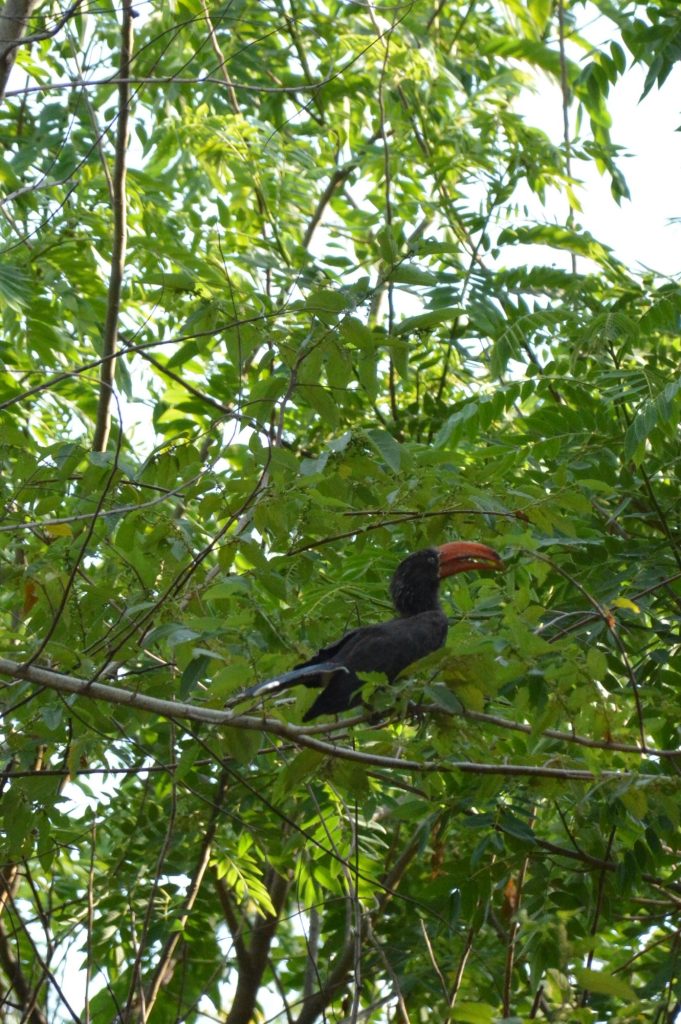
Birdwatching in Udzungwa Mountains National Park is done on foot with a compulsory guide, across around 400 recorded species of which roughly twenty five are restricted to these mountains. Low forest trails near the Mang’ula gate suit general birding, while the Eastern Arc specialists live above 1,300 metres and need a long day or a trek. Udzungwa is rated among the top bird conservation areas on the African mainland.
Come with a target list and a tolerance for standing still. This is ear birding in dim forest, not scanning open plains from a vehicle.
How Birding Works in a Roadless Forest Park
There is no vehicle birding here, no circuit to drive and no hide. Every session is a walk with a licensed guide, arranged at the headquarters on arrival, and the pace you set determines almost everything about the result.
Cover less ground and stop more. Most of what you find will be located by call first, so let the guide listen rather than filling the silence with questions. Mixed feeding flocks are what you wait for: several species travelling together in bursts, and standing still for ten minutes when one arrives will out perform an hour of walking on a birdwatching safari anywhere in this forest.
Birding the Camp Grounds Before You Walk
Start where you are sleeping. The solar powered camp on the park boundary has recorded over eighty species within its own grounds, and the easiest hour of birding in the area costs nothing and involves no walking at all.
The camp takes its local name from the Swahili word for hornbill, and three hornbill species use the forest edge here. Every evening at sunset they fly in and settle in trees along the boundary while the valley echoes with their calls, which is the one entirely predictable bird moment in the park. Colobus troops move through the same grounds, so the morning tends to produce both.
Low Forest Trails for General Birding
Two short routes near the headquarters do most of the general work. Prince Bernhard, about a kilometre and under an hour return, passes through closed lowland forest where greenbuls, green barbets and forest weavers work the mid storey. The Sonjo circuit at three kilometres adds miombo woodland, which carries a completely different set of species and better light.
The lower half of the Sanje Waterfall trail is productive on the way up, though the walk is long enough that birding competes with the climb. For a straightforward morning list, an early start on Prince Bernhard or Njokamoni will produce thirty to fifty species without chasing anything rare.
Reaching the Eastern Arc Specialists
The birds people travel for live high. Montane forest above roughly 1,400 metres holds the Iringa akalat, yellow throated mountain greenbul, dark batis and Mrs Moreau’s warbler, with Swynnerton’s robin recorded deeper in the forest.
The Hidden Valleys circuit, seventeen kilometres over six to seven hours climbing above 1,300 metres, is the best single day route for reaching that band. Beyond it, a leg of the 38 kilometre Mwanihana trek gets you into proper montane forest and bamboo. Both need real fitness, and Hidden Valleys requires an armed ranger since elephant and buffalo use the grassy clearings.
The Endemic Sunbirds and Other Targets
Three sunbirds tie this park to the wider Eastern Arc and all three are under threat of extinction: the rufous winged sunbird, which is the Udzungwa speciality, along with Moreau’s sunbird and the banded green sunbird. Moreau’s is about twelve centimetres long, the male bronzy green above with a green throat separated from an orange red breast by a narrow blue band.
The Udzungwa forest partridge is the celebrated endemic and realistically out of reach, occurring only in the Ndundulu, Luhombero and Nyumbanitu forests deep in the range between about 1,350 and 2,060 metres. Its morning call carries up to a hundred metres, so hearing one is likelier than seeing one, and even fieldworkers can spend days without a sighting.
Wetland Birding Along the Mang’ula Road
Outside the park boundary and often skipped. The wetlands bordering the road hold herons, kingfishers and cisticolas, including two species tied to this valley: the white tailed cisticola and the Kilombero cisticola.
An hour with binoculars there early in the morning adds species no forest trail will produce, in open light that makes photography possible, and it costs nothing since no park fee applies. Woodland and malachite kingfishers work the waterways, and the surrounding country is flat enough to cycle if you would rather cover more of it.
Birding at Magombera Nature Forest Reserve
Below the mountains at the eastern foot of the range, this lowland forest reserve has become popular with birders chasing Pel’s fishing owl, Africa’s largest owl and a difficult bird anywhere. The southern ground hornbill is also present.
A well maintained flat trail of about five kilometres gives views of monkeys, birds and the mountains behind. Evening walks by torchlight are the way to look for the owl and for the bearded pygmy chameleon. Part of every entrance fee goes directly to surrounding villages, and visits need arranging in advance rather than turning up.
Planning a Birding Trip to Udzungwa
Bring your own binoculars, since none are supplied. Eight by forty two or ten by forty two glass with good light gathering earns its price here in a way it does not on open plains.
Raptors and the Larger Forest Birds
Not everything here is a skulking greenbul. The crowned eagle is the bird to hope for, hunting monkeys through this forest with a call that carries a long way, and it is one of the few species you may hear before you have left the camp.
Rüppell’s vulture and the African hobby appear on the park list, and the southern banded snake eagle has been recorded in low forest at the foot of the mountains. Marabou storks cross the valley. Turacos work the canopy and give themselves away by movement rather than call. Against the endemic sunbirds and akalats these are common birds, and they are also the ones a first time visitor will actually see and remember.
Best Time for Birdwatching in Udzungwa
December through February is peak activity, with migrants arriving and nesting inside the park and residents at their most vocal. The complication is that these are wet months and the montane forest is hardest to reach exactly then.
Many visiting birders compromise on late June or early July, taking slightly reduced activity in exchange for reaching the altitude that holds the specialists.
Getting to Udzungwa for Birding
Register at the headquarters at Mang’ula on the road between Mikumi town and Ifakara. Dar es Salaam is five to six hours away via Chalinze, Morogoro and the highway through Mikumi National Park, with graded dirt for the final 24 kilometres from Kidatu. Mikumi is around 60 kilometres north and Iringa two to three hours southwest.
Staying at the camp on the boundary is worth it for the dawn and dusk activity in the grounds alone, and it puts you close enough to the gate for the early starts that forest birding demands.
Frequently Asked Questions About Birding in Udzungwa
What does a birding trip cost here?
No separate birding permit exists. The park conservation fee is 30 US dollars per person for 24 hours for non resident adults, roughly 35.40 with value added tax, plus a compulsory guide at around 20 dollars per day charged per guide rather than per head. Reaching the montane specialists on a multi day trek costs 400 to 500 dollars per person including porters, cook, ranger and fees.
How many species can I expect in a day?
Thirty to fifty on a good morning at low altitude with a guide who knows the calls, more if you add the roadside wetlands. Species counts here are lower than on an open savannah circuit, and the interest lies in what is restricted to these mountains rather than in the total.
Do I need a specialist bird guide?
It makes a substantial difference. Park guides vary in birding depth, so request one with that strength at the headquarters or arrange a specialist in advance through an operator or the camp on the boundary. Forest birding is largely an ear skill and that is not something every guide has developed.
Can I realistically see the Udzungwa forest partridge?
Not on a normal visit. It lives only in the Ndundulu, Luhombero and Nyumbanitu forests deep inside the range, and even researchers can go days without a sighting. Treat it as a reason the park matters rather than as a target, and concentrate on the specialists the upper day routes can reach.
Is birding possible without long walks?
Yes. The camp grounds have logged over eighty species, the wetlands along the Mang’ula road need no climbing at all, and Prince Bernhard takes under an hour. The flat trail at Magombera adds Pel’s fishing owl and southern ground hornbill on level ground.
When is the best hour to bird?
Before nine, without much competition. Forest birds are vocal in the first hours after dawn and largely silent by eleven. Dusk brings a second short window, particularly for the hornbills coming in to roost along the forest edge.
Booking Your Udzungwa Trip
The safari companies and tour operators listed on this website put trips like this together for a living and know which camps, guides and routes actually deliver. We are an independent guide to Udzungwa; we do not book or sell tours ourselves.
When you are ready, arrange your safari, tour or holiday with one of the recognised operators listed here. Tell them your dates and what matters most, and a real person, not a form, will handle the itinerary, park bookings and logistics for you.