Hike to Sanje Waterfalls in Udzungwa National Park
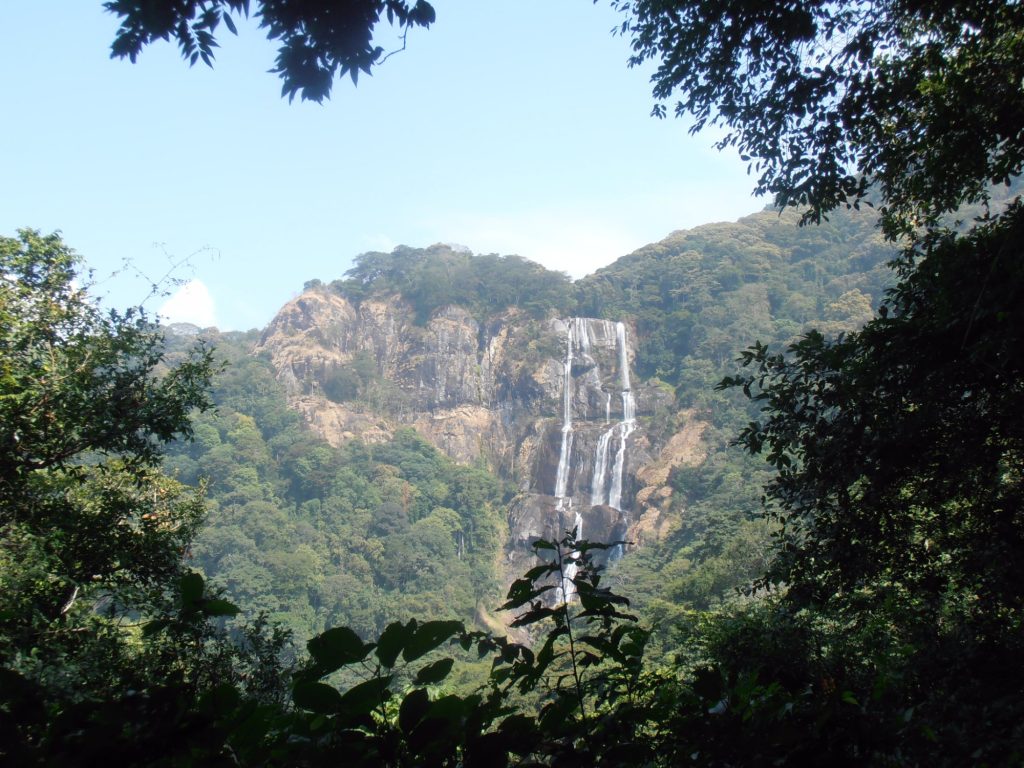
The Sanje Waterfalls hike is a guided walk of four to six hours return from the trailhead near Sanje village, climbing about 450 metres to a fall dropping roughly 170 metres in three tiers. Registration and guide allocation happen at the Mang’ula headquarters, and swimming is allowed at the pools. Udzungwa Mountains National Park sits in south central Tanzania, ninety minutes south of Mikumi, and has no interior roads at all.
This is the walk everyone books. What follows is how the day actually runs, rather than what it looks like in a photograph.
Booking the Sanje Waterfall Hiking Safari
No advance booking is needed for this walk. Arrive at the park headquarters, pay the conservation fee, and a licensed park guide is assigned there and then. A large map on the wall is where you and the guide agree which version of the trail suits your group.
Fees go through the government electronic payment system. Cards work at the office, though network coverage is unreliable, so carry a backup and do not count on drawing cash in Mang’ula village. Bring your passport, since identification is required at the gate.
Getting from the Headquarters to the Trailhead
The walk does not start at the office. The Sanje trailhead lies a few kilometres north near Sanje village, reached by tuk tuk or vehicle in a few minutes, and tuk tuks cost only a couple of dollars.
Lodges near the gate will drop and collect walkers, which is worth arranging the night before rather than in the morning. If you are on a day trip from Mikumi with a driver, the vehicle simply continues past the headquarters after you have registered.
The First Hour: Lowland Forest and Primates
The path enters forest almost immediately and begins climbing within ten minutes. Roots, loose stone and a couple of stream crossings on logs set the tone for the whole route, and long stretches under closed canopy give little sense of progress.
This lower section is the productive one for wildlife. Udzungwa red colobus feed overhead, Angolan black and white colobus sit still high in the taller trees, and blue monkeys cross the path at head height. Guides stop often, partly to let people breathe and partly because stopping is when the canopy gives things up. Both colobus species are commonly seen on this trail.
The Kilombero Valley Viewpoint Partway Up
Around ninety minutes in, the forest thins at a rock shelf and the whole floodplain opens below. Sugar cane and rice run flat to the horizon, the Kilombero River threads through the middle, and on a clear morning the far escarpment stands up across the plain.
It arrives as relief in a climb that has been enclosed and repetitive to that point, and most groups stay longer than the schedule allows. Haze builds through the day, so this view belongs to the morning. Photographers should treat it as the reason to leave early rather than a bonus.
Reaching the Middle and Upper Falls
The middle fall arrives first, seen from a ledge with spray drifting across the path on windy days. Above it comes the steepest section of the entire route, a hard pull that brings you out at the top tier, about forty metres, falling into a pool ringed by forest.
Most groups spend twenty or thirty minutes here before turning back. This is the main swimming spot: cold, deep enough in the middle, with rock to sit on afterwards. It is also where people realise they should have brought a towel.
The Detour to the Base of the Lower Fall
The largest of the three drops sits below the main path, and reaching its base takes a twenty minute detour, either on the way up or coming down past the old Sanje hotel ruins. This adds roughly an hour to the day.
It is worth it. Standing at the foot and looking straight up at the full height of water coming off the escarpment is the sight most people remember from the park. The pool here is warmer and larger than the one at the top, and jumping in from the rocks is standard practice when levels allow. Agree the detour at the trailhead rather than deciding halfway up when the group is tired.
How Hard the Sanje Trail Actually Is
Moderate, with one genuinely steep section before the upper pool. Nothing technical, no scrambling, no exposure. The difficulty is sustained climbing on uneven ground in humidity, and the descent punishes tired knees more than the ascent punishes lungs.
Trekking poles help on the way down. Trainers with worn tread do not, and after rain the root covered sections become genuinely slippery.
What to Take on the Walk
Two litres of water minimum and three if the day is hot, since there is nowhere safe to refill. Shoes with real grip. Long trousers if you dislike scratches. A swimsuit and a small quick drying towel. Insect repellent. Something to keep a camera dry, because spray at the pools reaches much further than it looks from the path.
Lodges near the gate will prepare a picnic lunch if asked the night before, which beats carrying nothing and eating at three in the afternoon. Keep the daypack light: twenty litres is ample and anyone hauling a heavy camera bag up 450 metres in humidity tends to regret it by hour two.
The Two Day Version of the Sanje Hike
There is an overnight option for anyone who would rather not walk back down the same afternoon. It covers about nine kilometres across two days with the same 450 metre gain, camping under the canopy above the falls with a team from the lodge at the gate handling tents, food and equipment.
What changes is the hours at either end. Tree hyrax call after dark and carry a long way, nightjars work the clearings, and the forest at five in the morning is a different place from the forest at eleven. It also puts you at the pools at first light before any day group has left the headquarters, which is the whole argument for photographers.
Best Time for the Sanje Waterfalls Hike
June through October gives the firmest footing, the clearest valley views and the most comfortable swimming. The falls keep flowing all year because the range makes its own moisture, so the dry season does not reduce them to damp rock.
Getting to Udzungwa for the Hike
Mang’ula sits on the road between Mikumi town and Ifakara. Dar es Salaam is five to six hours away via Chalinze, Morogoro and the highway through Mikumi National Park, with tarmac ending at Kidatu and graded dirt covering the last 24 kilometres. From Mikumi it is around 60 kilometres and ninety minutes, which makes a day trip feasible if you leave by six in the morning.
The TAZARA train stops at Mang’ula station and Ifakara buses pass the gate. Sanje Waterfall is visible from the road as you drive through Sanje village, which is a good moment to judge what you have signed up for.
Frequently Asked Questions About the Sanje Waterfalls Hike
How much does the Sanje hike cost?
Non resident adults pay a park conservation fee of 30 US dollars per person for 24 hours, roughly 35.40 with value added tax. A compulsory guide costs around 20 dollars per day, charged per guide rather than per person, so a group of four splits it. Some operators quote a full day guided rate near 50 dollars per person. Children between five and fifteen pay about 10 dollars and under fives go free.
How long does the hike take?
Four to six hours return for the full circuit, depending on pace, whether you add the lower falls detour and how long you swim. The shorter lower falls option takes two to three hours. Add an hour if you want all three tiers.
Do I need to book in advance?
No. Guides are assigned at the headquarters when you register and pay, and this walk does not require a reservation. Booking ahead makes more sense in the busy dry season months, or if you want a guide with particular strength in birds or plants.
Can children do this hike?
The shorter lower falls route suits children from around age eight, at two to three hours with water at the end. The full circuit is too much for most young children. For younger families, the Sonjo circuit at three kilometres or Prince Bernhard at under an hour are the better choices.
Is swimming safe at the falls?
Usually, and the guide decides on the day. Volume swings hard through the year, so a gentle pool in September becomes a churning one in April, and guides call it off when the current is unsafe. Rock around the pools is slick, so water shoes or sandals help.
Can I do this as a day trip from Mikumi?
Yes, and many people do. Leave your Mikumi camp by six, register by half past seven, and you will be back before dark. Anything longer than Sanje does not fit into a day trip, which is when a night at Mang’ula starts making sense.
Booking Your Udzungwa Trip
The safari companies and tour operators listed on this website put trips like this together for a living and know which camps, guides and routes actually deliver. We are an independent guide to Udzungwa; we do not book or sell tours ourselves.
When you are ready, arrange your safari, tour or holiday with one of the recognised operators listed here. Tell them your dates and what matters most, and a real person, not a form, will handle the itinerary, park bookings and logistics for you.