Nature Photography in Udzungwa National Park
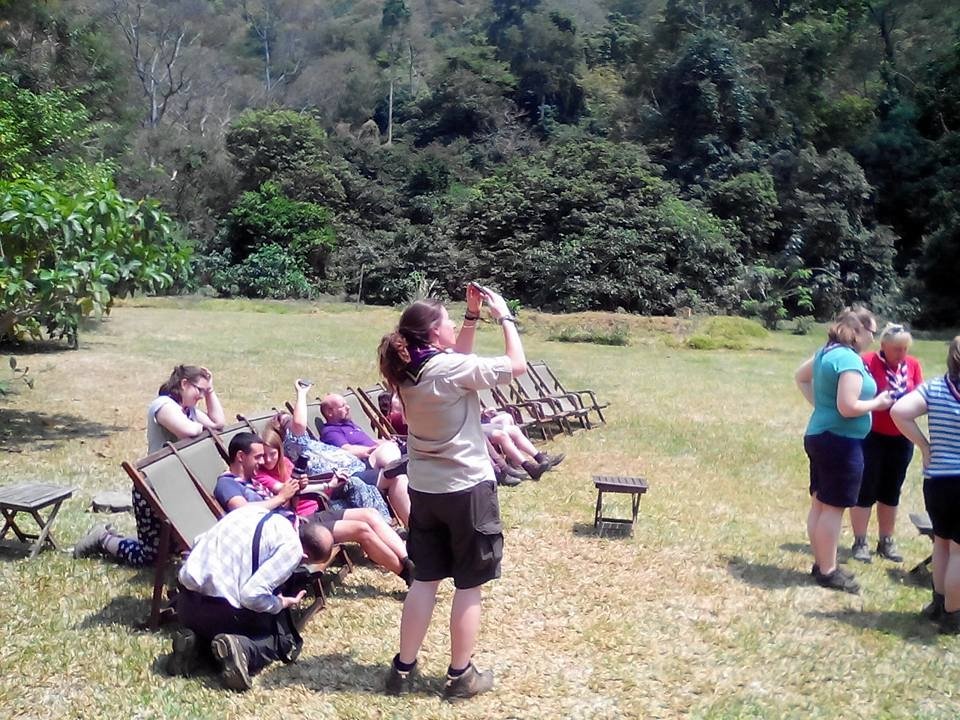
Nature photography in Udzungwa Mountains National Park means working on foot in low forest light, with waterfalls, valley viewpoints, butterflies, orchids and fungi as subjects alongside the wildlife. A guide is compulsory on every trail, and morning gives the only reliable light. Udzungwa sits in south central Tanzania and protects around 2,500 plant species across forest running from 250 metres to 2,576.
The animals get the attention. The wider scenery and the small stuff are what most photographers here come home pleased with.
Waterfalls as the Signature Subject
Sanje drops roughly 170 metres in three tiers and gives three separate compositions on one trail. The middle fall from a ledge with spray drifting across the path, the upper tier falling about forty metres into a forest ringed pool, and the largest drop viewed from its base on a twenty minute detour, which is the frame most people take home.
Morning puts sun on the falls. Volume swings hard by season, so April gives you thunder and September gives you detail and safe footing. The smaller falls reward closer work: Njokamoni, the two Sonjo cascades, the Moyer falls on the Hidden Valleys circuit, and Prince Bernhard near the headquarters. On the quiet ones nobody is waiting behind you, so waiting for light is actually possible.
Wide Views From the Escarpment
Two thirds of the way up the Sanje trail the forest thins at a rock shelf and the Kilombero floodplain opens below, with cane and rice running flat to the horizon and the far escarpment visible on clear mornings.
Haze builds through the day, so this is an early frame. A mid range zoom serves it better than an ultra wide, which flattens the escarpment into nothing. Higher up, on the Mwanihana ridge at around 2,150 metres, cloud sits for much of the year, and mist tearing through bamboo is both more likely and more interesting than a clear panorama. Photograph the weather rather than waiting it out.
Macro and Forest Detail
This is where the forest rewards patience rather than equipment. Butterflies gather at damp sand along stream crossings in dozens of species, particularly through the wetter months, and mud puddling groups sit tight if you keep low and avoid casting a shadow.
Fungi appear across the floor during the long rains. Orchids sit on mossy trunks throughout the submontane band, and wild African violets grow here in their native range, with two species endemic to these mountains alone. Ferns, buttressed roots and moss on fallen timber all photograph well in flat forest light, which is the one condition that actually suits close work.
Working With Forest Light
Under closed canopy the light is dim and contrasty, arriving in patches rather than evenly, which defeats meters and produces silhouettes if you let it. Two habits solve most of it.
Raise sensitivity rather than dropping shutter speed, since grain beats blur every time. And choose your position: moving twenty metres to put foliage behind a subject rather than bright sky is worth more than any adjustment on the camera. Overcast days are often better than bright ones here, because they close the gap between the brightest and darkest parts of a frame.
Where to Photograph Without Walking Far
The camp on the park boundary is the most productive setting in the area for the effort involved. Troops of colobus move through the grounds morning and afternoon at heights and angles no trail offers, over eighty bird species have been recorded on site, and hornbills fly in along the forest edge every evening at sunset.
Set up before the light does rather than reacting to it. Below the mountains, the flat five kilometre trail at Magombera gives habituated red colobus that stay put, plus the escarpment from the plain looking up, all on level ground. Both suit photographers who would rather stand still than climb.
Protecting Equipment in a Rainforest
Humidity is the quiet problem. It gets into bags, fogs optics and encourages mould on lens elements over a long trip. Silica gel packets are worth more here than a rain cover, and airing kit at the lodge each evening rather than sealing it away damp makes a real difference across a week.
Line the pack rather than trusting a cover, since rain arrives sideways under canopy. Keep one dry cloth sealed so you always have a clean one when the first is soaked. On multi day treks there is no power at all, and charging at the camp runs off solar and is slow, so battery discipline starts on day one.
Multi Day Trekking for Photographers
The two day version of the Sanje hike exists largely for people who want the hours at either end. About nine kilometres split across two days with a campsite above the falls, which puts you at the pools at first light before any day group has left the headquarters.
Longer, the 38 kilometre Mwanihana trek crosses miombo, lowland forest, grassy plateau, montane forest and bamboo over two or three days, which is more subject variety than any day walk delivers. A crew carries tents, food and equipment while you carry water, layers and camera, and the daypack stays light enough that the climb is about legs rather than load.
Building a Photography Itinerary
Three nights at Mang’ula is what this park asks of a photographer, and the order matters. Arrive in the afternoon, shoot the camp grounds at dusk when the hornbills come in and work out where the colobus cross the treeline.
Give the first full day to Sanje with an early start, taking the valley viewpoint before haze and the lower fall detour on the way down. Use the second on Njokamoni, where nobody is waiting behind you and you can spend an hour at one pool if the light justifies it. Keep the departure morning for the camp grounds again or for the drive south of Kidatu with the escarpment in early light. That is four distinct subjects and no rushing, which is more than most itineraries here manage.
Best Season for Nature Photography
Photographers are the one group with a genuine case for the wet months, since the forest runs at full pace exactly when the walking is worst.
Photographing the Drive In
Some of the strongest wide frames of this range are taken from outside it. South of Kidatu the road runs with the escarpment on your right for half an hour, a wall of forested cliff standing over flat cane country, and Sanje Waterfall becomes visible as you pass through Sanje village.
Early morning and late afternoon both work along that stretch, and stopping is straightforward since it is a public road. The villages, markets and cane fields either side are worth photographing too, with the usual courtesy of asking people first and accepting a refusal without argument. A guide making the introduction changes that exchange entirely and usually produces better frames than a long lens from a moving vehicle.
Subjects Nobody Photographs Here
Two are worth adding to a shot list because almost nobody bothers. The first is scale: a walker on the trail beneath buttressed trunks, or a figure at the base of the lower Sanje fall, which does more to convey the size of this forest than any frame of the forest alone.
The second is the boundary. Behind the last houses at Mang’ula the farmland stops and the canopy closes over a few dozen metres, and that transition is the whole story of the park in one image. Cane and rice on one side, thirty million years of forest on the other. It sits beside a public road, needs no permit and no climbing, and explains more than a waterfall does.
Getting to Udzungwa With Camera Gear
Register at the headquarters at Mang’ula on the road between Mikumi town and Ifakara. Dar es Salaam is five to six hours away via Chalinze, Morogoro and the highway through Mikumi National Park, with graded dirt for the final 24 kilometres. Mikumi is around 60 kilometres north.
Tell your guide at the trailhead that you want to move slowly and stop often. They adjust readily and would far rather know at the start than work it out at hour three when the group is behind schedule.
Frequently Asked Questions About Nature Photography
Is there a photography fee?
No charge applies for ordinary photography. You pay the conservation fee of 30 US dollars per person for 24 hours for non resident adults, roughly 35.40 with value added tax, plus a compulsory guide at around 20 dollars per day charged per guide rather than per head. Commercial filming is separate and requires prior authorisation through TANAPA.
Should I bring a tripod?
Only if long waterfall exposures are the reason you came. It is dead weight on a four to six hour climb otherwise, and the pools are cluttered enough with rock and spray that setting up takes patience. A beanbag or folded jacket handles most steadying needs.
Can I fly a drone?
Drones require prior authorisation in Tanzanian national parks and are not something to bring on spec. Permission, where granted, involves paperwork through TANAPA well in advance. Assume the answer is no unless you have written approval in hand.
What is the single best photograph in the park?
The base of the lower Sanje fall, looking up at the full drop, reached on a twenty minute detour from the main path. The valley viewpoint two thirds of the way up the same trail runs it close on a clear morning.
Which trail suits photographers best?
Njokamoni, because almost nobody walks it and you can wait as long as the light takes. Sanje gives the biggest subjects but more foot traffic. For minimum effort and high return, the camp grounds at dawn and dusk are hard to beat.
Do I need a specialist photography guide?
Not a specialist, though it helps enormously to say at the trailhead that photography is the priority. Guides adjust pace and route accordingly, and several are used to working with photographers who want to stop constantly and go back for a second attempt.
Booking Your Udzungwa Trip
The safari companies and tour operators listed on this website put trips like this together for a living and know which camps, guides and routes actually deliver. We are an independent guide to Udzungwa; we do not book or sell tours ourselves.
When you are ready, arrange your safari, tour or holiday with one of the recognised operators listed here. Tell them your dates and what matters most, and a real person, not a form, will handle the itinerary, park bookings and logistics for you.