What Makes the Sanje Waterfalls Famous?
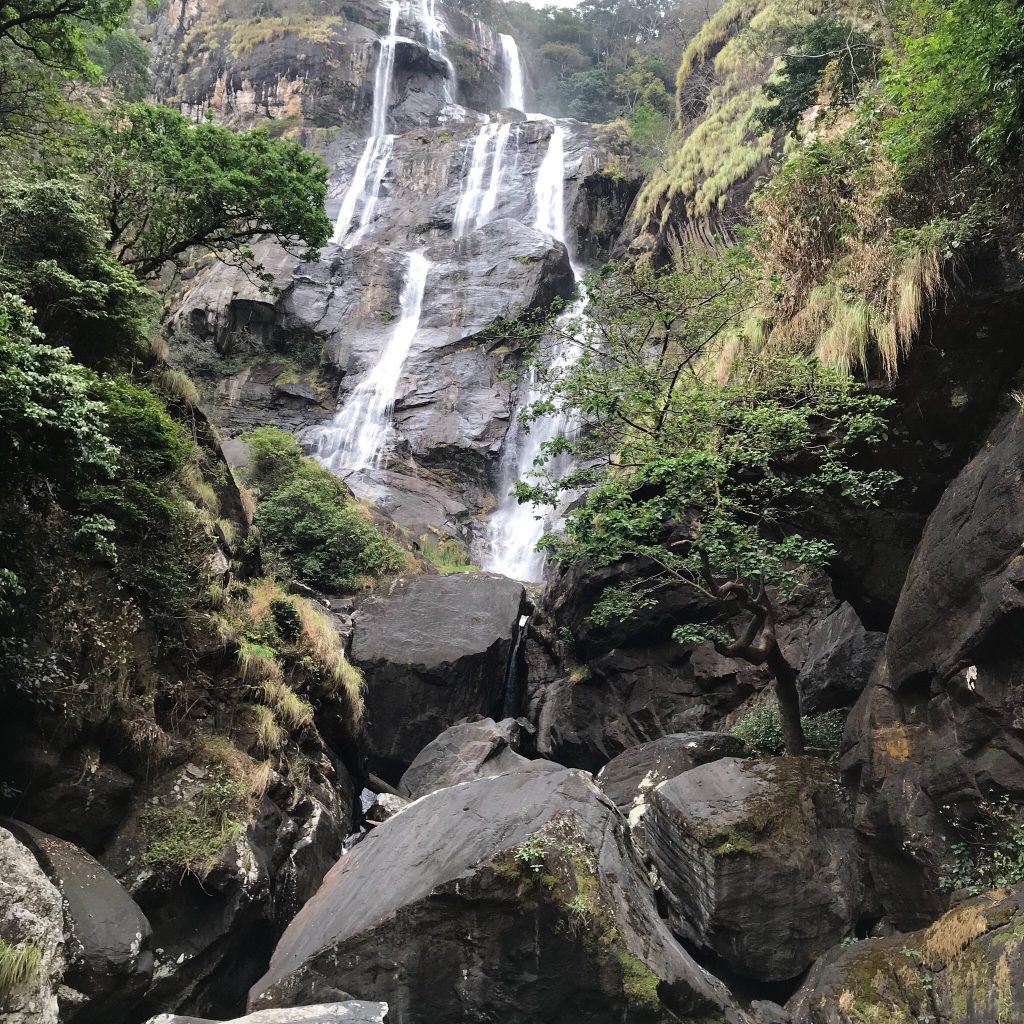
The Sanje Waterfalls are known as the tallest in Tanzania’s national park system, dropping roughly 170 metres in three tiers through rainforest, and as one of the very few places in a Tanzanian park where visitors are allowed to swim. The hike takes four to six hours return with a compulsory guide from the Mang’ula headquarters. Sanje sits in Udzungwa Mountains National Park in south central Tanzania, and the forest around it holds two primate species found nowhere else on earth.
Fame is relative here. This is not a waterfall with a coach park and a ticket booth. It is famous within Tanzania, among hikers, and among biologists, which is a different kind of reputation altogether.
The Tallest Waterfall in Tanzania’s National Park System
Height is the headline. Sanje falls roughly 170 metres, quoted as 180 in some sources, and is repeatedly described as the largest waterfall in the Tanzanian national park system. One breakdown gives the three stages as 170 metres, then 30, then 70, though the more common figure treats 170 as the total across all three.
What makes that number land is context. Tanzania has few accessible waterfalls of any scale, and almost none inside a national park with a maintained trail to the top. The Sanje Waterfall hike gets you to the base of one tier, the top of another, and a viewpoint over the whole valley, which is not something the country offers twice.
Three Tiers on One Trail
Most famous waterfalls are a single curtain. Sanje is a staircase, and the trail meets its stages in an order that builds rather than peaking early.
The middle fall arrives first, seen from a ledge with spray drifting across the path on windy days. A harder climb reaches the top tier, about forty metres, falling into a pool ringed by forest. The largest drop sits below the main path, reached on a twenty minute detour, and standing at its base looking up is the view most visitors remember.
Doing all three in one walk is possible and adds roughly an hour. Agree that at the trailhead rather than halfway up.
Swimming Allowed at the Sanje Plunge Pools
This is the detail that surprises people most. Swimming is permitted at Sanje, in a country where most national parks forbid leaving the vehicle at all.
The pool beneath the upper fall is the main spot, cold, deep enough in the middle, with rock to sit on afterwards. The pool at the base of the lower fall is warmer and larger, and people jump in from the rocks there. Volume swings hard through the year, so a gentle pool in September becomes a churning one in April, and guides call it off when the current is unsafe.
The Viewpoint Over the Kilombero Floodplain
Two thirds of the way up, the forest thins at a rock shelf and the Kilombero Valley opens out below: sugar cane and rice running flat to the horizon, the river threading through, and on a clear morning the far escarpment standing up across the plain.
It arrives as relief in the middle of a climb that is otherwise enclosed and repetitive, and most groups stay there longer than the guide planned. Haze builds through the day, so this is a morning view and not an afternoon one.
The Forest That Gave a Monkey Its Name
The Sanje mangabey takes its name from this stretch of forest, or the forest from the village, depending on who you ask in Mang’ula. Either way the connection is real. This monkey was unknown to science until the late nineteen seventies, recognised as a distinct species in 1986, and lives nowhere else on the planet.
Numbers are thought to run to around two thousand. It is shy and, on this particular trail, usually invisible because of foot traffic, so the better odds are on the quieter Njokamoni route. What you will very likely see on the Sanje climb is Udzungwa red colobus and Angolan black and white colobus, and both are worth the walk on their own.
Fireball Lilies and the Gorge in Bloom
At the right point in the year the sides of the gorge fill with fireball lilies, red spherical blooms coming up out of otherwise green ground. It is one of those details that never makes the guidebook summary and that everyone who has seen it mentions afterwards.
Butterflies gather at damp patches along the stream margins through the wetter months, sometimes lifting in clouds as you pass. Between the flowers, the insects and the birds, this trail rewards people who look down as much as up.
How Sanje Compares with Other Tanzanian Waterfalls
Within its own park Sanje is the giant. Nationally, Tanzania has taller falls outside the park system, though few with a trail, a guide service and permission to swim at the end of it.
Why the Falls Run All Year
Seasonal waterfalls disappoint half their visitors. Sanje does not, because the range makes its own weather. Moist air off the Indian Ocean rises against the escarpment and drops up to two or three thousand millimetres a year on the southeastern slopes, while the northwestern side sits in a rain shadow at around six hundred.
Forest canopy holds that water and releases it slowly. So volume drops between June and October without the falls ever reducing to damp rock, which means the dry season gives you good water and far better walking at the same time.
Why the Falls Stay Quiet Even With Their Reputation
Reputation and footfall are different things. Udzungwa averages very few visitors a day, and even Sanje, the busiest trail in the park, means passing perhaps two other groups on a dry season morning.
Several reasons combine. The park sits on the southern circuit rather than the northern one, so the Serengeti and Ngorongoro crowds never come near it. There is no road to the falls and no shortcut, so every visitor has to want it enough to climb for two hours. And accommodation nearby is limited to a handful of properties. The result is one of the tallest waterfalls in the country with no queue at the viewpoint, which is not a combination that survives long anywhere else.
Best Time to Visit the Sanje Waterfalls
June through October is the window most guides recommend, with firm trails, clear valley views and comfortable swimming. The long rains from March to May produce the most dramatic volume and the hardest climbing.
Getting to the Sanje Waterfalls
Register at the park headquarters at Mang’ula on the road between Mikumi town and Ifakara, pay the conservation fee and collect a guide, then transfer a few kilometres north to the trailhead near Sanje village by tuk tuk or vehicle.
Mang’ula is five to six hours from Dar es Salaam via Chalinze, Morogoro and the highway through Mikumi National Park, with tarmac ending at Kidatu and graded dirt covering the final 24 kilometres. From Mikumi it is around 60 kilometres and ninety minutes. Iringa lies two to three hours southwest. The TAZARA train stops at Mang’ula station and Ifakara buses pass the gate.
Frequently Asked Questions About the Sanje Waterfalls
How much does it cost to see the Sanje Waterfalls?
Non resident adults pay a park conservation fee of 30 US dollars per person for 24 hours, about 35.40 with value added tax. A compulsory guide adds around 20 dollars per day, charged per guide rather than per person, so a group of four splits it. Some operators quote a full day guided rate near 50 dollars per person. Children between five and fifteen pay roughly 10 dollars and under fives go free.
Is Sanje the tallest waterfall in Tanzania?
It is described as the tallest in the national park system, at around 170 metres across three tiers. Tanzania has taller falls outside the park network, so the more accurate claim is that Sanje is the highest inside a national park and by some distance the most accessible waterfall of its scale in the country.
Why is swimming allowed here?
Because this is a walking park with no dangerous game in the immediate area of the falls, and the pools are a long established part of the visit. It remains unusual for Tanzania, where most parks prohibit leaving the vehicle. Guides make the call on any given day based on water volume, and that judgement is not open to negotiation.
How long is the hike to the falls?
Four to six hours return with about 450 metres of climbing, depending on pace, detours and time spent swimming. A shorter option to the lower falls takes two to three hours and skips the steepest section. Guides recommend leaving the headquarters by eight in the morning.
Can I see the mangabey that the falls are named after?
Possibly, though this trail carries too much foot traffic for the species to be reliable on it. The Njokamoni route, walked by almost nobody, gives far better odds, and park staff have habituated one troop, so ask at the headquarters whether that group is currently accessible. Sightings are never guaranteed.
What should I bring?
Shoes with real grip, at least two litres of water, a swimsuit and a small towel, insect repellent and something to keep a camera dry, since spray reaches further than it looks. Long trousers save your legs on the overgrown sections. Trekking poles help on the descent more than on the climb.
Booking Your Udzungwa Trip
The safari companies and tour operators listed on this website put trips like this together for a living and know which camps, guides and routes actually deliver. We are an independent guide to Udzungwa; we do not book or sell tours ourselves.
When you are ready, arrange your safari, tour or holiday with one of the recognised operators listed here. Tell them your dates and what matters most, and a real person, not a form, will handle the itinerary, park bookings and logistics for you.