How Safe Is Udzungwa?
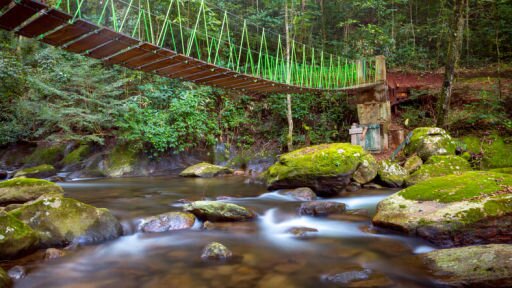
Udzungwa Mountains National Park is a low risk destination where the main hazards are slippery trails, heat and dehydration rather than wildlife or crime. Every trail requires a licensed guide, and the higher routes require an armed ranger because elephant and buffalo use the plateau. Udzungwa sits in south central Tanzania and has no interior roads, so safety here is a walking question rather than a driving one.
Nobody should be nervous about coming. It is worth knowing what the actual risks are, because they are not the ones people usually worry about.
Wildlife Safety on the Udzungwa Trails
Elephant and buffalo are the reason for the ranger rule. Both use the grassy plateau corridors and the forest streams, and thick cover means you can meet one at short range with little warning. TANAPA requires an armed ranger on every trekking party heading for the high ground, including the Hidden Valleys circuit and the Mwanihana route.
Rangers set the walking order, decide when to hold position and when to back off, and that is not open to discussion. Groups walk these routes regularly without incident, and the precautions are the reason for that. Leopard are present in the park and almost never seen. There are no lions.
Why a Guide Is Compulsory on Every Trail
Walking alone is prohibited across the whole park, with no self guided option anywhere. Partly this is about wildlife. Mostly it is about navigation.
Trails are only partly marked. Sections through grassland grow over between seasons, junctions are not always obvious, and on the Hidden Valleys route old fire damage has left ground cover riddled with elephant tracks where the correct path is genuinely easy to lose. Guides navigate, read conditions and carry radio contact with the headquarters. On a Udzungwa hiking safari that link back to the gate is the single most useful piece of safety equipment in the group.
Trail Hazards and Slippery Ground
Slipping is the realistic risk. Root covered sections turn treacherous after rain, and during the long rains from March to May the steep pitches on the Sanje and Njokamoni trails become genuinely hazardous rather than merely awkward.
Stream crossings rise fast in the wet months. Descents cause more trouble than ascents, since tired legs and wet stone combine badly, and trekking poles help more coming down than going up. Footwear with real grip is not a refinement here; trainers with worn tread are how people fall.
Heat, Humidity and Dehydration
More visitors get into difficulty through heat than through anything else. The lower forest is hot and airless, October brings maximums around thirty one degrees, and there is nowhere safe to refill water on any trail.
Two litres per person is a minimum for a half day and three is better for the full Sanje circuit or the seventeen kilometre Hidden Valleys route. Guides push for an eight o’clock start partly for this reason. Anyone feeling unwell should say so early, since turning back is a normal decision here and groups shorten routes without fuss all the time.
Swimming Safety at the Waterfalls
Swimming is permitted at several pools, which is unusual for a Tanzanian park, and it is not risk free. Water volume swings hard through the year, so a gentle pool in September becomes a churning one in April.
Guides call it off when the current is unsafe, and that judgement should be taken at face value. Rock around the pools is slick, so water shoes or sandals help. Jumping in from the rocks at the lower Sanje fall is popular and depends entirely on the water level on the day, which is exactly the sort of thing to ask about rather than assume.
Health Risks and Malaria in the Kilombero Valley
The valley is a malaria area and the forest adds mosquitoes at dusk. Speak to a travel clinic about prophylaxis well before you travel rather than after arriving, and bring repellent with a decent concentration for ankles and wrists. Mosquito nets are standard at the camps and guesthouses.
Yellow fever certificates are requested if you arrive from a country where the disease is present. Mang’ula village stocks basics only, so bring personal medication, rehydration salts, blister plasters and antiseptic rather than expecting to buy them. Tap water is not for drinking; bottled or treated water is the norm.
Medical Access and Evacuation
This deserves honest attention. There is no road into the interior of the park, so anyone injured on a multi day trek is walking out or being carried out. The nearest substantial medical facilities are at Ifakara and Morogoro, and serious cases go to Dar es Salaam, five to six hours away by road.
Travel insurance covering hiking, and evacuation cover if you are trekking, is worth reading properly rather than skimming. Day walks near the gate carry very little of this exposure. The Luhombero and Lumemo expeditions carry a lot of it, which is one reason operators ask about prior trekking experience.
Crime and Personal Safety Around Mang’ula
Mang’ula is a working village and the area is quiet. Violent crime against visitors is not a feature here, and the usual sensible precautions apply rather than anything specific to this park: keep valuables out of sight, do not walk unlit roads alone at night, and use a lodge safe where one exists.
One practical point. The TAZARA train typically arrives at Mang’ula station at night, so arrange a pickup with your accommodation before you travel rather than looking for transport in the dark at an unfamiliar station. Tuk tuks around the village during the day are cheap and straightforward.
Safety Considerations by Trail Type
Practical Precautions That Actually Matter
A short list covers most of it. Tell your guide at the trailhead if anyone in the group has a knee, a heart condition or a low tolerance for heat, because route choice can be adjusted before you set off and not halfway up. Carry more water than you think you need. Start early.
Keep the group together on open plateau ground, where a ranger’s instruction needs to reach everyone at once. Do not swim without asking. And say something the moment you feel unwell rather than pushing on quietly, since turning back costs nothing here and groups shorten routes routinely without anyone treating it as a failure.
Best Time to Visit for Safer Walking
June through October gives the firmest ground, the lowest crossings and the fewest slips, which is why it is the recommended trekking window as well as the most comfortable one.
Getting to Udzungwa Safely
The drive is straightforward. Tarmac runs from Dar es Salaam through Chalinze, Morogoro and Mikumi town, with graded dirt for the final 24 kilometres from Kidatu to Mang’ula. Five to six hours in total, or around 60 kilometres and ninety minutes from Mikumi.
Travel in daylight where possible, since the dirt section is unlit and livestock use the road. The highway through Mikumi National Park is unfenced and animals cross it, so speed limits there exist for good reason and are enforced. Ifakara buses and the TAZARA train both serve the gate.
Frequently Asked Questions About Safety in Udzungwa
What safety costs should I budget for?
An armed ranger is compulsory on the higher trails at roughly 20 US dollars per day alongside the guide fee, and it sits inside the price of any organised trek, which runs 400 to 500 dollars per person for the Mwanihana route. Travel insurance covering hiking and evacuation is the other cost worth paying properly rather than minimally. Park entry itself is 30 dollars per person per 24 hours for non resident adults, about 35.40 with tax.
Is it safe to walk in Udzungwa?
Yes, with a guide, which is compulsory anyway. Groups walk these trails daily without incident. The realistic hazards are slipping on wet roots, dehydration on long climbs and losing the path on the less used routes, all of which the guide and ranger system is designed around.
Are the elephants dangerous?
They are wild and unhabituated, which is exactly why an armed ranger accompanies every party on the plateau routes. Keeping distance, staying quiet on open ground and following the ranger’s instructions without debate is how it is managed, and it works. On the short trails near the gate elephants are not a factor.
Do I need vaccinations?
Yellow fever proof is requested if you arrive from a country where the disease is present. Beyond that, discuss routine travel vaccinations and malaria prophylaxis with a travel clinic before departure, since the Kilombero Valley is a malaria area. Bring repellent and use the mosquito nets provided.
Is it safe for solo travellers?
Yes. Solo visitors are common here, particularly those arriving by bus or train, and the compulsory guide system means nobody walks alone regardless. Solo trekkers pay considerably more per head on multi day routes, since guide, ranger and porter costs do not divide.
What happens if someone is injured on a trek?
There is no road into the interior, so evacuation means walking or being carried out with the crew’s help, and guides carry radio contact with the headquarters. This is the main argument for proper insurance and for choosing a route that matches your group’s real fitness rather than its ambitions.
Booking Your Udzungwa Trip
The safari companies and tour operators listed on this website put trips like this together for a living and know which camps, guides and routes actually deliver. We are an independent guide to Udzungwa; we do not book or sell tours ourselves.
When you are ready, arrange your safari, tour or holiday with one of the recognised operators listed here. Tell them your dates and what matters most, and a real person, not a form, will handle the itinerary, park bookings and logistics for you.