Multi-Day Trekking in Udzungwa National Park
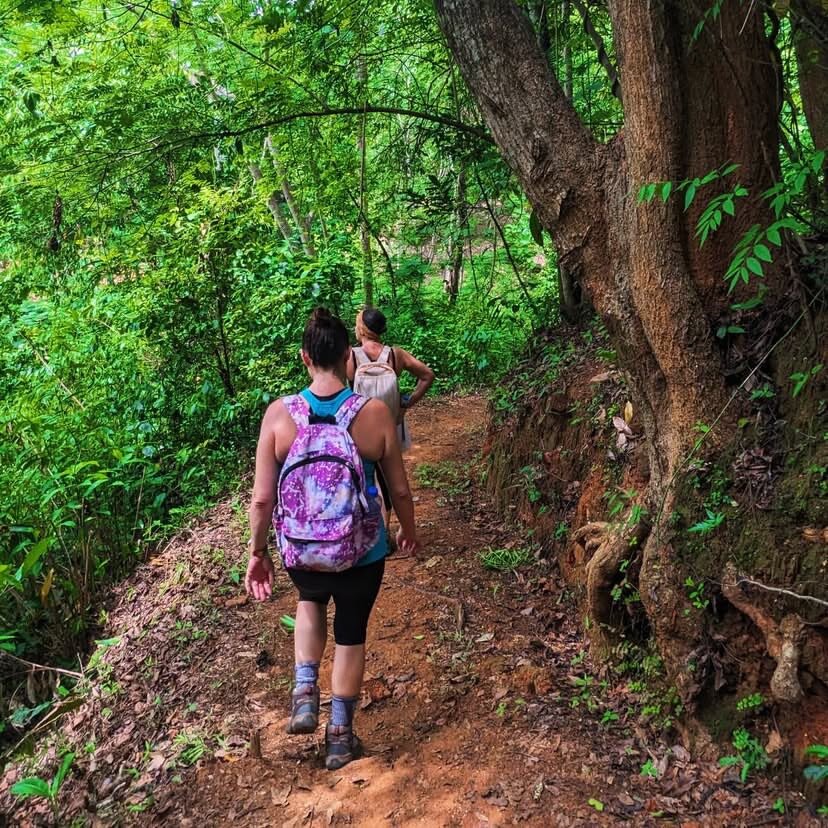
Multi day trekking in Udzungwa Mountains National Park runs from a single overnight above the Sanje Waterfalls to a seven day expedition reaching Luhombero at roughly 2,576 metres, with the 38 kilometre Mwanihana route over two or three days as the standard option. Every trek needs a guide, an armed ranger, porters and a cook, arranged in advance. Udzungwa lies in south central Tanzania and has no interior roads, so all camping is wild and everything is carried in.
This is where the park stops being a stop on a southern circuit and becomes a destination in its own right.
What Multi Day Trekking Involves Here
Nothing on these routes is self service. A Udzungwa trekking safari comes with a crew: a licensed guide, an armed ranger because elephant and buffalo range across the plateau, porters carrying tents, food and cooking equipment, and a cook working over a fire each evening.
You carry water, layers and a camera. Camps are pitched under canopy or at the edge of grassland with no facilities beyond what the team brings, and water is drawn from streams and treated. Equipment is hired through the forest camp at the park boundary or an operator unless you brought your own, and sleeping bags and mats are frequently excluded from packages, which is the detail that catches people out.
The Overnight Sanje Waterfall Trek
The gentlest introduction. About nine kilometres split across two days with the same 450 metre gain as the day hike, camping under the canopy above the falls rather than walking back down the same afternoon.
The distance is modest, which is the point: it exists for the hours at either end rather than the mileage. Tree hyrax call after dark and carry a long way, nightjars work the clearings, and the pools at first light belong to you alone before any day group leaves the headquarters. The camp team from the lodge at the gate sets everything up, so it is a soft introduction to sleeping in the forest.
The Mwanihana Trek Over Two or Three Days
The flagship route. Thirty eight kilometres round trip from Sonjo village, climbing from about 300 metres to a ridge near 2,150, crossing miombo woodland, lowland forest, grassy plateau, submontane and montane forest, bamboo glades and heather at the top.
Camping is at Njia Panda, a ranger post at around 900 metres roughly three hours in, and at higher sites beyond. Researchers often occupy the second camp, which makes for good conversation over dinner. Elephants are seen on this trail with some regularity, and it is among the better routes for the endemic Sanje mangabey.
Two schedules exist. One night makes for a summit day of ten hours or more. Two nights spreads the same distance and gives a fresh descent, which is what most guides push for.
The Lumemo Trail Over Four or Five Nights
Sixty five kilometres and the longest established route in the park. It starts beyond Ifakara on the Lumemo River, well south of everything else, and works up into the hills before returning along the same ground as the Mwanihana route not far from the forest camp, where a vehicle collects you.
This is the least walked of the named trails and the most demanding after Luhombero. Everything goes in on day one since resupply is impossible, camps are wild, and the crew plans daily distance around water sources rather than around a schedule. Anyone tempted should have done consecutive days on trail before.
The Luhombero Expedition to the Highest Point
Five to seven days to the park’s high point at roughly 2,576 metres, with the longer version coming in from Dabaga in the highlands south of Iringa, and an alternative crossing from the Mbatwa ranger post side that some operators run as a traverse taking in Mwanihana on the way out.
The summit itself is a narrow ridge in a small forest clearing, often in cloud. What people take away is the isolation: no path in from any road, no shelter, no phone signal and no other group. This crosses the Ndundulu forest where the kipunji was described in 2004, though a sighting of that monkey remains a genuine long shot.
Choosing Between the Multi Day Routes
Two other routes appear on the park’s list and see almost no use: Mzimu at around sixteen kilometres and Njia Panda at twenty six. Ask about them if you want something nobody else is walking.
Fitness and Experience Required
Fit enough to walk six to eight hours on uneven ground on consecutive days, and comfortable sleeping under canvas. No technical skill is needed on any route: no scrambling, no exposure, no fixed ropes, and altitude sickness is not a realistic concern below 2,600 metres.
Humidity in the lower forest tires people more than the gradient, and descents cause more trouble than climbs. Prior multi day trekking experience matters for Lumemo and Luhombero, and operators will ask about it. Groups of three or four work best, since crew costs divide and small quiet parties see far more wildlife.
Booking a Multi Day Trek in Advance
Unlike day walks, which need no reservation at all, treks must be arranged ahead so that rangers, porters, permits and equipment can be assembled. Weeks ahead for Mwanihana, and months for the longer expeditions during the busy dry season.
The forest camp on the park boundary handles this directly and is often the simplest route, since the people organising it live at the trailhead. Southern circuit operators also sell treks as part of wider itineraries. Whichever route you take, check that conservation fees, camping fees, ranger fees and equipment hire are all itemised, since a conservation fee falls due for each 24 hour period inside the park.
What Nights in the Forest Are Like
The part nobody warns you about is the noise. Tree hyrax start calling after dark and carry a very long way, and first time campers regularly assume something large is in trouble nearby. Nightjars work the clearings. By the second evening most people sleep through all of it.
Cold is the other surprise. Nights on the plateau fall towards nine degrees between June and September, which is not what anyone expects of a rainforest a few degrees south of the equator, and the difference between a proper sleeping bag and a liner decides how the next day goes. Camps are simple: tents pitched under canopy or at the edge of grassland, a cook working over a fire, stream water carried and treated. Washing happens in a mountain stream, which is bracing and, after eight hours of walking, welcome.
Best Season for Multi Day Trekking
June through October, and for the longest routes realistically only then. Plateau ground drains, stream crossings drop and clear summit mornings become likely rather than lucky.
Getting to Udzungwa for a Trek
Register at the headquarters at Mang’ula on the road between Mikumi town and Ifakara, then transfer to the trailhead. Sonjo village serves the Mwanihana route and is a short drive north. Lumemo starts beyond Ifakara to the south, and Luhombero routes begin either near Iringa or from the Mbatwa side.
Mang’ula is five to six hours from Dar es Salaam via Chalinze, Morogoro and the highway through Mikumi National Park, and around 60 kilometres from Mikumi itself. Arrive the day before so the briefing, kit check and porter allocation happen without a rush.
Frequently Asked Questions About Multi Day Trekking
How much does a multi day trek cost?
Between 400 and 500 US dollars per person for a two or three day Mwanihana trek covering guide, armed ranger, porters, cook, equipment, food and all park fees. The Luhombero expedition runs 800 to 1,200 per person. Underneath those totals sit a conservation fee of 30 dollars per person for each 24 hours, roughly 35.40 with tax, and camping inside the park at around 35.40 per person per night. Group size moves the figure considerably.
Do I have to camp?
Yes. There is no built accommodation anywhere on the trekking routes. Njia Panda has a ranger post but trekkers sleep under canvas, and the higher and remoter sites have no structures at all, which is part of why the crew is as large as it is.
Are porters included?
They are part of every organised trek and their fee sits inside the package price. Porters carry tents, food and cooking equipment while you carry water, layers and camera. Tipping the porters, cook, ranger and guide at the end is customary and separate from the quoted cost.
Why is an armed ranger compulsory?
Because elephant and buffalo use the grassy plateau corridors and the forest streams, and dense cover means you can meet one at close range with little warning. The ranger sets walking order and decides when to hold position. Groups walk these routes regularly without incident, and that is the reason.
How far ahead should I book?
Weeks for the Mwanihana trek and months for Lumemo or Luhombero in the dry season, since rangers, porters and permits all have to be lined up and the small supply of beds near the gate fills between June and October. Day walks, by contrast, need no booking whatsoever.
Can I combine a trek with a Mikumi safari?
Easily. Mikumi sits about 60 kilometres north, ninety minutes by road, so a common shape is two or three nights of game drives followed by a three day trek here. Allow a recovery morning at the end rather than planning to summit and drive five hours to Dar es Salaam the same day.
Booking Your Udzungwa Trip
The safari companies and tour operators listed on this website put trips like this together for a living and know which camps, guides and routes actually deliver. We are an independent guide to Udzungwa; we do not book or sell tours ourselves.
When you are ready, arrange your safari, tour or holiday with one of the recognised operators listed here. Tell them your dates and what matters most, and a real person, not a form, will handle the itinerary, park bookings and logistics for you.