Camping Near the Park in Udzungwa National Park
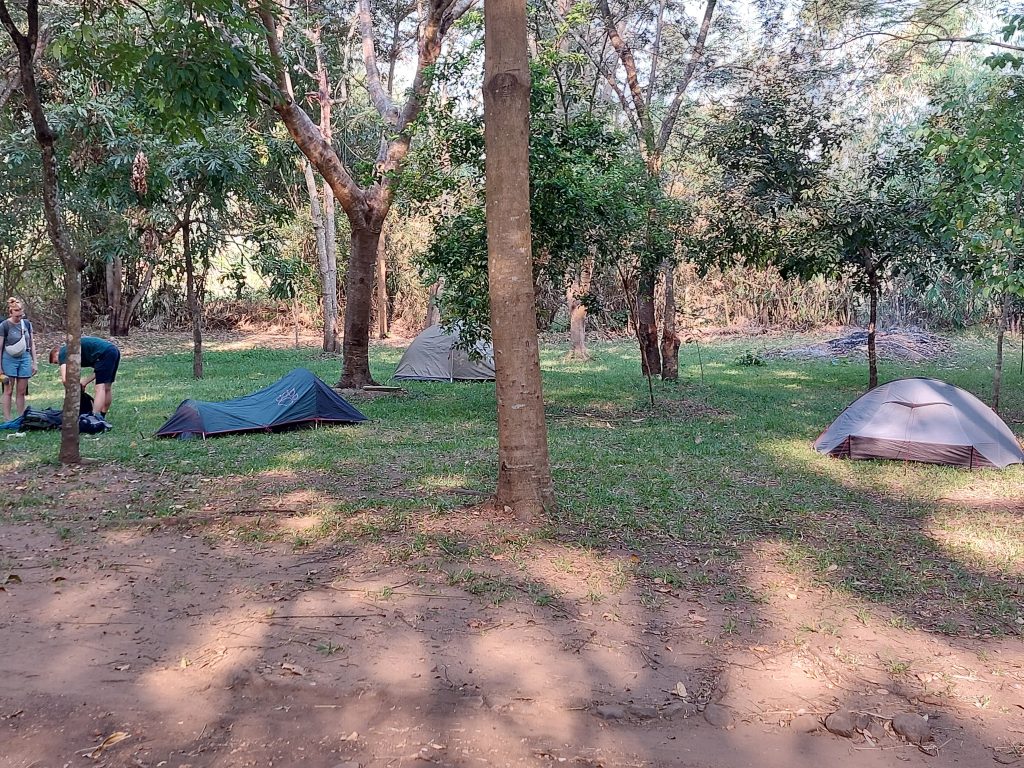
Camping at Udzungwa Mountains National Park comes in three forms: three TANAPA campsites inside the boundary near the Mang’ula gate, a campsite with showers and toilets at the forest camp on the park edge, and wild camping on the multi day trekking routes. Camping is the only accommodation actually inside the park, since no lodges exist within it. Udzungwa sits in south central Tanzania, ninety minutes from Mikumi National Park.
It is also the cheapest way to sleep beside this forest, which matters in a park where the beds are few and the good ones book out.
The Three TANAPA Campsites Inside the Park
Campsite one lies about 700 metres from the gate in the direction of Prince Bernhard Falls. Campsite two sits roughly two kilometres in and holds the better position of the three. Campsite three is the most equipped and sits close to the entrance beside the road.
Facilities are minimal at all of them, and you bring your own tent and gear. Because they sit inside the boundary, a conservation fee falls due for every 24 hour period you remain, in addition to the camping charge. Book through the park headquarters, where registration and payment happen anyway.
Camping at the Forest Camp on the Boundary
The solar powered camp bordering the park runs a campsite alongside its tented rooms and thatched huts, and it comes with showers and toilets, which the TANAPA sites do not.
Most independent travellers find this the easier arrangement. You are at the forest edge with troops of colobus moving through the grounds, a restaurant and bar on site, and the people who organise the trekking packages a short walk away. Over eighty bird species have been recorded on the property. Since it technically sits outside the park boundary, you avoid paying a conservation fee simply for sleeping.
The Camping Ground at Twiga
The hotel run by the park authority, directly across the road from the headquarters, maintains a camping ground on its own site alongside its rooms. It is well kept, with trees and flowers planted, and it puts you as close to the gate as it is possible to be.
The appeal is convenience above all. Register, collect a guide and be on the Prince Bernhard trail within twenty minutes of finishing breakfast. Availability has varied over the years, since the park has renovated the property at times, so confirm before relying on it rather than arriving with a tent and hope.
Community Campsites Around Mang’ula
Several small campsites run by the surrounding villages sit near the park entrance, offering tent pitches and basic amenities. A campsite at Kilombero and a community run site at Matundu both appear among the options, the latter combining camping with a cultural element.
These are the cheapest beds in the area and the most direct way of putting money into the villages living against the forest boundary. Facilities are simple and standards vary, so ask at the headquarters which are currently operating and in good order, since guides know and websites do not.
Wilderness Camping on the Trekking Routes
Different proposition entirely. Special camping can be arranged inside the park on the overnight Sanje hike, the two night Mwanihana trek and the four or five night Lumemo trail, with everything carried in.
The camp team handles equipment, all meals, porters and a cook, so you arrive to a pitched tent and a fire. Sites are wild with no facilities beyond what the crew brings, water comes from streams and is treated, and washing happens in a mountain stream. Njia Panda at around 900 metres has a ranger post, and researchers often occupy the second camp on the Mwanihana route, which makes for good conversation over dinner.
What to Bring for Camping Here
What Nights Under Canvas Are Like
Louder than people expect. Tree hyrax start calling once the light goes and carry a very long way, which startles first time campers who assume something is in distress nearby. Nightjars work the clearings. Six galago species live in this range and are heard far more often than seen.
Elephants pass at night in the forest near the boundary, and guests in the tented rooms at the camp describe falling asleep to that. Cold is the other surprise: this is a rainforest a few degrees south of the equator, and the upper camps are genuinely chilly between June and September. By the second night most people sleep through all of it.
Camping Versus the Alternatives
Why Camping Suits This Park Particularly
Two reasons beyond cost. The first is supply: there is one comfortable camp on the boundary with six tents, one larger lodge a drive away and a handful of village guesthouses, so a park with genuinely few visitors can still leave you without a bed between June and October. A tent removes that problem entirely.
The second is the forest itself. This is a walking park where the interesting hours are dawn and dusk, and sleeping under canvas at the forest edge puts you in the right place for both without a drive. Colobus move through the camp grounds in the early morning. Hornbills come in along the boundary at sunset. Tree hyrax start up once the light goes. None of that reaches a room with the windows shut.
Best Time to Camp at Udzungwa
June through October, comfortably. Dry ground, low humidity by local standards and no rain on the tent, offset by cold nights at altitude. The wet months are workable at the low sites and grim on the plateau.
Camping Rules and Practicalities
Fees at the TANAPA sites are paid at the headquarters through the government electronic payment system, along with your conservation fee, and cards work there when the network cooperates. Carry a backup, since there is no reliable cash point at Mang’ula.
Fires are subject to park rules and the crew handles cooking on treks, so do not plan on building one at a TANAPA site. Everything carried in comes out, including food waste, which otherwise teaches baboons to associate campsites with meals. Keep food inside a closed tent or bag rather than in the open, and remember that a conservation permit runs 24 hours from payment rather than to closing time, which matters when you are working out how many nights you are actually being charged for.
Getting to the Campsites
All the sites sit along the road at Mang’ula, between Mikumi town and Ifakara. Dar es Salaam is five to six hours away via Chalinze, Morogoro and the highway through Mikumi National Park, with graded dirt for the last 24 kilometres from Kidatu. Mikumi is around 60 kilometres north.
The TAZARA train stops at Mang’ula station and typically arrives at night, so arrange a pickup with your accommodation before travelling rather than looking for transport in the dark with a full pack. Ifakara buses pass the gate.
Frequently Asked Questions About Camping at Udzungwa
How much does camping cost?
Public campsites run by TANAPA cost about 35.40 US dollars per person per night for non residents, with special wilderness sites charging more, and children between five and fifteen paying around 11.80. Remember that a conservation fee of 30 dollars per person, roughly 35.40 with tax, is due for each 24 hour period inside the park on top of that. The forest camp on the boundary and village sites cost considerably less.
Can I camp with my own tent?
Yes, at the three TANAPA sites inside the park, at the forest camp campsite on the boundary, at the Twiga camping ground and at several village run sites. Only the organised trekking routes require you to use a crew supplied tent, since everything has to be carried and pitched at wild sites.
Is camping cheaper than a guesthouse?
Inside the park, often not, because of the stacked conservation and camping fees. Village guesthouses at Mang’ula can undercut a night at a TANAPA campsite while giving you a bed and a roof. Camping at the forest camp or a village site is the genuinely cheap option.
Are the campsites safe?
Yes. The area is quiet and the sites near the gate are close to the headquarters. Elephants and buffalo range in the forest interior rather than around the entrance, and on trekking routes an armed ranger camps with the group. Keep food closed against baboons, which is the realistic nuisance.
Do I need to book campsites in advance?
For the TANAPA sites, yes, they require advance booking through the park. The forest camp campsite is worth reserving between June and October when the property is busy. Village sites are usually fine at short notice. Trek camping must be arranged weeks ahead for permits, rangers and porters.
Is there anywhere to eat if I camp?
The forest camp has a restaurant and bar, and Twiga runs a restaurant serving local food across from the headquarters. Mang’ula village has simple places to eat. If you are camping at a TANAPA site inside the park, plan on being self sufficient or walking out to the village.
Booking Your Udzungwa Trip
The safari companies and tour operators listed on this website put trips like this together for a living and know which camps, guides and routes actually deliver. We are an independent guide to Udzungwa; we do not book or sell tours ourselves.
When you are ready, arrange your safari, tour or holiday with one of the recognised operators listed here. Tell them your dates and what matters most, and a real person, not a form, will handle the itinerary, park bookings and logistics for you.