Prince Bernhard Falls
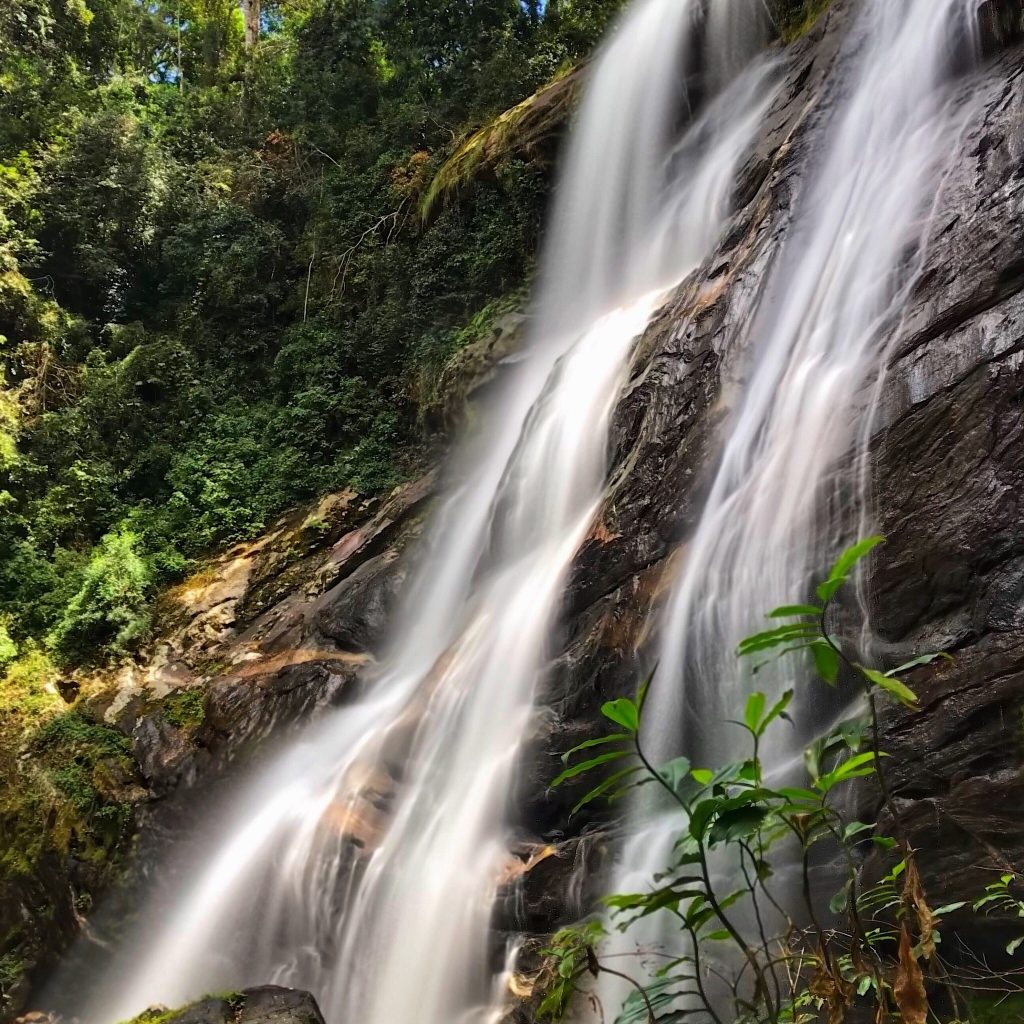
Prince Bernhard Falls is the shortest guided waterfall walk in Udzungwa Mountains National Park, reached on a trail of roughly one and a half hours return from the headquarters at Mang’ula. A park guide is compulsory and the same day permit covers it, so most visitors add it to an arrival afternoon. The falls take their name from Prince Bernhard of the Netherlands, who opened the park in 1992 in his role with the World Wide Fund for Nature.
People often treat this as the consolation prize for anyone not walking to Sanje. That undersells it. The forest here is dense, close and full of movement, and an hour on this path teaches you more about how to look at rainforest than a hard climb does.
The Prince Bernhard Falls Trail in Udzungwa Mountains National Park
The Prince Bernhard Falls trail starts within walking distance of the park headquarters, which is unusual in a park where most trailheads need a transfer. You register, pay the conservation fee, collect a guide and set off on foot. No vehicle, no tuk tuk, no waiting.
The path climbs gently through lowland forest, following the sound of water for most of its length. Some sources put the round trip at ninety minutes, others closer to three hours if you take the longer loop and linger at the pool, and both are accurate depending on which version your guide walks. It is not steep in the way the Sanje climb is steep. There are steps cut into the slope in places, roots elsewhere, and a couple of stream crossings that are easy in the dry months and require care after rain.
Who Prince Bernhard Was and Why the Falls Carry His Name
The naming is not decorative. Udzungwa Mountains National Park was gazetted in 1992 with backing from the World Wide Fund for Nature, and Prince Bernhard of the Netherlands, a co founder of the organisation, formally opened it. The falls near the headquarters were given his name at the same time.
That history matters more than it might sound. Udzungwa was protected late by Tanzanian standards, well after Serengeti and Mikumi, and the case for it rested almost entirely on biodiversity rather than big game. There are no lions to sell here and no road to drive them on. What the park protects instead is one of the most species rich forest blocks in Africa, and a walk to these falls sits inside that story rather than beside it.
What You Walk Through on the Prince Bernhard Waterfall Hike
Lowland forest, mostly, at the base of an escarpment that rises steeply behind. The trees are tall and buttressed, the understorey is thick, and light arrives in patches rather than evenly. Ferns crowd the stream banks. Fallen trunks carry moss and small orchids that guides will point out if you ask, and few visitors do.
The falls themselves are modest next to Sanje, a single drop into a shaded pool with rock on three sides. That scale is part of why the spot works. You stand close enough to feel the spray without shouting over it, and the pool is a good place to sit for twenty minutes doing nothing in particular.
Swimming is possible for anyone who likes cold water in shade. Most people wet their feet and leave it there.
Primate Watching on the Prince Bernhard Falls Walk
Four species of monkey use this stretch of forest, and the lower trails near the headquarters are as reliable for them as anywhere in the park. Udzungwa red colobus, a species restricted entirely to this mountain block, feed high in the canopy and give themselves away by dropping fruit. Black and white colobus sit still for long periods and are easy to miss. Blue monkeys move lower and faster. Yellow baboons work the forest edge near the road.
The Sanje mangabey, the park’s other endemic primate, is present in the wider forest but rarely on this short path. Do not build the walk around hoping for it. What you will very likely get is a decent look at red colobus, which is not a small thing given how few places on earth hold them.
Birdwatching Tours Along the Lower Forest Path
Udzungwa holds around 400 bird species, and the low altitude forest along this trail is where several of the easier forest birds are found. Silvery cheeked hornbills cross overhead with a wingbeat you hear before you see. Trumpeter hornbills call from the taller trees. Green barbets, forest weavers and various greenbuls work the mid storey.
Serious birders come here for the Eastern Arc specialities, and the rarer ones sit higher up the mountain than this walk goes. Still, an early morning birdwatching tour on this path in good light produces a respectable list, and the camp at the park boundary has recorded well over eighty species within its own grounds. Bring binoculars even if you would not describe yourself as a birder.
Butterflies and Endemic Plants on the Short Falls Trek
The stream margins on this trail are one of the better butterfly spots in the park, particularly through the wetter months from November to May, when mud puddling groups gather on the damp ground and lift in clouds as you pass. Charaxes species, swallowtails and dozens of smaller ones are present, and the park has never been fully catalogued for them.
On the botanical side, Udzungwa protects more than 2,500 plant species, with roughly a quarter of them found only in the Eastern Arc. African violets grow wild in this range, which surprises people who only know them from windowsills. Guides trained through the park’s programmes will point out medicinal species used in the surrounding villages, and that part of the walk tends to hold the attention of visitors who thought they had come for the waterfall.
Combining Prince Bernhard Falls With Longer Udzungwa Hikes
This trail is rarely the whole plan, and it works best as part of a fuller Udzungwa hiking safari. Two combinations are common. The first pairs it with the Sonjo circuit, another short walk near the headquarters, reaching the lower Sonjo fall in about twenty minutes with a steeper option continuing to a second fall above. Together they fill a comfortable half day.
The second uses it as an arrival warm up before the Sanje climb or a multi day trek onto the plateau. Trekking groups heading for Mwanihana Peak, a route of roughly 38 kilometres over two or three days, often walk to Prince Bernhard Falls the afternoon before setting off, mainly to test boots and legs on real terrain rather than on tarmac.
Family Friendly Walking Tours to Prince Bernhard Falls
This is the trail to choose if you are travelling with children, older parents, or anyone whose knees have opinions. The distance is short, the gradient forgiving, and there is a clear reward at the end that children can swim in. Guides are patient with a slow pace and will stop for as long as a seven year old wants to watch a column of ants cross the path.
Prams do not work here. Carriers do. Full sun is not an issue under canopy, but insect repellent is, and long sleeves are more comfortable than they sound in the humidity.
Best Time for a Prince Bernhard Falls Walk
The walk runs year round. Dry season from June to October gives the surest footing and the easiest stream crossings, plus cooler mornings, with night temperatures at altitude dropping towards nine degrees and days sitting around twenty one. The wetter months from November to May bring heavier water over the falls, better butterflies and slippery ground on the short steep pitches.
Getting to the Prince Bernhard Falls Trailhead
Everything begins at the park headquarters at Mang’ula, on the road between Mikumi town and Ifakara. Dar es Salaam is five to six hours away by road via Chalinze, Morogoro and the highway that runs straight through Mikumi National Park. From Mikumi itself the drive is about 65 kilometres and takes roughly ninety minutes. Iringa lies two to three hours to the southwest.
The TAZARA train stops at Mang’ula station, and Ifakara bound buses pass the gate. Because this trailhead sits beside the headquarters rather than out along the road, you can register, pick up a guide and be walking within twenty minutes of arriving.
Frequently Asked Questions About Prince Bernhard Falls
How much does it cost to visit Prince Bernhard Falls?
The park conservation fee is 30 US dollars per person for non resident adults, roughly 35.40 with value added tax, valid for 24 hours and covering any trail you walk in that period. A compulsory guide costs in the region of 20 dollars per day, charged per guide rather than per head. Children between five and fifteen pay about 10 dollars, under fives are free, and East African citizens pay a shilling rate of 5,000 for adults.
How long is the walk to Prince Bernhard Falls?
Roughly ninety minutes return on the standard route, stretching to two or three hours if you take the longer loop or spend time at the pool. It is the shortest of the park’s named waterfall walks and the only one that starts on foot from the headquarters.
Is Prince Bernhard Falls suitable for children?
Yes, for children who are comfortable walking for an hour or so on uneven ground. The gradient is mild compared with the Sanje trail, the distance is short, and the pool at the end holds their attention. Carriers work for smaller children. Wheeled buggies do not.
Can you swim at Prince Bernhard Falls?
There is a small pool at the base and swimming is permitted, though it sits in shade and stays cold. Most visitors wade rather than swim properly. If swimming is the priority, the upper pool on the Sanje trail is the better target.
Which monkeys might I see on this trail?
Udzungwa red colobus are the most likely, along with black and white colobus and blue monkeys. Yellow baboons frequent the forest edge nearer the road. The Sanje mangabey lives in the park but is seldom seen on this short path, and the quieter Njokamoni trail gives better odds. As with all wildlife walking, nothing is promised.
Do I need to book this walk in advance?
Not usually. Guides are allocated at the headquarters when you register, and the trail is short enough that groups rarely queue. Booking ahead makes more sense in the busy dry season months, or if you want a guide with a particular strength such as birds or plants.
Booking Your Udzungwa Trip
The safari companies and tour operators listed on this website put trips like this together for a living and know which camps, guides and routes actually deliver. We are an independent guide to Udzungwa; we do not book or sell tours ourselves.
When you are ready, arrange your safari, tour or holiday with one of the recognised operators listed here. Tell them your dates and what matters most, and a real person, not a form, will handle the itinerary, park bookings and logistics for you.