Sanje Waterfalls (~170m)
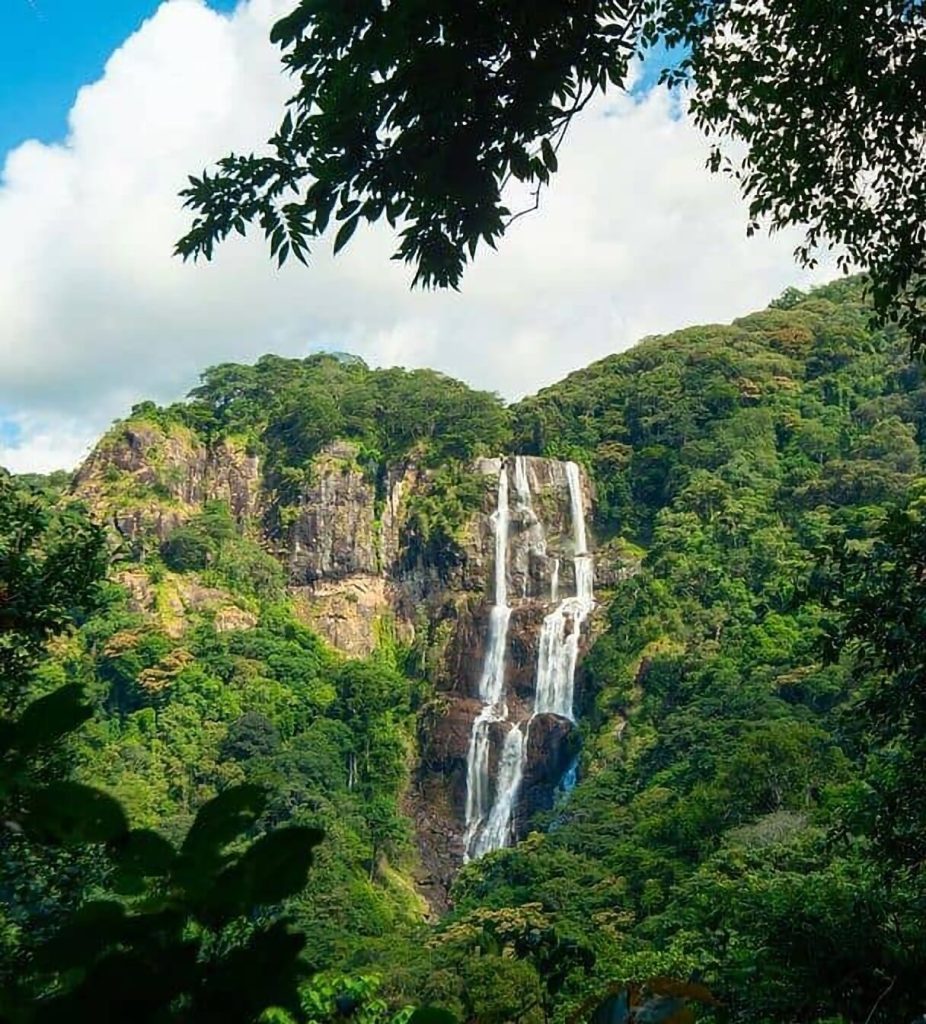
The Sanje Waterfalls drop roughly 170 metres in three tiers through rainforest in Udzungwa Mountains National Park, reached on a guided climb of four to six hours return with a swimmable plunge pool at the upper fall. A licensed park guide is compulsory and hikes start from the headquarters at Mang’ula. Udzungwa sits in south central Tanzania, part of the ancient Eastern Arc chain, about ninety minutes by road from Mikumi National Park.
If you have been told this is the best day hike in southern Tanzania, that is a fair claim. It is also steeper than most people expect from the photographs.
The Sanje Waterfall Hiking Safari in Udzungwa Mountains National Park
A Sanje Waterfall hiking safari begins at the park headquarters, where you register, pay the conservation fee and are assigned a guide. From there it is a short hop by tuk tuk or vehicle to the trailhead near Sanje village. The path enters lowland forest almost immediately and starts to climb within the first ten minutes.
The route gains around 450 metres over roughly four and a half kilometres each way. It is a proper forest trail: tree roots, loose stone, a couple of stream crossings on logs, and long stretches where the canopy blocks any sense of where you are in the climb. Guides set the pace to the group and stop often, partly to let people breathe and partly because that is when the monkeys show themselves.
Morning departures are standard. Midday on the lower section is hot and airless, and the sun sits better on the falls before noon.
The Three Tiers of Sanje Falls Along the Trekking Route
Sanje is not a single curtain of water. The stream drops in three distinct stages, and the trail reaches them in an order that builds rather than peaks early. The middle fall arrives first, viewed from a ledge with spray drifting across the path on windy days. Above that, a harder pull brings you to the top tier, which falls about forty metres into a pool ringed by forest.
The lowest and largest drop sits below the main path. Reaching its base takes a twenty minute detour, either on the way up or on the descent from the old Sanje hotel ruins, and it is the view most people remember: looking straight up at the full height of water coming off the escarpment.
Not everyone does both. Ask your guide at the start which detours you want, since it changes the timing by an hour or so.
Swimming at the Sanje Falls Plunge Pool
Swimming is allowed, and this is one of the few national parks in Tanzania where you can say that. The pool beneath the upper fall is cold, deep enough in the middle, and surrounded by rock you can sit on to dry off. Most groups spend twenty or thirty minutes here before turning back.
The pool at the base of the lower fall is warmer, larger, and popular with people who prefer jumping in from the rocks to easing in slowly. Water volume changes through the year, so what is a gentle pool in September becomes a churning one in April. Guides will say plainly when it is not sensible.
Bring a towel. Nobody ever does.
Primate Tracking on the Sanje Waterfall Trail
The Sanje trail doubles as one of the better primate tracking walks in the park. Udzungwa red colobus feed in the canopy along the lower and middle sections, black and white colobus move through the taller trees, and blue monkeys work the understorey. The Sanje mangabey, which takes its name from this very stretch of forest and lives nowhere else on earth, is the one everyone hopes for and the hardest to find on the busiest trail.
Sightings are common but never guaranteed. Groups that walk quietly and stop when the guide stops do far better than those talking their way uphill. Red duiker sometimes cross the path low down, and elephant shrews, properly called sengis, bolt through the leaf litter and are gone before most people register what moved.
Kilombero Valley Viewpoints on the Sanje Falls Climb
Two thirds of the way up, the forest thins at a rock shelf and the whole Kilombero Valley opens out below. Sugar cane and rice fields run flat to the horizon, the Kilombero River threads through them, and on a clear morning the far escarpment is visible across the plain.
It is the payoff for the middle section of the climb, which is otherwise enclosed and repetitive. Photographers should plan for this to be a morning shot, since haze builds through the day and the valley disappears into it by early afternoon.
The Sanje Waterfall Overnight Camping Trek
There is a two day version of this hike for anyone who would rather sleep in the forest than walk back down the same afternoon. It covers about nine kilometres across two days with the same 450 metre gain, and the night is spent at a campsite under the canopy above the falls.
What changes is the sound. Tree hyrax calls start after dark and carry a long way, nightjars work the clearings, and the forest is a different place at five in the morning than it is at eleven. The camp team from the lodge at the gate carries tents and food and sets everything up, so this is a soft introduction to camping rather than a survival exercise. It also gives you the falls to yourself at first light, before any day groups arrive.
How Difficult the Sanje Waterfalls Hike Really Is
Moderate, with one hard section. Reasonably fit people who walk regularly manage it without drama. The difficulty is not technical, it is sustained: a long climb in humidity with uneven footing, and a descent that punishes tired knees more than the ascent punishes lungs.
Trekking poles help on the way down. Trainers with worn tread do not. During and after rain the root covered sections become genuinely slippery and the pace drops. Children of about eight upward do fine on the shorter lower falls option, which takes two to three hours return and skips the steep upper pull entirely.
Best Time for a Sanje Waterfalls Trek
June through October is the reliable window. Trails firm up, the steep sections stop being a hazard, and the valley views are clearest. The falls keep flowing well through these months because the forest generates its own moisture off the Indian Ocean side of the range, so the dry season does not reduce them to a trickle the way it does elsewhere.
From November to May the water is heavier and the forest greener, with the long rains from March to May bringing the most dramatic volume and the worst footing. Butterflies are at their best in the wetter months, and at the right time of year the sides of the gorge fill with fireball lilies.
Getting to the Sanje Trailhead for Your Hike
All hikes start with registration at the park headquarters at Mang’ula, beside the main road to Ifakara. From Dar es Salaam the drive runs five to six hours through Chalinze, Morogoro and Mikumi town. From Mikumi National Park it is about 65 kilometres and ninety minutes, which is why so many people fold the two parks into one trip. Iringa is two to three hours away on the other side.
The TAZARA railway stops at Mang’ula station, and buses towards Ifakara pass the gate. Once registered, the trailhead is a few kilometres north of the headquarters, and tuk tuks run the gap cheaply. Some lodges near the gate will drop you there and collect you at the end.
Frequently Asked Questions About the Sanje Waterfalls
How much does it cost to hike to Sanje Waterfalls?
Non resident adults pay a park conservation fee of 30 US dollars per person, about 35.40 once value added tax is added, valid for 24 hours. A licensed guide is compulsory and costs in the region of 20 dollars per day, charged per guide rather than per person, so groups share it. Some operators bundle guide and walking fees into a full day rate of around 50 dollars per person. Children between five and fifteen pay a reduced entry fee, and under fives go free.
How high are the Sanje Waterfalls?
Around 170 metres in total across three tiers, with some sources rounding it to 180. The uppermost drop, the one with the swimming pool at its base, accounts for about forty of those metres. It is among the highest waterfalls in Tanzania and by some distance the most accessible of them.
Can you swim at Sanje Falls?
Yes. The plunge pool beneath the top tier is the usual swimming spot, and there is a warmer, larger pool at the base of the lower fall reached by a short detour. Water levels rise sharply in the rainy months and guides will call it off when the current is unsafe. Nobody minds if you only paddle.
How long does the Sanje Waterfall hike take?
Four to six hours return for the full route, depending on pace, how many detours you add, and how long you spend swimming. The shorter lower falls option takes two to three hours. Guides usually recommend leaving the headquarters by eight in the morning.
Do I need a guide to hike to Sanje Waterfalls?
Yes, without exception. Park rules require a licensed guide on every trail in Udzungwa, and there is no self guided option. Guides are assigned at the headquarters when you register and pay, so booking in advance is not necessary for a day hike, though it does no harm during the busier dry season months.
What should I wear for the Sanje trail?
Shoes with real grip, long trousers if you dislike scratches, and a shirt you do not mind sweating through. Add a swimsuit, a small towel, insect repellent and at least two litres of water. A dry bag or plastic sleeve for a camera is sensible near the pools, where spray carries further than you expect.
Booking Your Udzungwa Trip
The safari companies and tour operators listed on this website put trips like this together for a living and know which camps, guides and routes actually deliver. We are an independent guide to Udzungwa; we do not book or sell tours ourselves.
When you are ready, arrange your safari, tour or holiday with one of the recognised operators listed here. Tell them your dates and what matters most, and a real person, not a form, will handle the itinerary, park bookings and logistics for you.