Which Endemic Species Live in Udzungwa?
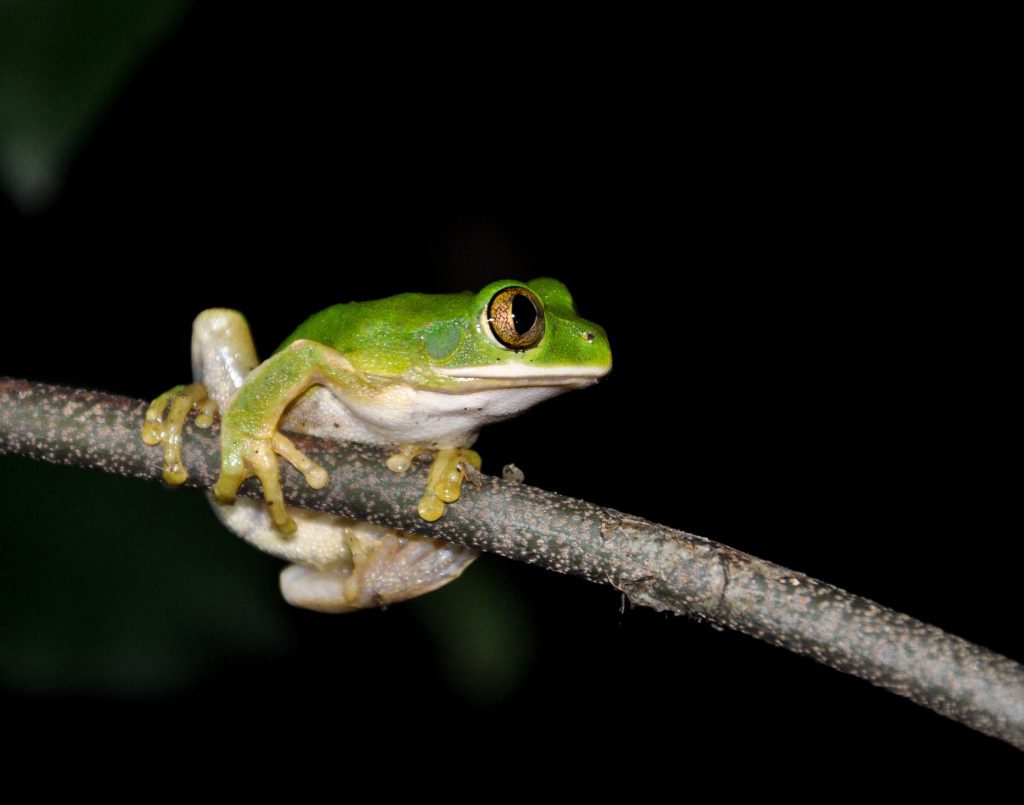
Udzungwa Mountains National Park holds twenty vertebrate species found only in this mountain block, among them the Udzungwa red colobus, the Sanje mangabey, the grey faced sengi and the Udzungwa forest partridge, plus roughly a quarter of its 2,500 plant species restricted to the Eastern Arc. All are seen on guided walks from the Mang’ula gate. Udzungwa sits in south central Tanzania and is the largest range in the Eastern Arc chain.
The list below is not complete, and that is the point. Species are still being described from these mountains, which is not something you can say about many places.
Udzungwa Red Colobus: The Signature Endemic
The Udzungwa red colobus, Piliocolobus gordonorum, also called the Iringa red colobus, exists only in this range and the lowland forest at its foot. A spiky red crown over black and white body fur makes it unmistakable once you have seen one.
Population estimates run between thirty and forty thousand with the majority inside the park, and the species prefers low altitude forest over high, which makes it the endemic most visitors actually see. Troops feed along all the short trails and regularly visit the grounds of the camp on the park boundary. It is listed as endangered, mainly because the lowland forest it favours is the forest most easily cleared.
Sanje Mangabey: Found Only in These Mountains
The Sanje mangabey, Cercocebus sanjei, was unknown to science until the late nineteen seventies and recognised as a distinct species in 1986. Grey, fifty to sixty five centimetres in body length with a long tufted tail, it forages on the ground as much as in the canopy.
Numbers are thought to be around two thousand, split between two separated populations, one of them in the Mwanihana forest above Mang’ula. It is endangered and shy, which makes it the hard one. The quiet Njokamoni trail and the higher stretches of the Mwanihana trek give the best chance, and park staff have habituated one troop, so ask at the headquarters what is currently accessible.
Kipunji: A New Genus Found in Ndundulu Forest
The kipunji, Rungwecebus kipunji, was found in Ndundulu Forest in 2004 by two research teams working independently and placed in a genus of its own, the first primate discovery of that magnitude in more than eighty years. Shaggy, brown, almost entirely arboreal and restricted to cold high altitude forest.
It is near endemic rather than strictly so, since a second population lives on Mount Rungwe in the Southern Highlands. Wild numbers run to only a few hundred. Reaching its habitat means a Luhombero expedition of five to seven days, and a sighting is a genuine long shot even then.
Grey Faced Sengi and Other Endemic Small Mammals
The grey faced sengi, Rhynchocyon udzungwensis, is a giant elephant shrew described from these mountains within the last two decades and known from nowhere else. It forages in leaf litter on the forest floor and is heard bolting away far more often than it is seen.
Two shrews join it on the endemic list: the Phillips’s Congo shrew and a mouse shrew, both known only from this range. Abbott’s duiker, one of Africa’s least seen antelope, is an Eastern Arc endemic present here. Camera trapping has produced most of what science knows about all of them, which tells you how likely a chance sighting is.
Endemic Birds of the Udzungwa Forests
Around 400 bird species are recorded across the park with roughly twenty five restricted to these mountains. The Udzungwa forest partridge, described in 1991, is the celebrated one, since its closest known relatives are the hill partridges of Asia rather than anything African.
The rufous winged sunbird is another recent description and another Udzungwa speciality. Beyond the strict endemics, the montane forest holds Eastern Arc birds that birders travel for: dappled mountain robin, Sharpe’s akalat, olive flanked robin chat, white chested alethe and Mrs Moreau’s warbler. They live high, so reaching them means the Hidden Valleys circuit or a leg of the Mwanihana trek rather than the waterfall walks.
Endemic Plants and Trees of the Eastern Arc
Some 2,500 plant species have been recorded here, with roughly a quarter found only in the Eastern Arc, and around thirty six tree species are Eastern Arc endemics or near endemics. Across the chain as a whole the figure often quoted is 800 plant species restricted to it.
Wild African violets grow in this range, which startles people who know them only as houseplants. Orchids sit on mossy trunks and go unnoticed unless a guide points them out. In the lowland forest at the foot of the mountains, Verdcourt’s Polyalthia, the large leaved Memecylon, Luke’s Cynometra and Heinsen’s Isolona are all threatened trees with very small ranges.
Reptiles, Amphibians and Invertebrates Still Being Described
Butterflies run to dozens of species and have never been fully catalogued. Anyone walking a stream margin between November and May is looking at insects that may not all have names yet.
Where the Endemic Species Are Found in the Park
Altitude sorts them. Red colobus, blue monkeys and Angolan colobus occupy the lowland forest that all the short trails cross. The Sanje mangabey ranges through submontane forest, best reached on Njokamoni or partway up the Mwanihana route. Eastern Arc birds and the kipunji live in montane and bamboo zones that only multi day treks reach.
Below the park entirely, the lowland forest at Magombera holds a healthy red colobus population along with several of the threatened trees, on a flat five kilometre trail where the monkeys are considerably more relaxed about people than they are on the mountain.
Why So Much Endemism Is Concentrated Here
Isolation over an enormous stretch of time. The Eastern Arc mountains are fault bounded blocks of Precambrian rock that have stood as separate highland islands for roughly thirty million years, holding forest through climate swings that stripped it from the surrounding lowlands again and again.
Species cut off up there had no route out and nothing arriving to compete with them, so they diverged. Udzungwa adds a second advantage: its forest still runs unbroken from around 250 metres to 2,576, which is rare in African mountains and lets populations move between altitudes rather than sitting marooned in fragments.
Best Time to Look for Udzungwa’s Endemic Species
June through October gives firm trails and the easiest access to the higher habitats where most of the rarer endemics live. The wetter months bring peak butterfly and amphibian activity and the best birding, with harder walking.
Getting to Udzungwa to See the Endemics
Register at the headquarters at Mang’ula on the road between Mikumi town and Ifakara. Dar es Salaam is five to six hours away via Chalinze, Morogoro and the highway through Mikumi National Park, and Mikumi itself around 60 kilometres north. Iringa is two to three hours southwest.
The TAZARA train stops at Mang’ula station and Ifakara buses pass the gate. The camp on the park boundary is worth basing at, since four primate species including red colobus are seen in its grounds regularly.
Frequently Asked Questions About Udzungwa’s Endemic Species
What does it cost to look for endemic species here?
There is no special permit. The standard park conservation fee is 30 US dollars per person for 24 hours for non resident adults, about 35.40 with value added tax, plus a compulsory guide at around 20 dollars per day charged per guide rather than per head. Multi day treks reaching the high altitude endemics run 400 to 500 dollars per person, and the Luhombero expedition 800 to 1,200.
How many endemic species are there in Udzungwa?
Twenty vertebrate species are restricted to this mountain block alone, out of forty six Eastern Arc endemics recorded here. Add roughly a quarter of the park’s 2,500 plant species as Eastern Arc endemics, and an unknown number of invertebrates that have never been fully surveyed.
Which endemic am I most likely to see?
The Udzungwa red colobus, without much competition. It favours the lower forest that every short trail passes through and often appears in the grounds of the camp on the park boundary. The Sanje mangabey is the difficult one, and the kipunji is effectively out of reach for ordinary visitors.
Are new species still being found?
Yes. The kipunji was described in 2004, the grey faced sengi within the last two decades, the Magombera chameleon in the 2000s and at least one endemic snake more recently. Long term monitoring runs from an ecological research centre at Mang’ula, and much of the range has never been surveyed on foot.
Are these species threatened?
Several are. The Sanje mangabey and Udzungwa red colobus are both listed as endangered, and the kipunji likewise. Pressure comes from forest clearing for farmland, logging, charcoal production, hunting and fire, particularly in the lowland forest outside the park boundary where several patches have already been lost.
Can I see endemic species outside the national park?
Yes. The nature reserve at Magombera, in lowland forest at the eastern foot of the range, protects a red colobus population along with the Magombera chameleon, the Udzungwa dwarf galago and several rare trees. Its flat five kilometre trail suits visitors who want the wildlife without the climbing.
Booking Your Udzungwa Trip
The safari companies and tour operators listed on this website put trips like this together for a living and know which camps, guides and routes actually deliver. We are an independent guide to Udzungwa; we do not book or sell tours ourselves.
When you are ready, arrange your safari, tour or holiday with one of the recognised operators listed here. Tell them your dates and what matters most, and a real person, not a form, will handle the itinerary, park bookings and logistics for you.