Endemic Species Habitats
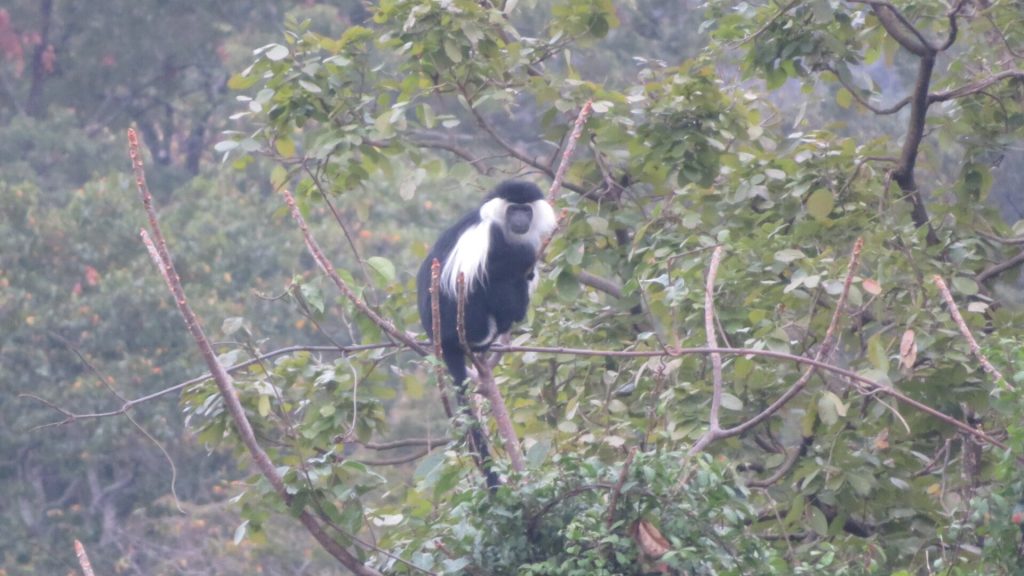
The endemic species habitats of Udzungwa Mountains National Park are layered by altitude, running from lowland forest at around 250 metres up through submontane and montane forest to bamboo near 2,576 metres, with each band holding species found nowhere else. Guided walks and treks reach different layers, so which habitat you see depends entirely on which trail you book. Udzungwa lies in south central Tanzania and protects the largest forest block in the Eastern Arc chain.
Twenty Eastern Arc endemic vertebrates are restricted to this single mountain block. That number is the reason biologists have been working here continuously for decades while most tourists drive past on the way to Ruaha.
Endemic Species Habitats on an Udzungwa Wildlife Safari
An Udzungwa wildlife safari works on foot, since the park has no interior roads, and the practical consequence is that you sample habitat bands rather than covering ground. A four hour walk stays in lowland and submontane forest. A three day trek crosses six or seven zones. Neither is better; they show different animals.
What makes this range unusual is continuity. Forest here runs unbroken from the valley floor to the summits, which is rare in African mountains where the lowland belt has usually been cleared. Species still move up and down that gradient with the seasons, and the whole system behaves as one rather than as isolated patches.
Lowland Forest Habitat of the Udzungwa Red Colobus
The Udzungwa red colobus, also called the Iringa red colobus, lives only in this mountain block and is most common in lower altitude forest rather than high up. Total population estimates run somewhere in the range of thirty to forty thousand, with the bulk of it inside the national park.
That preference for low ground is exactly what makes the species vulnerable, because low ground is what people farm. It also makes them the easiest endemic to see. Troops feed along the Sanje, Sonjo, Prince Bernhard and Njokamoni trails, and they visit the grounds of the camp on the park boundary regularly enough that some visitors watch them over breakfast. Look for movement in the mid canopy and for fruit dropping onto the path.
Mwanihana Forest and the Sanje Mangabey
The Sanje mangabey is the park’s other strict endemic, unknown to science until the late nineteen seventies and thought to number only a couple of thousand. It lives in two separated populations within the range, one of them in the Mwanihana forest above Mang’ula, and it forages on the ground as much as in the trees.
Shyness is the obstacle. On the busy Sanje path the mangabey usually keeps out of sight, so the better odds are on the quiet Njokamoni trail or high on the Mwanihana route. Park staff have also worked with one troop to habituate it to people, which has improved viewing considerably for visitors who ask about mangabey tracking by name. Sightings remain a matter of luck on any given morning.
Ndundulu Forest and the High Altitude Kipunji Habitat
Higher and deeper into the range, the Luhombero and Ndundulu forest block covers something over 230 square kilometres between roughly 1,100 and 2,520 metres. This is where the kipunji was found in 2004, described independently by two research teams and placed in a genus of its own, the first primate discovery of that scale in more than eighty years.
It is shaggy, brown, almost entirely arboreal and restricted to cold high altitude forest, with a second population on Mount Rungwe in the Southern Highlands. Wild numbers are thought to run to only a few hundred. Reaching this habitat means a Luhombero expedition of five to seven days, and even then a sighting is a long shot. Most people who have seen one were doing fieldwork rather than hiking.
Miombo Woodland and the Forest Edge Species
At the bottom of the gradient, open brachystegia woodland fringes the park where forest meets farmland. It looks nothing like rainforest: widely spaced trees, grass underfoot, light coming straight through. The Mwanihana trail starts in it and the longer Sonjo route passes through it.
Butterflies gather here in numbers through the wetter months, and the park holds dozens of species that have never been properly catalogued. Yellow baboons work this belt, along with bushbuck and duiker, and certain rarer primates drop down out of the denser forest to feed for part of the day. It is the habitat visitors write off in advance and then find themselves enjoying.
Riverine Forest and the Grey Faced Sengi
Streams cut through every altitude band here and the forest along them holds a distinct set of species. The grey faced sengi, a giant elephant shrew described from these mountains in the last two decades, forages in leaf litter on the forest floor and is far more often heard bolting away than actually seen.
Two other small mammals, the Phillips’s Congo shrew and a mouse shrew, are also known only from this range. Abbott’s duiker, an Eastern Arc endemic and one of Africa’s least seen antelope, moves through the same ground. Camera trapping has produced most of what science knows about all of them, which tells you something about how likely a chance sighting is.
Montane and Bamboo Zones for Eastern Arc Birds
Around 400 bird species are recorded across the park, with roughly twenty five restricted to these mountains. The specialists live high. The Udzungwa forest partridge, found in 1991 and whose closest relatives appear to be the hill partridges of Asia, lives in montane forest. The rufous winged sunbird was described only recently. Dappled mountain robin, Sharpe’s akalat, olive flanked robin chat and white chested alethe all belong to the upper forest.
Six species of galago live across these bands, which makes the range unusually rich in nocturnal primates. The mountain galago found here may prove distinct on the basis of its calls, and the taxonomy is still being worked out.
Magombera Forest Outside the Park Boundary
Not every important habitat sits inside the park. Magombera, a lowland forest patch at the eastern foot of the range, holds one of the healthiest remaining red colobus populations outside the protected area. Other lowland fragments in the Kilombero Valley have been badly reduced or lost entirely in recent decades.
That matters for the species that prefer low altitude, since the park protects the mountain rather than the plain. Buffer zone work, revenue sharing with surrounding villages and long term monitoring run out of an ecological research centre at Mang’ula, supported by TANAPA, the Tanzanian Forest Service and international conservation bodies.
Guided Walks That Reach the Endemic Habitats
For red colobus, any of the short trails will do, and the camp grounds at the boundary often deliver without walking at all. For mangabey, take the Njokamoni trail or ask about the habituated troop. For upper forest birds, the Hidden Valleys circuit at six to seven hours gets you above 1,300 metres in a day. For the full altitude sweep, the 38 kilometre Mwanihana trek over three days crosses everything from miombo to heather.
Best Time to Visit the Endemic Habitats
June through October gives the firmest trails and the easiest walking, which matters most for the higher habitats. The wetter months from November to May bring peak butterfly and amphibian activity, migrant birds and heavier waterfalls, with slippery ground on the steep sections.
Getting to Udzungwa for a Wildlife Walking Safari
Every visit starts at the park headquarters at Mang’ula, on the road between Mikumi town and Ifakara. Dar es Salaam is five to six hours away via Chalinze, Morogoro and the highway that crosses Mikumi National Park. From Mikumi it is about 65 kilometres, roughly ninety minutes. Iringa lies two to three hours to the southwest.
The TAZARA railway stops at Mang’ula station and Ifakara buses pass the gate. Accommodation sits along the road at Mang’ula, with a solar powered camp on the park boundary where colobus troops move through the grounds, and simpler guesthouses in the village.
Frequently Asked Questions About Udzungwa’s Endemic Species
How much does it cost to see the endemic primates?
The park conservation fee is 30 US dollars per person for 24 hours for non resident adults, about 35.40 with value added tax. A compulsory guide adds around 20 dollars per day, charged per guide rather than per head. That is the whole cost for a day walk targeting red colobus or mangabey. Multi day treks reaching the high altitude habitats run 400 to 500 dollars per person, and the Luhombero expedition 800 to 1,200.
Which species are found only in Udzungwa?
The Udzungwa red colobus and the Sanje mangabey among primates, the grey faced sengi among small mammals, and the Udzungwa forest partridge among birds. The kipunji is near endemic, shared with Mount Rungwe. Twenty Eastern Arc endemic vertebrates are restricted to this block alone, and roughly a quarter of the park’s 2,500 plant species occur only in the Eastern Arc.
Where am I most likely to see the Sanje mangabey?
On the Njokamoni trail, which carries very few walkers, or high on the Mwanihana route. Park staff have habituated one troop, so ask at the headquarters whether that group is currently accessible. On the busy Sanje path the species usually stays hidden. No sighting is guaranteed on any forest walk.
Can I see endemic species without a long trek?
Yes, for the red colobus. They favour lower altitude forest and feed along all the short trails near the headquarters, and they regularly visit the grounds of the camp on the park boundary. The higher altitude endemics need multi day walking, and the kipunji needs a full expedition and considerable luck.
Why are there so many endemic species here?
Isolation over a very long period. The Eastern Arc mountains have stood as separate highland blocks for something like thirty million years, holding forest through climate shifts that stripped it from surrounding lowlands. Species cut off on these mountains diverged with no route out and no arriving competition, which is why the range is sometimes compared to the Galapagos.
Are the endemic habitats under threat?
Yes, particularly the lowland forest that the red colobus prefers. Clearing for farmland, logging, charcoal production, hunting and fire all press on the boundary, and patches outside the park in the Kilombero Valley have already been heavily reduced. Park fees feed into buffer zone programmes and monitoring, which is worth knowing when you pay at the gate.
Booking Your Udzungwa Trip
The safari companies and tour operators listed on this website put trips like this together for a living and know which camps, guides and routes actually deliver. We are an independent guide to Udzungwa; we do not book or sell tours ourselves.
When you are ready, arrange your safari, tour or holiday with one of the recognised operators listed here. Tell them your dates and what matters most, and a real person, not a form, will handle the itinerary, park bookings and logistics for you.