Njokamoni Waterfall
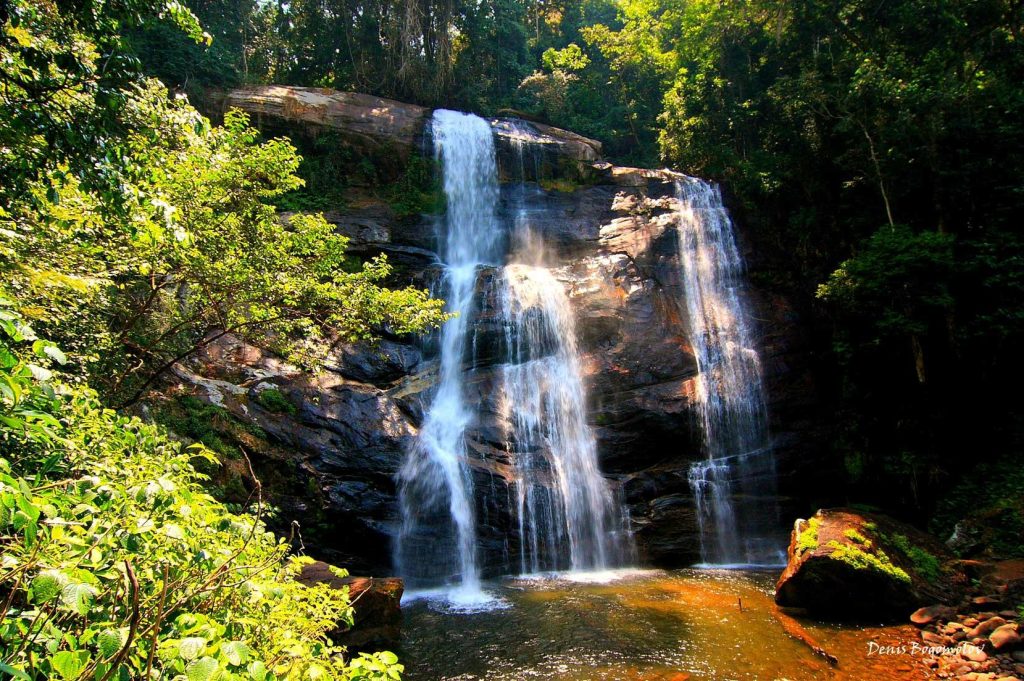
Njokamoni Waterfall sits at the top of a quiet forest trail in Udzungwa Mountains National Park, reached on a guided hike of four to five hours return covering roughly five to six and a half kilometres. The walk starts at the park headquarters at Mang’ula and finishes on the road below the forest camp, with a pool at the falls you can cool off in. Udzungwa lies in south central Tanzania, part of the Eastern Arc range, and holds two primate species found nowhere else.
Most visitors never hear of this trail. That is precisely why the guides who care about primates keep recommending it.
The Njokamoni Waterfall Trail in Udzungwa Mountains National Park
The Njokamoni trail mirrors the far busier Sanje route in length and altitude gain, running around six and a half kilometres with a waterfall at the top and a similar climb through lowland into submontane forest. What differs is traffic. Sanje sees most of the park’s day visitors. Njokamoni sees a handful.
You register at the headquarters, pay the conservation fee and set off with a licensed guide, since walking alone is not permitted anywhere in this park. The path climbs behind the forest camp on the park boundary and follows the Njokamoni River upstream, crossing it more than once. The same stream supplies water to the camp below, which is a small detail that makes the geography click into place once you are back down.
The walk ends about a kilometre below the camp on the main road rather than looping back to the start, so arrange the pickup before you leave.
Sanje Mangabey Tracking on the Njokamoni Hike
This is the trail’s real draw. The Sanje mangabey is an endangered monkey restricted entirely to the Udzungwa Mountains, unknown to science until the late nineteen seventies and thought to number only a couple of thousand in the wild. It is shy, ground foraging as much as arboreal, and it avoids disturbance. On the busy Sanje path it usually stays out of sight.
Njokamoni carries so little foot traffic that troops feed close to the trail. Guides working this route regularly report several groups in a morning, sometimes moving through the canopy directly overhead. Udzungwa red colobus, the park’s other endemic primate, are common here too, along with black and white colobus and blue monkeys.
None of that is a promise. Monkeys move, and a quiet day happens on any forest walk. The odds, though, are better here than anywhere else that can be done in a single day.
What the Njokamoni Waterfall Itself Is Like
Smaller than Sanje and altogether more intimate. The water comes off a rock face into a pool ringed by forest, with enough space on the stones to sit and eat lunch. Volume swings hard with the season, running heavy from March to May and settling into something gentler through the dry months without ever drying up, since the range makes its own weather off the Indian Ocean moisture that hits its eastern slopes.
Splashing about in the pool is standard practice at the top and most groups do it. It is cold. After four hours of climbing in humidity, that is the point.
Forest Mammals and Birds Along the Njokamoni River
Quiet trails produce sightings that busy ones do not. Red duiker cross the path low down and freeze rather than bolt if you stop moving. Squirrels work the trunks. Elephant shrews, properly sengis, rustle through the leaf litter and vanish, and the Udzungwa range holds the grey faced sengi, a giant species described only in the last two decades and known from these mountains alone.
For birds, the Njokamoni forest walk passes through the altitude band where several Eastern Arc species live. Silvery cheeked and trumpeter hornbills are heard more often than seen. Greenbuls, forest weavers and green barbets work the mid storey, and the river attracts kingfishers along its lower reaches. Udzungwa holds around 400 recorded bird species overall, with roughly twenty five of them restricted to this mountain block.
How the Njokamoni Trek Compares With the Sanje Waterfall Hike
People ask which of the two to do, and the honest answer depends on what you want from the day. Sanje delivers the bigger waterfall, a 170 metre drop in three tiers, a swimmable upper pool and a viewpoint over the Kilombero Valley that is genuinely worth the climb. Njokamoni delivers solitude and better primate odds.
If you only have one day and have never seen a big tropical waterfall, take Sanje. If you have two days, or if the endemic monkeys are the reason you came to Udzungwa at all, Njokamoni earns its place.
Difficulty and Timing of the Njokamoni Waterfall Walk
Moderate. The climb is sustained rather than brutal, spread over more distance than the sharp final pull on Sanje, and the river crossings add a little balance work on wet stone. Reasonably fit walkers manage it without trouble. Four to five hours is the standard round trip, and that assumes stopping properly rather than marching.
Start early. Guides prefer a departure by eight, both for the heat and because primates feed in the first hours after dawn and go quiet through the middle of the day. Footwear with grip matters here more than on the shorter trails, particularly on the crossings. Two litres of water per person is a sensible minimum, since there is nowhere safe to refill.
Photography on the Quiet Njokamoni Forest Trail
Forest photography is hard and this trail is no exception. Light under closed canopy is low and contrasty, monkeys sit high against bright sky, and autofocus struggles through leaves. A fast lens helps. So does accepting high ISO rather than fighting it.
The better opportunities are at ground level: the river, ferns catching a shaft of light, fungi on fallen trunks, and butterflies gathered on damp sand at the crossings. At the falls, spray reaches further than it looks, so keep a cloth handy and a bag for the camera while you swim. Guides on this route are used to photographers wanting to wait, and because nobody is queueing behind you, waiting is actually possible.
Best Time for a Njokamoni Waterfall Trek
June through October is the practical window. Trails firm up, crossings are easy, and the humidity eases slightly at altitude, with nights dropping towards nine degrees and days near twenty one. Waterfall volume stays respectable because the forest holds its own moisture through the dry months.
From November to May the picture changes. Rain arrives in bursts before Christmas and settles into the long rains from March to May, when this trail becomes slippery and the crossings need real care. Butterflies peak in the wet months, and the forest is at its greenest, so photographers sometimes accept the harder walking as a trade.
Getting to the Njokamoni Trailhead
The walk begins at the park headquarters at Mang’ula, on the road running from Mikumi town towards Ifakara. From Dar es Salaam it is five to six hours by road through Chalinze, Morogoro and the highway that cuts across Mikumi National Park. From Mikumi the drive is around 65 kilometres, about ninety minutes, which is why the two parks pair so naturally on a southern circuit trip. Iringa lies two to three hours southwest.
The TAZARA railway serves Mang’ula station and buses towards Ifakara stop at the gate. Because the trail finishes a kilometre below the forest camp rather than back at the headquarters, tell your driver or lodge where to collect you. Guides sort this at the start if you mention it.
Frequently Asked Questions About Njokamoni Waterfall
How much does the Njokamoni waterfall hike cost?
Non resident adults pay a park conservation fee of 30 US dollars per person, about 35.40 with value added tax, valid for 24 hours. A licensed guide is compulsory at roughly 20 dollars per day, charged per guide rather than per person, so a group of four splits it. Some operators quote a full day guided rate of around 50 dollars per person that folds both together. Children between five and fifteen pay a reduced entry fee and under fives go free.
How long is the Njokamoni trail?
Around five to six and a half kilometres, taking four to five hours return at a normal walking pace with stops. It is similar in length and height gain to the Sanje trail but spreads the climb more evenly, and it ends on the road below the forest camp instead of returning to the trailhead.
Is Njokamoni the best trail for seeing the Sanje mangabey?
Among the day walks, yes. The trail carries so few visitors that mangabey troops feed close to it, and guides working this route see them regularly. The multi day Mwanihana trek is also strong for this species. Nothing is guaranteed on any forest walk, and quiet groups moving slowly do considerably better than talkative ones.
Can you swim at Njokamoni Waterfall?
Yes. There is a pool at the top where most groups cool off before heading down. It is cold and shaded, and levels rise sharply during the long rains, so take your guide’s advice on any day when the water is running hard.
Do I need a guide for this trail?
Yes. Every trail in Udzungwa requires a licensed park guide and there is no self guided option anywhere in the park. Guides are assigned at the headquarters when you register. On this route the guide also arranges the finish point, which matters since the walk does not loop back.
Can I do Njokamoni and Sanje on the same permit?
Not comfortably. Each is a four to six hour walk, and the conservation permit runs for 24 hours from payment, so doing both on one fee would mean two long hikes in a single day. Most people spread them across two days and pay two conservation fees, which is still modest by Tanzanian national park standards.
Booking Your Udzungwa Trip
The safari companies and tour operators listed on this website put trips like this together for a living and know which camps, guides and routes actually deliver. We are an independent guide to Udzungwa; we do not book or sell tours ourselves.
When you are ready, arrange your safari, tour or holiday with one of the recognised operators listed here. Tell them your dates and what matters most, and a real person, not a form, will handle the itinerary, park bookings and logistics for you.