Which Animals Are Most Common in Udzungwa?
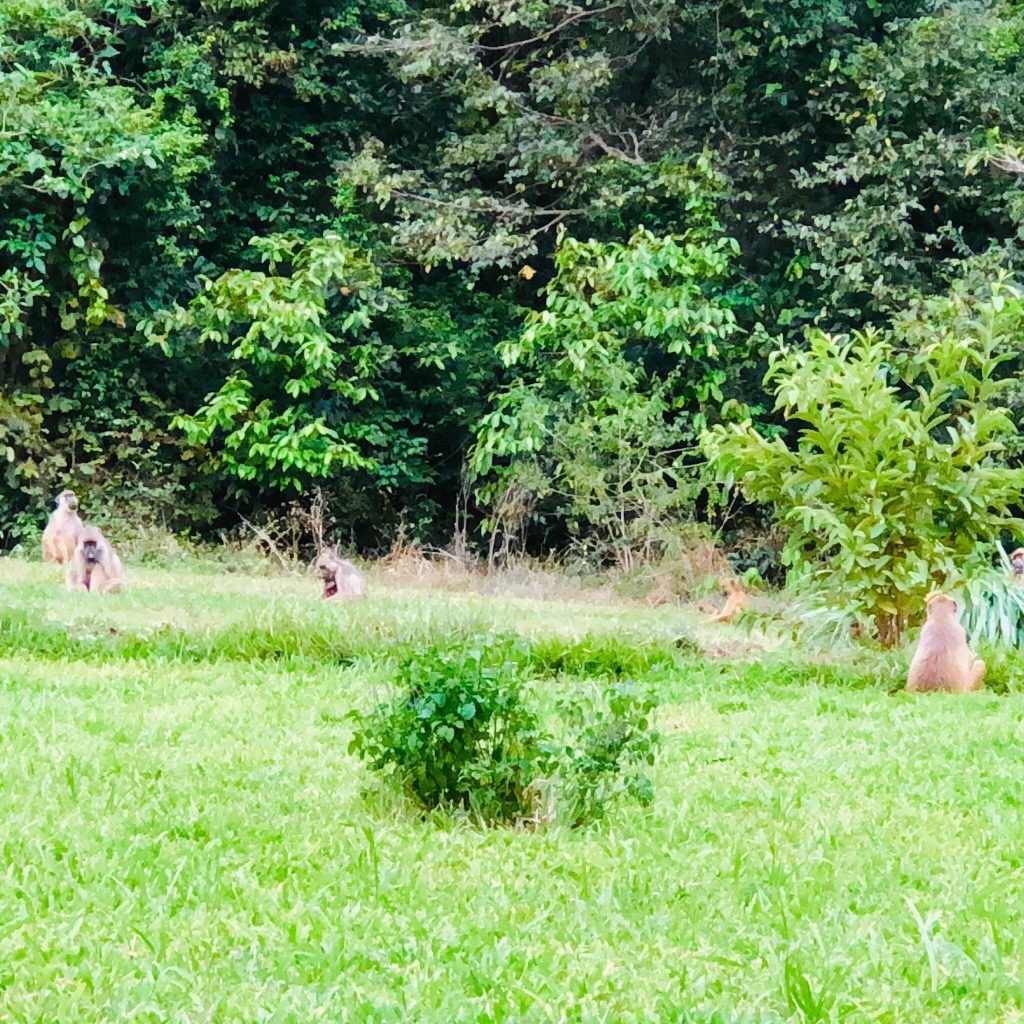
The animals seen most often in Udzungwa Mountains National Park are monkeys: Udzungwa red colobus, Angolan black and white colobus, blue monkeys and yellow baboons, all of which turn up on the short forest trails near the Mang’ula gate. Duikers, bushbuck, squirrels and hornbills follow, while elephant and buffalo are usually read as tracks rather than seen. Udzungwa is a walking park in south central Tanzania with over 300 recorded animal species and no interior roads.
Set expectations correctly and this park delivers. Arrive hoping for the sightings a savannah reserve produces and it will disappoint you.
Monkeys: The Animals You Will Almost Certainly See
Four primate species account for most sightings on any Udzungwa wildlife walk. The Udzungwa red colobus is the headline one, found only in this mountain block, with a total population estimated between thirty and forty thousand and a preference for lower altitude forest that puts it directly on the short trails.
Angolan black and white colobus sit high and still for long periods, black bodied with long white shoulder fringes. Blue monkeys, often called Sykes monkeys here, work the understorey faster and lower. Yellow baboons occupy the forest edge near villages and the road.
All four are seen regularly in the grounds of the camp on the park boundary, where visitors have reported watching three of them from the restaurant.
The Sanje Mangabey and the Harder Sightings
The Sanje mangabey is the park’s other strict endemic and the one that separates a good day from an ordinary one. Grey, fifty to sixty five centimetres in body length with a tufted tail, it forages on the ground as much as in the trees and numbers perhaps two thousand across two separated populations.
It is not common in the sense of being reliably seen. On the busy Sanje trail it usually stays out of sight, and the better odds sit on the quiet Njokamoni route or high on the Mwanihana trek. Park staff have habituated one troop, which helps considerably, so ask at the headquarters what is currently accessible.
Forest Antelope: Duikers and Bushbuck
Red duiker cross the trails low down and tend to freeze rather than bolt if you stop moving, which gives you a few seconds if the group stays quiet. Bushbuck use the forest edge and the miombo belt, and the Hidden Valleys circuit is rated as the best route in the park for both.
Abbott’s duiker, an Eastern Arc endemic and one of the least seen antelope in Africa, is present in the higher forest. Realistically nobody sees it on a hiking trip. Camera trapping has produced almost everything known about the species, which tells you what your chances look like standing on a trail.
Elephants and Buffalo on the Plateau
Both are present and both are why an armed ranger is compulsory on the higher trails. Elephants live in the forests along the southern escarpment and use the open grassy corridors on the plateau, and the Mwanihana route sees them with some regularity.
For day walkers near the gate, elephants are effectively absent. What you find instead is sign: tracks in the mud, dung on the path, broken branches. On the Hidden Valleys circuit, ground burnt by fire years ago now carries low vegetation riddled with elephant tracks. At Magombera below the mountains, elephant sign is abundant and the animals move through at dawn and dusk.
Small Mammals of the Forest Floor
Elephant shrews, properly sengis, rustle through leaf litter and vanish before most people register what moved. The grey faced sengi is a giant species known only from these mountains, described within the last two decades.
Squirrels work the trunks and are among the more visible small mammals. Tree hyrax are heard rather than seen, and their calls after dark carry a long way and startle first time visitors at the camp. Palm civet, Miombo genet and hyena appear on the park’s mammal list, along with leopard, which is present and almost never seen by anybody.
Hornbills and the Commonest Birds
Around 400 bird species are recorded in the park, and a handful account for most of what a walker notices. Three hornbill species use the forest edge, and the camp on the boundary takes its local name from the Swahili word for hornbill, with birds flying in every evening at sunset while the valley echoes.
Silvery cheeked and trumpeter hornbills are heard before they are seen. Greenbuls, green barbets and forest weavers work the mid storey. Crowned eagles hunt monkeys in this forest. Along the wetlands beside the Mang’ula road, herons, kingfishers and cisticolas are easy additions to any list.
Butterflies, Reptiles and Amphibians
Butterflies are among the most abundant animals here and the ones most visitors underestimate. Dozens of species gather at damp ground along stream margins, particularly through the wetter months, sometimes lifting in clouds as you pass. The park’s butterfly checklist has never been considered complete.
Chameleons and lizards are numerous, with several endemic species. Frogs call from every pool during the long rains, when amphibian activity peaks. A new snake species endemic to the park has been recorded in recent years, which is a fair illustration of how much remains uncatalogued.
What You Are Realistically Likely to See in a Day
Two or three primate species is a normal half day. Four is a good one. Nothing in a rainforest is guaranteed, and groups that walk quietly see roughly twice what talkative ones do.
How Animal Sightings Compare With a Savannah Park
The difference is not fewer animals but a different kind of looking. On the Mkata floodplain at Mikumi, ninety minutes north, wildlife stands in the open at a distance and a vehicle brings you to it. Here the animals are close, partly hidden and above your head, and you walk to them.
That changes the arithmetic of a good day. Twenty species seen briefly from a car is a normal Mikumi morning. Four species watched properly over several minutes each is a normal Udzungwa one, and one of those four may be a monkey that exists nowhere else in the world. Visitors who understand that trade before arriving come away pleased. Those expecting a forest version of a game drive rarely do.
Best Time to See the Common Animals
Early morning matters more than the month. Primates feed hardest in the first hours after dawn and go quiet through the middle of the day, and the same window suits birds. Guides push for an eight o’clock start and earlier is better.
Animals You Will Hear Rather Than See
Sound does a lot of the work in this forest. Tree hyrax start calling after dark and carry a long way, and the noise is genuinely startling on a first night at the camp. They are not primates, though most guests assume they are.
Hornbills announce themselves with a wingbeat you hear before the bird appears. Galagos call from the dark and are almost never seen. Duikers and sengis are usually a rustle in leaf litter that has stopped by the time you turn your head. Guides identify a good deal by ear alone, and asking what a sound was tends to produce a better answer than scanning for the animal yourself.
Getting to Udzungwa for Wildlife Walking
Register at the headquarters at Mang’ula on the road between Mikumi town and Ifakara. Dar es Salaam is five to six hours away via Chalinze, Morogoro and the highway through Mikumi National Park, with graded dirt for the last 24 kilometres from Kidatu. Mikumi is around 60 kilometres north and Iringa two to three hours southwest.
Staying at the camp on the park boundary is the single best move for wildlife, since four primate species and over eighty bird species have been recorded in the grounds without anyone leaving the property.
Frequently Asked Questions About Udzungwa’s Animals
What does it cost to see wildlife here?
There is no separate wildlife permit. The conservation fee is 30 US dollars per person for 24 hours for non resident adults, about 35.40 with value added tax, plus a compulsory guide at roughly 20 dollars per day charged per guide rather than per head. Children between five and fifteen pay around 10 dollars. Multi day treks reaching the plateau where elephants range run 400 to 500 dollars per person.
Which animal is most commonly seen?
The Udzungwa red colobus. It favours the lower altitude forest that every short trail crosses, and troops move through the grounds of the camp on the park boundary regularly. Black and white colobus and blue monkeys come close behind.
Are there lions in Udzungwa?
No. There are no lions and no rhino. Elephant, buffalo and leopard are present, but this is dense forest, so elephant and buffalo are mostly read as tracks and leopard is almost never seen. For big game the neighbouring Mikumi National Park, ninety minutes north, is the right destination.
How many species live in the park?
Over 300 animal species have been recorded, including around 400 birds, twelve primates and a mammal list that runs well beyond what visitors ever meet. Twenty vertebrate species are restricted to this mountain block alone, and the butterfly and reptile lists remain incomplete.
Will I see anything on a short trail?
Very probably. Prince Bernhard, about a kilometre from the headquarters, regularly produces red colobus and baboons in thirty to forty five minutes. The Sonjo circuit adds miombo species. Short does not mean poor here, because the commonest animals live at low altitude.
Is night wildlife viewing possible?
Not as a standard park activity. Six galago species live in the range and are heard far more often than seen, and much of the night calling around the camp is tree hyrax rather than primate. Ask your guide, since some will take interested guests out with a torch around the lodge grounds.
Booking Your Udzungwa Trip
The safari companies and tour operators listed on this website put trips like this together for a living and know which camps, guides and routes actually deliver. We are an independent guide to Udzungwa; we do not book or sell tours ourselves.
When you are ready, arrange your safari, tour or holiday with one of the recognised operators listed here. Tell them your dates and what matters most, and a real person, not a form, will handle the itinerary, park bookings and logistics for you.