Giant Udzungwa Rainforest Tree Named as a New Species
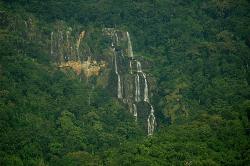
A giant rainforest tree from the western foothills of the Udzungwa Mountains was described as a species new to science in the journal Phytotaxa in 2025, and reported by Mongabay on 20 March 2025. Named Tessmannia princeps, it is known from about 100 mature individuals in two small village forest reserves, and ring counts on a fallen specimen suggest the largest trees may be 2,000 to 3,000 years old.
The description is credited to Andrea Bianchi, Luca Tomasi, Aloyce Mwakisoma, Michele Barbieri and Quentin Luke, published in Phytotaxa 694(2): 109-118. Bianchi told Mongabay he first came across the trees in 2019 while surveying with the local plant experts Aloyce and Ruben Mwakisoma, neither of whom recognised the species.
How old, and how sure
The age estimate deserves care, and the researchers themselves flag it. The team sampled a tree that had fallen naturally and counted 12 to 15 growth rings per centimetre of wood. If each ring is one year, the biggest trees would be two to three thousand years old. Bianchi cautioned to Mongabay that ring counting is unreliable for rainforest trees that grow through two wet seasons a year, and the team plans radiocarbon dating on a core from a living tree to settle it. Until that is done the figure is an indication rather than a measurement.
What is not in doubt is the size. The trees reach about 40 metres, pushing their crowns clear of the surrounding canopy on heavy buttress roots, which is where the species name comes from: princeps is Latin for most eminent. Other members of the genus Tessmannia are mostly West African, which makes the Udzungwa population geographically odd.
Outside the park boundary
The trees are not inside Udzungwa Mountains National Park. They grow in the Boma la Mzinga and Uluti Village Land Forest Reserves in the Mngeta Valley, on land surrounded by abandoned cropland. That is worth stating plainly, because a good deal of what makes the Udzungwas important sits outside the park in reserves and village land, a pattern that also shapes the Eastern Arc forest as a whole.
Both reserves fall within the Udzungwa Corridor, a roughly 75 square kilometre block of former farmland that Udzungwa Corridor Limited is restoring in partnership with local landowners. The intention, as Mongabay reported, is to reconnect the Uzungwa Scarp Nature Forest Reserve with the Kilombero Nature Forest Reserve and with the national park to the north-east. A restored corridor would matter for far more than trees, since forest connectivity is the constraint on most of the habitats the range’s endemic animals depend on.
The small population and tiny distribution make the species vulnerable to extinction, according to the description. It may simply need conditions found nowhere outside the Mngeta Valley.
Why a name changes things
Arafat Mtui, based at the Udzungwa Ecological Monitoring Centre at Mang’ula, told Mongabay that new species descriptions give conservationists something concrete to work with, prompting studies of ecology, distribution, population size and threats. He cited the Magombera chameleon, described in 2009, which helped make the case for upgrading Magombera forest to a formal reserve in 2019. Both sit within the network of conservation projects operating around the mountains.
For visitors there is no trail to these trees and no arrangement to see them. The nearest equivalent experience is on the park side, where guided walks focused on plants and forest structure cover the same forest types, and where the older, buttressed hardwoods along the lower rainforest trails give a reasonable sense of scale.