What Makes Udzungwa Unique?
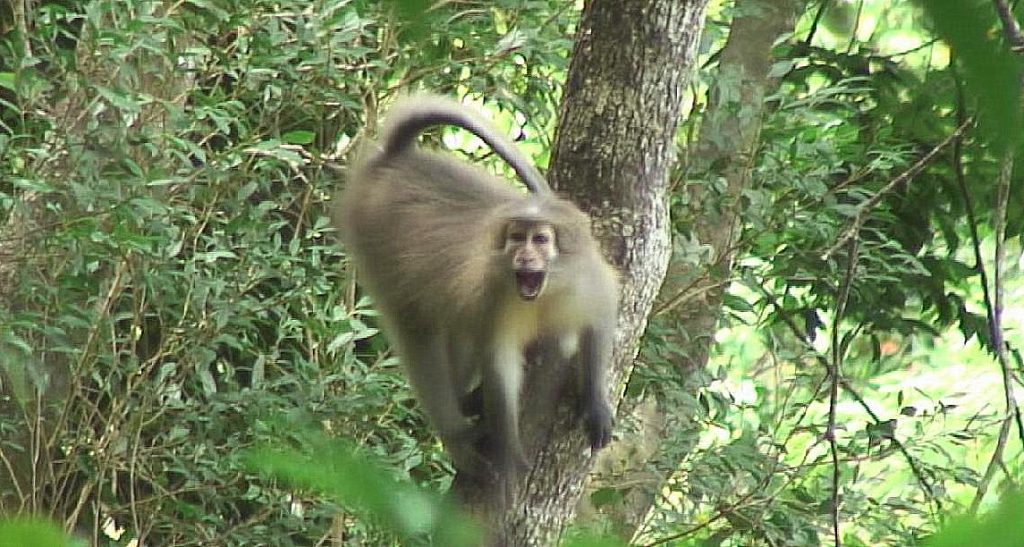
Udzungwa Mountains National Park is the only Tanzanian national park with no interior roads, which makes it a walking park rather than a driving one, and it protects the largest surviving block of Eastern Arc rainforest with two primate species that live nowhere else on earth. Visits run as guided day hikes or multi day treks booked at the Mang’ula gate. The park covers 1,990 square kilometres in south central Tanzania and holds forest that has stood in isolation for roughly thirty million years.
Every other reason people give for coming here follows from that isolation. The endemism, the discoveries, the sense that nobody has finished counting what lives in this forest.
Udzungwa’s Unbroken Forest Gradient from 250 to 2,576 Metres
Most tropical mountain forests in Africa survive as fragments. The lowland belt gets cleared for farming and only high patches remain, cut off from each other. Udzungwa is one of very few ranges where forest still runs continuously from around 250 metres near the valley floor to the summit of Luhombero at roughly 2,576.
Species move up and down that gradient with the seasons rather than being marooned at one altitude. For a walker on a Udzungwa hiking safari, the practical result is that a single trail changes character every few hundred metres of climbing. The Mwanihana route crosses miombo woodland, lowland forest, grassy plateau, submontane and montane forest, bamboo and heather in two days of walking.
The Only Tanzanian National Park With No Roads
There is no game drive circuit in Udzungwa because there is no road network to drive. Everything inside the boundary is reached on foot along trails ranging from twenty minute strolls to the 65 kilometre Lumemo route walked over five days.
That single fact changes the experience completely. You move at three kilometres an hour instead of thirty, under canopy rather than through open plain, and the wildlife you see is what tolerates you being there on foot. A licensed guide is compulsory on every trail, and the higher routes require an armed ranger because elephant and buffalo use the plateau.
Visitor numbers stay low as a result. This park has been described as averaging fewer than thirty visitors a day, which is unheard of on the northern circuit.
Two Primates That Live Nowhere Else on Earth
The Udzungwa red colobus and the Sanje mangabey are found in these mountains and nowhere else in the world. The mangabey was unknown to science until the late nineteen seventies and is thought to number around two thousand. The red colobus runs to perhaps thirty or forty thousand, mostly inside the park, favouring lower altitude forest.
The near endemic kipunji was described from Ndundulu Forest in 2004, placed in a genus of its own, and was the first primate discovery of that magnitude in more than eighty years. Twelve primate species live in the range altogether, including six galagos, which makes it exceptionally rich for nocturnal species too.
Thirty Million Years of Isolation in the Eastern Arc
The Eastern Arc mountains are fault bounded blocks of ancient Precambrian rock, gneiss and quartzite and schist, uplifted along rift lines and standing as separate highland islands for something like thirty million years. Forest persisted on them through climate swings that stripped it repeatedly from the surrounding lowlands.
Species trapped on those blocks had nowhere to go and nothing arriving to compete with them, so they diverged. The comparison people reach for is the Galapagos, and here it is earned rather than borrowed. The chain runs from the Taita Hills in Kenya down through Tanzania, and Udzungwa is the largest range in it.
Waterfall Hiking Instead of Game Drives
Sanje Falls drops roughly 170 metres in three tiers and is among the highest waterfalls in Tanzania, reached on a climb of four to six hours with swimming allowed in the plunge pool at the upper tier. Swimming inside a Tanzanian national park is itself unusual.
Other falls sit on shorter trails. Prince Bernhard, about a kilometre from the headquarters, is named for the Dutch prince who opened the park in 1992 and who, at eighty four, could not manage the Sanje climb. Sonjo has two cascades on a gentle three kilometre circuit. Njokamoni, Msolwa and Mwaya add more. The range holds water year round because the forest generates its own moisture off the Indian Ocean side of the escarpment.
The Density of Endemic Plants and Birds
Around 2,500 plant species have been recorded, with roughly a quarter found only in the Eastern Arc. Wild African violets grow here, which surprises anyone who knows them as houseplants. Some 800 plant species and 96 vertebrates are restricted to the Eastern Arc chain as a whole, and twenty vertebrate species occur in the Udzungwa block alone.
Birds run to around 400 species with roughly twenty five confined to these mountains. The Udzungwa forest partridge, found in 1991, has its closest relatives among the hill partridges of Asia, which is a genuinely strange piece of biogeography. Birders rank the area among the top few mainland African conservation sites.
Species Still Being Discovered in These Mountains
A new snake species endemic to the park has been recorded more recently still. Long term monitoring runs out of an ecological research centre at Mang’ula, and camera trapping has produced most of what is known about the shyer mammals.
Cultural and Historical Sites Inside the Park
The name comes from the Kihehe word Wadzungwa, meaning people who live on the mountainsides, and the Hehe are the people of this range. That relationship left marks on the ground.
Udzungwa is the only Tanzanian national park known to hold a culturally important natural cave, and the site survived destruction before the park was gazetted because of traditional taboos protecting it. Bokela, treated as a mountain deity, is visible from the Prince Bernhard trail. Mwanaruvele and Magombereka caves, and the Nyumbanitu and Ndundulu mountains, all carry cultural weight locally.
How Udzungwa Differs from Tanzania’s Savannah Parks
There are no lions to look for and no plains to cross. Elephant and buffalo are present but move through dense forest, so you read their tracks far more often than you see them. Leopard exist and are almost never seen.
What you get instead is closeness. Monkeys thirty metres up rather than a kilometre away across grassland, butterflies rising off wet sand at a stream crossing, orchids on a mossy trunk that your guide has to point out before you notice. Entry fees sit in the lower TANAPA band, well below Serengeti or Kilimanjaro rates, and the crowds are simply not there.
Best Time to Visit for a Udzungwa Trekking Trip
June through October gives firm trails and the best chance of clear views from altitude. The wetter months from November to May bring heavier waterfalls, peak butterflies and migrant birds, with the long rains from March to May making the steep sections slippery and some high routes impractical.
Getting to Udzungwa Mountains National Park
The headquarters at Mang’ula sit on the road between Mikumi town and Ifakara, about 60 kilometres and ninety minutes from Mikumi. Dar es Salaam is five to six hours away via Chalinze, Morogoro and the highway that crosses Mikumi National Park, with tarmac ending at Kidatu and graded dirt covering the final 24 kilometres. Iringa lies two to three hours southwest.
The TAZARA train stops at Mang’ula station and Ifakara buses pass the gate. Kilombero airstrip sits 24 kilometres from the headquarters and takes charters.
Frequently Asked Questions About Udzungwa
How much does it cost to visit Udzungwa?
Non resident adults pay 30 US dollars per person for a 24 hour conservation permit, roughly 35.40 with value added tax, which puts the park in TANAPA’s lower fee band alongside Mikumi and Ruaha. Children between five and fifteen pay about 10 dollars and under fives are free. A compulsory guide adds around 20 dollars per day, charged per guide rather than per person. Multi day treks run 400 to 500 dollars per person.
Why is Udzungwa called the Galapagos of Africa?
Because the Eastern Arc mountains have functioned as isolated islands of forest for roughly thirty million years, allowing species to evolve separately from anything around them. The result is a concentration of endemic plants and animals that has no parallel elsewhere in Tanzania.
Can you do a game drive in Udzungwa?
No. There are no roads inside the park boundary, which makes it the only Tanzanian national park where driving is not an option. All access is on foot along trails, with a licensed guide required and an armed ranger on the higher routes.
What animals will I actually see?
Monkeys, most reliably. Udzungwa red colobus are common on the lower trails, along with black and white colobus and blue monkeys. Yellow baboons work the forest edge. Duiker and bushbuck cross the paths. Elephant and buffalo are present but seen mainly as tracks unless you are on a plateau trek. Nothing is guaranteed on a forest walk.
Is Udzungwa worth visiting on its own?
For hikers, birders and anyone interested in forest ecology, yes. For visitors set on big game, it works better as a contrast alongside Mikumi rather than as a standalone destination. The two parks sit ninety minutes apart, which is why most itineraries combine them.
How many visitors does the park get?
Very few by Tanzanian standards, with figures suggesting an average of under thirty a day. Trails are quiet even in peak season. What does fill up is accommodation, since there is one comfortable camp on the boundary and a handful of village guesthouses, so beds are worth booking well ahead.
Booking Your Udzungwa Trip
The safari companies and tour operators listed on this website put trips like this together for a living and know which camps, guides and routes actually deliver. We are an independent guide to Udzungwa; we do not book or sell tours ourselves.
When you are ready, arrange your safari, tour or holiday with one of the recognised operators listed here. Tell them your dates and what matters most, and a real person, not a form, will handle the itinerary, park bookings and logistics for you.