Sanje Mangabey Observation in Udzungwa National Park
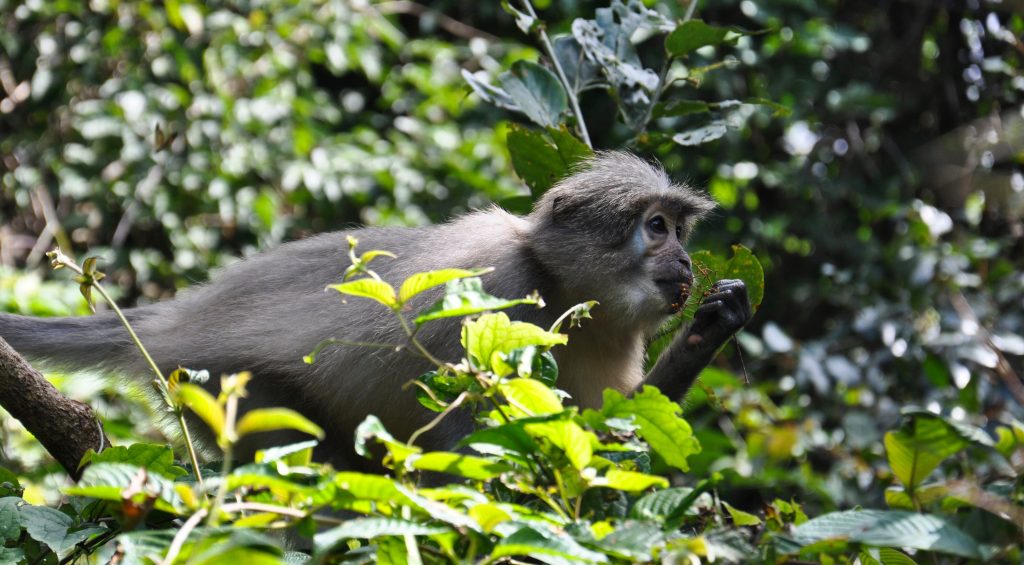
Sanje mangabey observation means walking the quieter forest trails of Udzungwa Mountains National Park in search of an endangered monkey that lives here and nowhere else, with perhaps two thousand individuals split across two separated populations. The Njokamoni trail and the Mwanihana trekking route give the best chances, and park staff have habituated one troop. Udzungwa sits in south central Tanzania and is the only place on earth this species occurs.
Be clear about the odds before booking. This is the difficult primate in a park where the other endemic is easy.
What the Sanje Mangabey Is
Cercocebus sanjei, a member of the white eyed mangabey group, was unknown to science until the late nineteen seventies and recognised as a distinct species in 1986. Greyish, fifty to sixty five centimetres in body length not counting the tail, with a tuft at the end of a long grey tail.
It carries an endangered listing and numbers around two thousand in the wild. Unusually for a forest monkey, it forages on the ground as much as in the canopy, which changes how you look for it: guides watch the leaf litter and listen for movement at ground level rather than scanning overhead the way they would for colobus.
Where the Species Lives Within the Park
Two separated populations exist inside the range, one of them in the Mwanihana forest above Mang’ula. Research suggests ancient subpopulations once occupied other forest blocks in the region, possibly including lowland forest in the Kilombero Valley, that have since disappeared.
Within Mwanihana, the species ranges through submontane forest, which sits above the band where the short waterfall trails run. That altitude is the practical reason a mangabey observation walk asks more of you than a red colobus one: you have to climb into its habitat and stay quiet once you are there.
The Njokamoni Trail: The Best Day Walk Option
Roughly six and a half kilometres over four to five hours, similar in length and altitude to the Sanje trail but walked by almost nobody. That absence of foot traffic is the whole point, because troops feed close to a path nobody uses.
Guides working this route report several groups in a good morning, sometimes moving through the canopy directly overhead. Red duiker, squirrels and sengis turn up along the way, and there is a waterfall with a bathing pool at the top. The trail starts at the headquarters and finishes on the road about a kilometre below the forest camp, so arrange the pickup before setting off.
The Habituated Troop and Park Research
Park staff have worked with one troop of mangabeys to habituate it to people, which has improved viewing considerably for visitors who ask about it. Habituation status and troop location both shift, so this is a question for the headquarters on the day rather than something to assume from a website.
The species has been studied here for decades. Long term work has looked at which habitat conditions correlate most strongly with population density, group size and composition in this monkey and the Udzungwa red colobus, and an ecological monitoring centre at Mang’ula has run standardised surveys and camera trapping since the mid two thousands. Trekkers on the Mwanihana route sometimes share a campsite with fieldworkers.
Mangabey Sightings on the Mwanihana Trek
The 38 kilometre Mwanihana route over two or three days climbs directly through the band this species uses, which makes it the strongest option for anyone prepared to camp. It is described as the most successful route in the park for spotting the mangabey.
Days start early on trail, which coincides with the hours when primates feed hardest. The route also crosses miombo, lowland forest, grassy plateau, montane forest and bamboo, so the mangabey is one target among several rather than the whole reason for the walk. An armed ranger accompanies every party because elephant and buffalo use the plateau.
Why the Species Avoids the Busy Trails
Shyness, straightforwardly. On the Sanje Waterfall trail, which carries most of the park’s day visitors, the mangabey usually keeps out of sight. It is not absent from that forest; it simply moves away from noise and regular disturbance.
This is worth understanding rather than resenting, because it explains every piece of advice a guide gives you. Walk quietly. Stop when the guide stops. Choose the trail nobody else is on. Groups that follow those three rules see considerably more than groups that treat the walk as exercise.
How to Watch Mangabeys Responsibly
Keep voices low and follow the guide’s lead on distance. Give a troop room when it crosses the path rather than closing in for a photograph, and never feed anything. Avoid pointing directly at animals.
Since the species forages at ground level, there is a real chance of coming across one at close quarters rather than overhead, which asks for stillness rather than movement. Where a habituated troop is involved, that tolerance was built patiently and is easy to damage. Photographers should shoot from where they are standing rather than manoeuvring for a better angle.
Comparing Your Chances by Route
Managing Expectations Before You Book
Worth saying plainly, because a good deal of published material about this park lists the mangabey as a headline attraction without qualifying it. Two thousand animals across an entire mountain range is not many. The species is shy, it avoids disturbed trails, and it can go unseen on a perfectly well run morning.
Book the walk for the forest rather than for the monkey. Njokamoni gives you a waterfall, a bathing pool, red colobus, black and white colobus, blue monkeys and a trail nobody else is on, and the mangabey is the possible bonus rather than the guaranteed centrepiece. Visitors who arrive with that framing tend to leave pleased whatever happens; those who booked expecting a sighting sometimes do not.
Best Time for Mangabey Observation
June through October, because that is when the quiet upper trails are in condition. The species is present year round, so the seasonal question is access rather than animal movement.
Early morning matters in any month, since the canopy goes quiet through the middle of the day.
Identifying a Mangabey in the Field
Confusion with the other monkeys is common on a first sighting, particularly at distance. Size is the first clue: this is a heavier, more solid animal than a blue monkey, greyish overall rather than olive or black and white.
The long grey tail ends in a tuft, which no other primate here has. Look at where the animal is, too. Colobus feed high and stay there, while a mangabey may well be moving across the forest floor turning over leaf litter, and a grey monkey on the ground in this park is almost certainly this species. Guides call the identification quickly, and asking what they used to make it is the fastest way to learn the difference yourself.
Getting to Udzungwa to Look for the Mangabey
Register at the headquarters at Mang’ula on the road between Mikumi town and Ifakara, where fees are paid and a guide assigned. Njokamoni begins there. Sonjo village, the start of the Mwanihana route, lies a short transfer north.
Mang’ula is five to six hours from Dar es Salaam via Chalinze, Morogoro and the highway through Mikumi National Park, and around 60 kilometres from Mikumi. Iringa is two to three hours southwest. Staying at the camp on the park boundary makes an early start straightforward.
Frequently Asked Questions About the Sanje Mangabey
Is there a permit for mangabey observation?
No. Unlike gorilla or chimpanzee tracking, there is no separate permit and no time limit. You pay the park conservation fee of 30 US dollars per person for 24 hours for non resident adults, roughly 35.40 with value added tax, plus a compulsory guide at around 20 dollars per day charged per guide rather than per head. A two or three day Mwanihana trek runs 400 to 500 dollars per person all in.
What are my chances of seeing one?
Reasonable on the Njokamoni trail or the Mwanihana trek, and poor on the busy Sanje path. Guides working the quiet routes report several troops in a good morning, and the habituated group improves matters further where it is accessible. Nothing is guaranteed, and a quiet day happens on any forest walk.
How many Sanje mangabeys are left?
Around two thousand in the wild, split across two separated populations within the Udzungwa range. The species is listed as endangered and occurs nowhere else on earth, which is why it features so heavily in the research work based at Mang’ula.
Where is the habituated troop?
Its location and current accessibility change, so ask at the headquarters when you register rather than planning around it in advance. Park staff have run the habituation work, and guides will tell you honestly whether the group is reachable on the day and which trail to take.
What does it look like compared with other monkeys here?
Greyish overall, larger and heavier looking than a blue monkey, with a long grey tail ending in a tuft. Body length runs fifty to sixty five centimetres. Unlike the colobus species it spends a great deal of time on the ground, which is often the first clue that you are watching a mangabey rather than something else.
Can I see it on a day trip from Mikumi?
Unlikely. A day trip fits the Sanje trail and nothing else, and that is the wrong trail for this species. Seeing a mangabey realistically means a night at Mang’ula so you can walk Njokamoni early, or a multi day trek.
Booking Your Udzungwa Trip
The safari companies and tour operators listed on this website put trips like this together for a living and know which camps, guides and routes actually deliver. We are an independent guide to Udzungwa; we do not book or sell tours ourselves.
When you are ready, arrange your safari, tour or holiday with one of the recognised operators listed here. Tell them your dates and what matters most, and a real person, not a form, will handle the itinerary, park bookings and logistics for you.