Patrol Data Show Illegal Activity Falling in Uzungwa Scarp
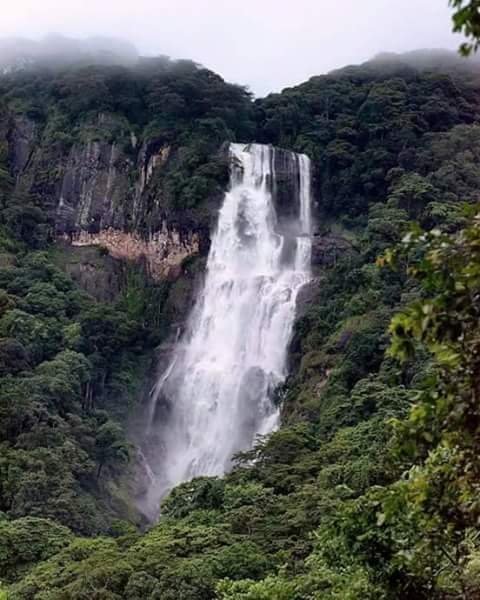
Six years of ranger patrol records from the Uzungwa Scarp Nature Forest Reserve show illegal activity falling overall, with habitat destruction dropping sharply but snaring proving stubborn. The analysis was posted as a preprint on Research Square on 8 May 2026 and has not yet been peer reviewed, which is worth keeping in mind: its conclusions could change before formal publication.
The authors are Galateia Goudeli, Neil D. Burgess, Trevor Jones, Godfrey Nyangaresi, Elikana John, Andrew E. Bowkett, Francesco Rovero and Jonas Geldmann. They worked from patrol data collected by rangers between 2018 and 2023.
What the patrol data show
The headline finding is a downward trend in recorded illegal activity across the six years. Habitat destruction, meaning clearing and encroachment, declined steeply. Poaching declined too, but more slowly and less consistently, and the paper attributes that mainly to the persistence of snaring.
The statistical modelling produced a caution that any reader of enforcement statistics should absorb. Patrol effort was the strongest predictor of how many snares and how much logging got recorded, which means detection rates rise with monitoring. More recorded incidents can indicate better patrolling rather than a worse problem, and fewer can indicate the opposite.
Where offences occurred also followed a pattern. Snares were associated with higher elevations and greater distances from main trails, while logging clustered at lower elevations nearer the reserve edge. That is the shape you would expect if hunters are walking in past the easily patrolled ground, and it matters for the forest mammals most often caught in snares.
The reserve in question
Uzungwa Scarp is not the national park. It is a separate protected area on the western side of the range, first gazetted as a forest reserve in 1929, left poorly protected for decades, and upgraded to Nature Forest Reserve status in 2016, which the preprint links to stronger management. Its condition has long been the weak point in the conservation picture across the Udzungwa forests, and it holds one of the two populations of the endemic Sanje mangabey along with a long list of species found nowhere else in the range.
Patrolling there is now part of a larger effort. The Udzungwa Landscape Strategy, a twenty-year plan reported by Mongabay in April 2025, covers three core protected areas, the national park, Kilombero Nature Forest Reserve and Uzungwa Scarp, plus 71 adjacent villages. The strategy aims to raise US$3 million a year and was initially funded by the Hempel Foundation and the Aage V. Jensen Charity Foundation. Around 80 per cent of the money is split evenly between protecting the forests and community wellbeing, with the remaining fifth going to human-wildlife conflict, collaboration, management and monitoring.
The Southern Tanzania Elephant Program, which leads the protected-area work, describes supporting 14-day joint foot patrols in each of the three areas every month, with teams combining reserve rangers and community scouts from neighbouring villages.
Fuel, farms and forest edges
Enforcement is only half of it. Mongabay reported that residents of 23 villages consulted in 2023 ranked fuel-efficient cooking stoves as their top priority, and that MACCO, one of the implementing organisations, had built more than 500 mud stoves benefiting over 2,400 people in five villages, with an aim of reaching 15 villages by 2027. The organisation has also set up briquette factories using maize cobs, coconut shells and rice husks.
That approach is not universally welcomed. The University of Dodoma geographer Mathew Mabele told Mongabay he saw potential in the strategy but had concerns about the role of non-Tanzanians in shaping it and about mistrust between protected-area staff and residents. The strategy’s Tanzanian manager, Arafat Mtui, responded that the objective is to empower local actors. Some of that community relationship is visible to visitors through the village and cultural visits arranged around Mang’ula.
One date is genuinely unclear. Mongabay’s April 2025 feature says the Udzungwa Landscape Strategy launched in October of the previous year; a Mongabay summary published that June says late 2023. We have not been able to reconcile the two, so no launch date is asserted here.
For visitors, none of this affects access. Uzungwa Scarp has no tourist infrastructure and is not part of a normal itinerary, and conditions inside the national park, including the general safety picture at Udzungwa, are unchanged.
Sources
- Goudeli et al., “Spatiotemporal patterns of illegal activities in a Tanzanian Nature Forest Reserve”, Research Square preprint, 8 May 2026 (not peer reviewed)
- Scilit index record for the preprint, 8 May 2026
- Mongabay, “New strategy launched to protect Tanzanian biodiversity hotspot”, 2 April 2025
- Mongabay, “Protecting Tanzania’s Udzungwa Mountains means putting communities at the center of conservation”, 18 June 2025
- Southern Tanzania Elephant Program, Udzungwa Landscape Strategy page