What Photography Opportunities Exist in Udzungwa?
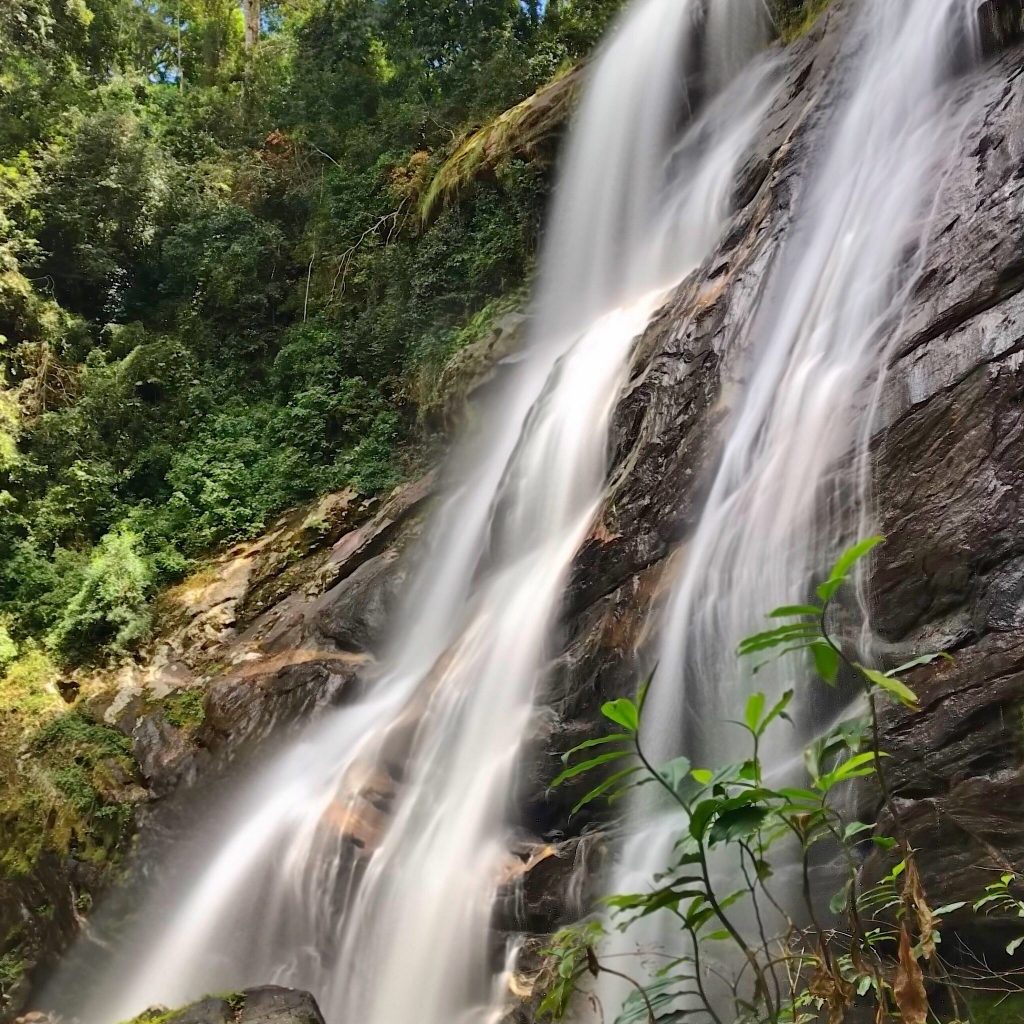
Photography in Udzungwa Mountains National Park centres on four subjects: the Sanje Waterfalls dropping roughly 170 metres in three tiers, endemic primates in the canopy, valley viewpoints over the Kilombero floodplain, and close forest detail such as butterflies, fungi and orchids. Everything is shot on foot with a guide, since the park has no interior roads. Udzungwa is a rainforest park in south central Tanzania with low light under closed canopy and high humidity throughout.
This is harder work than a savannah safari, where a vehicle carries the gear and the light is open. Here you carry everything and shoot at high sensitivity in shade.
Waterfall Photography on the Sanje Trail
The Sanje Waterfall hike gives you three separate compositions on one trail. The middle fall is viewed from a ledge with spray drifting across the path. The upper tier, about forty metres, falls into a pool ringed by forest and works best from the rocks beside it. The largest drop needs a twenty minute detour to its base, and looking straight up at the full height is the frame most people come away with.
Morning is the time, with sun on the falls before noon. Spray carries considerably further than it looks from the path, so a cloth and a sealed bag matter more here than any lens choice. Volume swings hard by season, so April gives you thunder and September gives you detail.
Primate Photography in the Forest Canopy
The technical problem is consistent: monkeys thirty metres up, backlit against bright sky, behind leaves that defeat autofocus. Accept high sensitivity rather than fighting it, and expect to discard a lot.
Udzungwa red colobus are the most photographable, being common at low altitude and inclined to freeze rather than flee. Angolan black and white colobus sit still for long stretches, which helps. The Sanje mangabey forages on the ground as much as in trees, which gives cleaner backgrounds when you find one, and the quiet Njokamoni trail offers the best chance.
The grounds of the camp on the park boundary are the easiest setting of all, with four primate species moving through regularly at eye level rather than overhead.
Valley Viewpoints and Wide Landscapes
Two thirds of the way up the Sanje trail the forest thins at a rock shelf and the Kilombero floodplain opens below, with cane and rice running flat to the horizon and the far escarpment standing up across the plain on clear mornings.
Haze builds through the day, so this is an early frame and not an afternoon one. A mid range zoom suits it better than an ultra wide, which flattens the escarpment into nothing. Higher up, the Mwanihana ridge at around 2,150 metres gives lowlands running towards Nyerere on one side and trackless forest on the other, though cloud sits on that altitude for much of the year.
Close Forest Detail and Macro Work
The best photography here is often at ground level. Butterflies gather at damp sand along stream crossings in dozens of species, especially through the wetter months, sometimes lifting in clouds as you pass. The park’s butterfly checklist has never been considered complete.
Fungi appear across the forest floor during the long rains. Orchids sit on mossy trunks, and wild African violets grow in this range, which surprises anyone who knows them as houseplants. Chameleons, frogs and the strange textures of buttressed roots and fern lined stream banks all reward someone willing to stop for twenty minutes at a time.
Bird Photography in the Udzungwa Forest
Hard, and worth attempting anyway. Around 400 species live here with roughly twenty five restricted to these mountains, and most of the interesting ones sit high in poor light.
Hornbills are the accessible subject. Three species use the forest edge, and every evening at sunset they fly in and settle in trees along the boundary while the valley fills with their calls, which is the one predictable bird moment in the park. Along the wetlands beside the Mang’ula road, herons and kingfishers work in open light, which makes them far easier than anything under canopy.
Which Trails Suit Photographers Best
The Two Day Camping Option for Photographers
A two day version of the Sanje hike covers about nine kilometres with the same 450 metre gain, camping under the canopy above the falls. It exists mainly for people who want the light at either end of the day rather than the middle of it.
First light at the falls before any day group arrives is the whole argument, and the forest at five in the morning is a different place from the forest at eleven. Tree hyrax call after dark, nightjars work the clearings, and a camp team from the lodge at the gate handles tents and food, so it is a soft introduction to camping rather than an expedition.
Equipment That Works in This Forest
A fast lens helps more than a long one. Binoculars matter as much as glass, since finding the animal is usually harder than photographing it. Carry a lens cloth, spare batteries, since charging at the camp runs off solar and is not instant, and dry bags for everything rather than trusting a pack cover.
Keep the daypack light. Twenty litres is ample, and anyone carrying a heavy camera bag up four hours of climbing in humidity usually regrets it by hour two. Tripods are a judgement call: useful at the falls, awkward on the trail, and rarely worth their weight unless waterfall exposures are the point of the trip.
Photographing People and Village Life
The Kilombero Valley below the park is worked land, and the drive in passes cane fields, rice plots, roadside markets and villages where a good deal of ordinary life happens in the open. Guides and porters come from these settlements.
The rule is the same everywhere and worth restating: ask before photographing anyone, and accept a refusal without argument. A guide can make the introduction, which changes the whole exchange and often produces better frames than a long lens from a car window would. Village and rubber plantation visits can be arranged through the camps if this interests you, and paying for the time you take is normal rather than awkward.
Best Season for Photography in Udzungwa
Photographers are the one group with a genuine case for the wet months, since the forest is at its most alive exactly when the walking is at its worst.
Protecting Gear in a Rainforest
Humidity is the quiet enemy. It gets into bags, fogs optics and encourages mould on lens elements over a long trip. Silica gel packets in the camera bag are worth more here than any rain cover, and airing kit at the lodge each evening rather than sealing it away damp makes a real difference across a week.
Line the pack rather than relying on a cover, since rain arrives sideways under canopy and covers shift as you scramble. Keep one dry cloth in a sealed bag so that you always have a clean one when the first is soaked. And on multi day treks, remember there is no power at all in the forest camps, so battery discipline starts on day one rather than when the first one dies.
Getting to Udzungwa With Camera Gear
Register at the headquarters at Mang’ula on the road between Mikumi town and Ifakara, where fees are paid and a guide assigned. Dar es Salaam is five to six hours away via Chalinze, Morogoro and the highway through Mikumi National Park, with graded dirt for the last 24 kilometres from Kidatu. Mikumi is around 60 kilometres north.
Tell your guide at the trailhead that you want to move slowly and stop often. They adjust the pace readily and would rather know at the start than work it out at hour three when the group is behind schedule.
Frequently Asked Questions About Photography in Udzungwa
Is there a camera fee at the park?
No separate charge applies for ordinary photography. You pay the conservation fee of 30 US dollars per person for 24 hours for non resident adults, about 35.40 with value added tax, plus a compulsory guide at around 20 dollars per day. Commercial filming is a different matter and requires prior authorisation and separate fees through TANAPA.
What is the single best photograph in the park?
The base of the lower Sanje fall, looking up at the full drop, reached on a twenty minute detour from the main path. The valley viewpoint two thirds of the way up the same trail runs it close on a clear morning.
Can I use a drone?
Drones require prior authorisation in Tanzanian national parks and are not something to bring on spec. Permission, where granted, involves paperwork through TANAPA well in advance. Assume no unless you have written approval in hand.
How do I photograph monkeys in low light?
Raise sensitivity rather than dropping shutter speed, since canopy animals move constantly and blurred fur is worse than grain. A fast lens helps. Position matters more than settings: work around to where the animal is against foliage rather than sky, and let the group settle before shooting.
Should I bring a tripod?
Only if long waterfall exposures are the reason you came. It is dead weight on a four to six hour climb otherwise, and the pools are crowded enough with rock and spray that setting up takes patience. A beanbag or a folded jacket handles most steadying needs.
Where can I charge batteries?
The camp on the park boundary runs entirely on solar, with a charging socket in each tent, though it is slower than mains power. Village guesthouses vary. Bring more spare batteries than you think you need, particularly if you are heading out on a multi day trek where there is no power at all.
Booking Your Udzungwa Trip
The safari companies and tour operators listed on this website put trips like this together for a living and know which camps, guides and routes actually deliver. We are an independent guide to Udzungwa; we do not book or sell tours ourselves.
When you are ready, arrange your safari, tour or holiday with one of the recognised operators listed here. Tell them your dates and what matters most, and a real person, not a form, will handle the itinerary, park bookings and logistics for you.