What Are the Top Reasons to Visit Udzungwa?
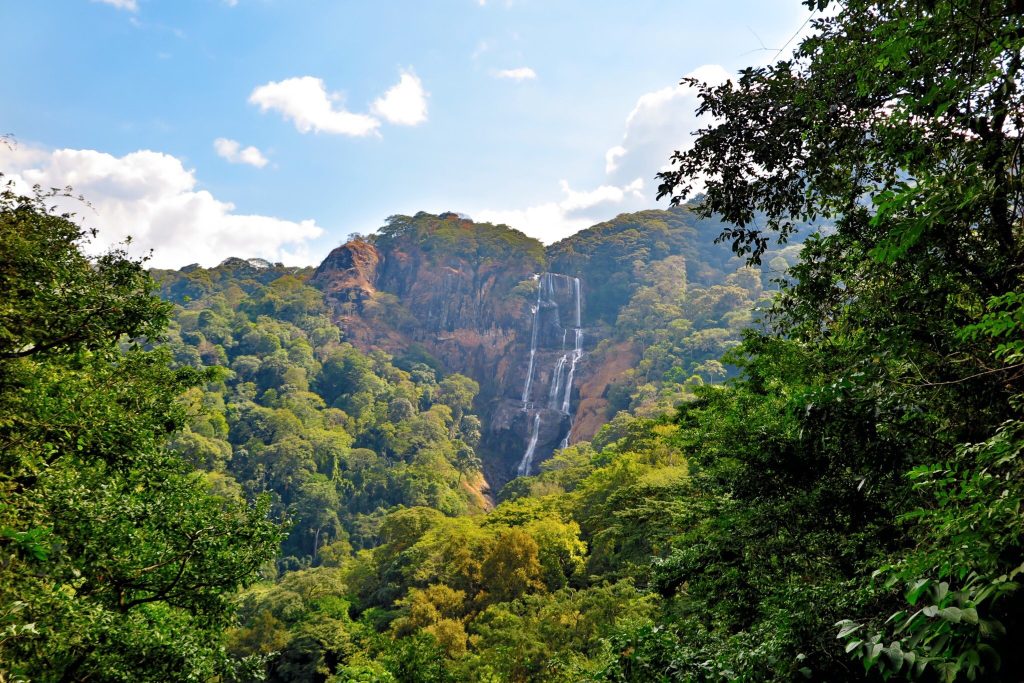
People visit Udzungwa Mountains National Park for rainforest hiking, the 170 metre Sanje Waterfalls with pools you are allowed to swim in, two primate species found nowhere else on earth, and trails that stay almost empty even in peak season. Walks and treks are booked at the Mang’ula gate with a compulsory guide. Udzungwa covers 1,990 square kilometres in south central Tanzania and is the largest forest block in the ancient Eastern Arc chain.
None of those reasons involve a vehicle, which is the honest starting point. This park suits people who want to walk.
Waterfall Hiking You Can Swim At
The Sanje Waterfall hike is the reason most first time visitors come. Four to six hours return, roughly 450 metres of climbing, and a fall dropping about 170 metres across three tiers, described as the tallest in Tanzania’s national park system.
Swimming is permitted, which sets this apart from almost every other park in the country where leaving the vehicle is forbidden. The pool below the upper tier is the main spot, and a warmer, larger pool at the base of the lower fall takes a twenty minute detour. Other falls sit on shorter trails: Prince Bernhard near the headquarters, two cascades at Sonjo, and Njokamoni at the top of a quiet four to five hour route.
Two Primates That Exist Nowhere Else
The Udzungwa red colobus and the Sanje mangabey live in this mountain block and nowhere else in the world. The red colobus favours lower altitude forest, which puts it on every short trail and regularly in the grounds of the camp on the park boundary. Total numbers run somewhere between thirty and forty thousand.
The mangabey is the harder one, perhaps two thousand animals across two separated populations, unknown to science until the late nineteen seventies. Twelve primate species live in the range altogether, including six galagos, which makes it exceptionally rich for nocturnal species. Sightings of the commoner monkeys are likely on any morning; the mangabey is never promised.
A National Park With No Roads
Udzungwa is the only Tanzanian national park with no interior road network, so there are no game drives at all. Every part of the park is reached on foot along trails ranging from a one kilometre stroll to the 65 kilometre Lumemo route walked over five days.
That single rule reshapes the whole visit. You move at walking pace under canopy instead of driving across open ground, and what you see is whatever tolerates a person on foot. For anyone who has done a savannah safari and found the vehicle limiting, this is the obvious next step rather than a downgrade.
Trails That Stay Quiet Even in High Season
Visitor figures suggest an average of under thirty people a day across the entire park. Even Sanje, the busiest trail, means passing a handful of groups on a dry season morning rather than joining a procession, and the Njokamoni and Hidden Valleys routes stay close to empty in any month.
What actually fills up is accommodation, since the camp on the boundary has six tents and the village options are limited. Book beds early between June and October and the solitude looks after itself.
Thirty Million Years of Isolation
The Eastern Arc mountains are fault bounded blocks of ancient rock that have stood as separate highland islands for roughly thirty million years, holding forest through climate swings that stripped it from the surrounding lowlands. Species trapped there had no route out and nothing arriving to compete with them, so they diverged.
The comparison to the Galapagos gets made constantly and is earned here. Twenty vertebrate species are restricted to this block alone, roughly a quarter of the park’s 2,500 plant species are Eastern Arc endemics, and around 400 bird species have been recorded with about twenty five confined to these mountains.
Multi Day Trekking Without the Crowds
For serious walkers this is the draw. The Mwanihana Peak trek covers 38 kilometres over two or three days from Sonjo village, crossing miombo woodland, lowland forest, grassy plateau, montane forest, bamboo and heather to a ridge near 2,150 metres.
Beyond that sit the 65 kilometre Lumemo Trail over five days and the Luhombero expedition, five to seven days to the park’s highest point at roughly 2,576 metres. No huts, no established sites on much of the route, no evacuation road and almost nobody else. Trekkers who have done Kilimanjaro often describe this as the quieter and more affecting of the two.
Species Still Being Discovered
Much of the range has never been surveyed on foot, and the butterfly and reptile checklists remain incomplete. Walking here means walking in a forest that scientists have not finished counting.
Low Fees and Easy Independent Access
Udzungwa sits in TANAPA’s lower fee band alongside Mikumi and Ruaha, costing a fraction of Serengeti or Kilimanjaro rates. Guides are assigned at the headquarters, so no advance booking is needed for a day walk.
It is also one of the few Tanzanian national parks reachable without hiring a vehicle. Buses towards Ifakara pass the gate, the TAZARA train stops at Mang’ula station, and tuk tuks handle the short hops to the trailheads for a couple of dollars. Village guesthouses cost a fraction of a safari lodge.
Cultural Sites and the Hehe Connection
The park’s name comes from the Kihehe word Wadzungwa, meaning people who live on the mountainsides, and the Hehe are the people of this range. That relationship has left marks that outlast the gazetting.
Udzungwa is the only Tanzanian national park known to hold a culturally important natural cave, and the site survived destruction before protection precisely because traditional taboos guarded it. Bokela, treated locally as a mountain deity, is visible from the Prince Bernhard trail. The Mwanaruvele and Magombereka caves and the Nyumbanitu and Ndundulu mountains all carry weight in the villages below. Cultural visits, including Hehe and Ndamba traditions, can be arranged through the camps near the gate.
Best Time to Visit Udzungwa
June through October gives firm trails, cool walking and the best chance of clear views from the escarpment. The wet months bring heavier waterfalls, peak butterflies and the best birding, with harder going underfoot.
The Contrast With a Savannah Safari
This is the reason most repeat visitors to Tanzania end up here. After a week of game drives, the change is total: out of the vehicle, under canopy, moving at three kilometres an hour instead of thirty.
What you gain is closeness and quiet. Monkeys thirty metres overhead rather than a kilometre across grassland, butterflies rising off wet sand at a stream crossing, an orchid your guide has to point out before you notice it. What you give up is the certainty of a big sighting, since elephant and buffalo here are mostly read as tracks. Visitors who understand that trade before arriving tend to rate this park highly. Those expecting a forest version of a game drive rarely do.
Getting to Udzungwa Mountains National Park
The headquarters at Mang’ula sit on the road between Mikumi town and Ifakara, about 60 kilometres and ninety minutes from Mikumi National Park. Dar es Salaam is five to six hours away via Chalinze, Morogoro and the highway through Mikumi, with tarmac ending at Kidatu and graded dirt for the final 24 kilometres. Iringa lies two to three hours southwest.
That proximity to Mikumi is why the two parks are paired on almost every southern circuit itinerary, and it is the easiest way to fold Udzungwa into a trip you are already taking.
Frequently Asked Questions About Visiting Udzungwa
How much does it cost to visit Udzungwa?
Non resident adults pay a conservation fee of 30 US dollars per person for 24 hours, roughly 35.40 with value added tax, plus a compulsory guide at around 20 dollars per day charged per guide rather than per person. Children between five and fifteen pay about 10 dollars and under fives are free. Accommodation near the gate starts from around 60 dollars per person per night, and multi day treks run 400 to 500 dollars per person.
Is Udzungwa worth visiting?
For hikers, birders, photographers and anyone interested in forest ecology, comfortably yes. For visitors set on lions and open plains it works better as a contrast alongside Mikumi than as a standalone trip. The park suits people willing to walk, and it disappoints those expecting a forest version of a game drive.
How many days should I allow?
Two full days covers the Sanje climb plus a shorter walk and is the sensible minimum. Three lets you add Njokamoni or the Hidden Valleys circuit. Multi day trekking needs four or five days at the park. A single day gets you the waterfall and nothing else.
Can I combine Udzungwa with a safari?
Yes, and most people do. Mikumi is ninety minutes north and offers game drives on the Mkata floodplain, and a week comfortably covers both plus the drive from Dar es Salaam. Nyerere and Ruaha extend the same southern circuit for anyone with longer.
Do I need to be fit?
For the main trails, reasonably. The Sanje circuit asks for four to six hours on uneven ground in humidity. Shorter options exist: Prince Bernhard at around forty five minutes and the Sonjo circuit at one to two hours both reach waterfalls with far less climbing.
What makes it different from other Tanzanian parks?
No roads, so no game drives. Two endemic primates. Waterfalls with permitted swimming. Very low visitor numbers. And a level of endemism no other national park in the country matches, which is why the range is treated as a global biodiversity priority.
Booking Your Udzungwa Trip
The safari companies and tour operators listed on this website put trips like this together for a living and know which camps, guides and routes actually deliver. We are an independent guide to Udzungwa; we do not book or sell tours ourselves.
When you are ready, arrange your safari, tour or holiday with one of the recognised operators listed here. Tell them your dates and what matters most, and a real person, not a form, will handle the itinerary, park bookings and logistics for you.