Primate Photography in Udzungwa National Park
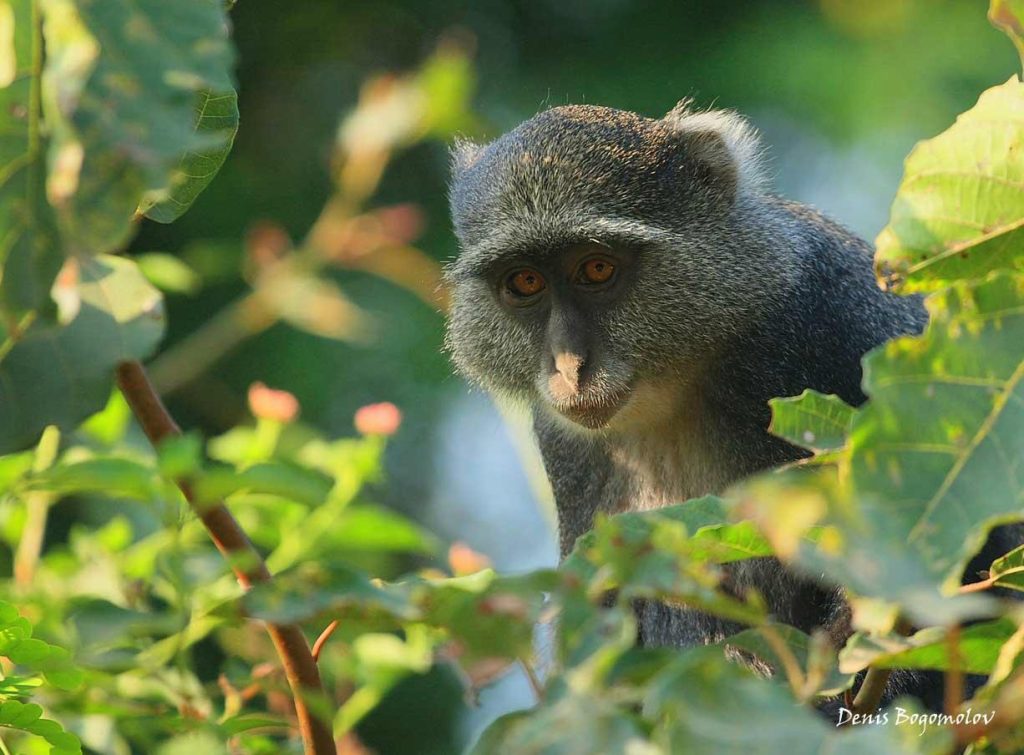
Primate photography in Udzungwa Mountains National Park means shooting monkeys high in dark canopy on foot, with two species that exist nowhere else on earth among the subjects. A guide is compulsory on every trail, and the best conditions are early morning on the quieter routes from the Mang’ula gate. Udzungwa is a roadless rainforest park in south central Tanzania holding twelve primate species.
This is technically harder than photographing anything on a savannah. No vehicle carries your gear, the light is poor, and the animals are usually thirty metres above you against bright sky.
The Species You Will Be Photographing
Four are realistically photographable on a day walk. The Udzungwa red colobus is the headline subject, found only in this mountain block, with a spiky red crown over black and white fur that reads beautifully even in poor light.
The Angolan black and white colobus is the most cooperative, sitting motionless for long stretches with long white shoulder fringes catching whatever light gets through. Blue monkeys move faster and lower in the understorey. Yellow baboons work the forest edge in open light, which makes them the easiest exposure in the park. The Sanje mangabey is the prize and the hardest to find.
The Light Problem Under Closed Canopy
Forest interiors here are dim and contrasty. Light arrives in patches rather than evenly, and a monkey in shade against a bright gap is an exposure problem no camera solves on its own.
Accept high sensitivity rather than fighting it. Blurred fur from too slow a shutter is worse than grain, and canopy animals move constantly. Where possible, work around to where the animal sits against foliage rather than sky, which is a positioning decision rather than a settings one and makes more difference than any dial. Overcast conditions are often better than bright sun, which pushes troops into deeper shade higher up.
Which Trails Suit Primate Photographers
The Njokamoni trail, four to five hours over roughly six and a half kilometres, is the strongest choice. Almost nobody walks it, so troops behave naturally, mangabey odds are the best of any day route, and nobody is queueing behind you when you want to wait ten minutes for an animal to move into a gap.
The lower half of the Sanje Waterfall trail commonly produces both colobus species, though the traffic makes it poor for mangabey. The Hidden Valleys circuit at seventeen kilometres reaches submontane forest for anyone with a full day. For the least effort of all, the grounds of the camp on the park boundary see four primate species regularly, often at eye level rather than overhead.
Equipment That Works in This Forest
A fast lens beats a long one here more often than people expect, because the limiting factor is light rather than distance. Something in the range of a fast telephoto zoom covers most situations without becoming a burden on a four hour climb.
Binoculars matter as much as glass, since finding the animal is usually harder than photographing it. Carry a lens cloth, because humidity fogs everything the moment you step from forest into open air near water. Bring spare batteries, since charging at the camp runs off solar and is not instant, and there is no power at all on multi day treks. Keep the daypack light: twenty litres is ample, and anyone hauling a heavy camera bag up 450 metres in humidity regrets it by hour two.
Fieldcraft That Changes What You Get
Behaviour affects results more than kit does. Stop when the guide stops and stay stopped longer than feels natural. Colobus rely on stillness rather than flight, so a troop that has registered you will often keep feeding overhead while you set up, and ten patient minutes will produce grooming, movement between trees and individuals stepping into the open.
Keep voices down. Walking and talking uphill takes you straight underneath troops you never notice. Tell your guide at the trailhead that photography is the priority, since they will adjust pace and route rather than pushing to reach the waterfall on schedule.
Photographing the Sanje Mangabey
Worth its own consideration, because the species behaves differently. Around two thousand animals exist, all of them in this range, and unlike the colobus it forages on the ground as much as in the canopy.
That habit is a gift photographically. Ground level animals mean cleaner backgrounds, better light angles and no shooting straight upward. It also means you may meet one at close quarters, which asks for stillness rather than manoeuvring. Park staff have habituated one troop, so ask at the headquarters whether it is currently accessible. Where habituation exists it was built patiently, and closing in for a better angle is the fastest way to spend it.
Ethics on a Primate Photography Walk
Never feed anything, never use flash on a shy species, and never ask a guide to push a troop into better light. Give animals room when they cross the path. Avoid pointing directly at them, which some primates read as a threat.
Baboons around the forest edge are the exception to worry about in a different way: they associate people with food, so an unattended bag while you concentrate on a shot rarely stays unattended. Keep gear closed and within reach.
Easier Photography at Magombera
For close primate work without a climb, the nature reserve at Magombera below the mountains is the answer. Its five kilometre Mbega Trail is entirely flat and shaded, and both red colobus and Angolan colobus there are relatively habituated after decades of living alongside people who never hunted them.
The monkeys watch visitors from their perches rather than moving off, which produces the calm, sustained sightings that make photography possible. It sits in the lowlands nearer the road between Mikumi and the park, so it folds into an arrival or departure day, and visits need arranging in advance.
Working the Camp Grounds at Dawn and Dusk
The most productive photographic hours in this park may not involve a trail at all. Troops move through the grounds of the camp on the boundary in the early morning and late afternoon, at heights and angles no forest trail offers, and there is a chair, a coffee and no schedule.
Set up before the light does. Work out where the troops cross the treeline the previous evening, then be in position rather than reacting. Hornbills come in at sunset along the same boundary, which gives a second predictable session at the end of the day. Over eighty bird species have been recorded on the property, so even a quiet primate morning produces something.
Best Time for Primate Photography
Early morning in any season, since primates feed hardest in the first hours after dawn and go quiet by mid morning. Across the year, dry season access to the quiet trails matters more than light quality.
Composition Problems Specific to This Forest
Two things spoil more frames here than exposure does. The first is the sky gap: a monkey framed against bright cloud gives you a silhouette no matter how carefully you meter, so moving twenty metres to put foliage behind the animal is worth more than any adjustment on the camera.
The second is clutter. Rainforest is visually chaotic, and a technically correct photograph of a colobus among forty branches reads as nothing at all. Wait for the animal to move into a gap, or shoot wide enough that the forest becomes the subject and the monkey the detail within it. Both approaches work; what does not is filling the frame with a partially obscured animal and hoping the eye finds it.
Getting to Udzungwa With Photographic Gear
Register at the headquarters at Mang’ula on the road between Mikumi town and Ifakara. Dar es Salaam is five to six hours away via Chalinze, Morogoro and the highway through Mikumi National Park, with graded dirt for the final 24 kilometres. Mikumi is around 60 kilometres north.
Humidity is the quiet enemy of kit here. Silica gel in the bag helps, airing equipment at the lodge each evening rather than sealing it away damp matters over a week, and lining the pack beats relying on a rain cover.
Frequently Asked Questions About Primate Photography
Is there a photography fee?
No charge applies for ordinary photography. You pay the park conservation fee of 30 US dollars per person for 24 hours for non resident adults, about 35.40 with value added tax, plus a compulsory guide at around 20 dollars per day charged per guide rather than per head. Commercial filming is separate and requires prior authorisation through TANAPA.
What lens should I bring?
A fast telephoto zoom covers most of it. Extreme focal lengths are less useful than they sound, since the animals are high rather than distant and the real constraint is light. Bring binoculars too, because locating the subject is usually harder than framing it.
Which trail gives the best photographs?
Njokamoni, because so few people walk it that you can wait as long as an animal takes. The camp grounds on the park boundary are the easiest of all, with four species passing through at close range and no walking involved.
Can I use flash?
Better not to. These are unhabituated animals in dim forest and flash is both intrusive and largely ineffective at canopy distances. Raising sensitivity and repositioning for a better background will serve you better and disturbs nothing.
Will a guide wait while I shoot?
Yes, if you say so at the trailhead. Guides adjust pace readily and are used to photographers wanting to stop, wait and go back for a second attempt. What they cannot do is guess, so mention it before setting off rather than at hour three.
Where can I charge batteries?
The camp on the park boundary is solar powered with a charging socket in each tent, though slower than mains supply. Village guesthouses vary. On multi day treks there is no power at all, so carry more spares than you think you need.
Booking Your Udzungwa Trip
The safari companies and tour operators listed on this website put trips like this together for a living and know which camps, guides and routes actually deliver. We are an independent guide to Udzungwa; we do not book or sell tours ourselves.
When you are ready, arrange your safari, tour or holiday with one of the recognised operators listed here. Tell them your dates and what matters most, and a real person, not a form, will handle the itinerary, park bookings and logistics for you.