Kipunji Census Finds Around 100 Monkeys Left in Udzungwa
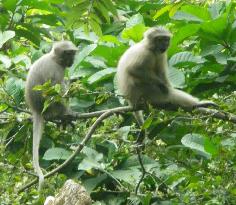
A census published on 6 March 2026 in the journal Primates puts the Udzungwa population of the kipunji at roughly 50 to 100 animals, the first new abundance figures for this monkey since baseline counts were made in 2006. The paper, led by Claudia Barelli of the University of Florence and the Udzungwa Landscape Strategy, with Trevor Jones among the co-authors, reports three standardised sweep censuses carried out in 2013, 2016 and 2024.
Teams walked between 42 and 45 transects of about two kilometres each during the dry season, from August to October. Across all three censuses they found only four to six kipunji groups at a time, spread over a range the authors measure at 10.42 square kilometres. Minimum group size averaged 17 individuals, giving what the paper calls a crude minimum abundance of between 51 and 102 animals per census.
Where the kipunji actually live
The finding matters for anyone reading about the primate species recorded in the Udzungwa Mountains, because the kipunji is often listed alongside them without much qualification. It should not be. The Udzungwa kipunji live in Ndundulu forest, which sits inside the Kilombero Nature Forest Reserve rather than inside Udzungwa Mountains National Park, and the paper gives their area of occupancy as 199 hectares at 1,300 to 1,750 metres. That is a very small patch inside a reserve extending over 1,345 square kilometres. There is no visitor trail to it.
The kipunji was described in 2006 and was the first new African monkey genus named in 125 years. The only other population is in the Southern Highlands, on Mount Rungwe and Livingstone, about 370 kilometres away, and the paper notes the Udzungwa animals retain the only pure Rungwecebus lineage.
A puzzle the authors cannot yet explain
What the researchers describe as puzzling is that the density is so low despite the habitat being good. Their encounter rate averaged 0.04 groups per kilometre, eight to twelve times lower than for the three other diurnal monkeys sharing the same forest: Peter’s Angola colobus, Tanzania Sykes’ monkey and the endemic Udzungwa red colobus. Earlier habitat assessments cited in the paper found the occupied portion of Ndundulu is structurally as good as neighbouring forests, so degradation does not appear to be the cause. The authors raise genetics, historical hunting, disease and competition with other papionins as possibilities without settling on one.
Kipunji were recorded in mixed-species groupings in 43.8 per cent of encounters, most often paired with Sykes’ monkeys. Sykes’ monkeys were also the only species whose relative abundance rose across the survey years, which the authors suggest may point to competitive pressure given the overlap in diet. The paper closes by warning that kipunji persistence in Udzungwa is at risk and calling for intensified monitoring.
What it means for visitors
Practically, nothing changes on the ground. Kipunji were never a species tourists could expect to see, and the primates you can realistically time a visit around remain the red colobus and the Sanje mangabey on the Mwanihana side of the park. The species is a reminder of how narrow some Udzungwa ranges are: several of the mountains’ endemic animals are confined to single forest blocks or single valleys.
The paper does note one change in protection. It records that patrols in the Kilombero Nature Forest Reserve, run jointly with the Tanzania Forest Services, TANAPA and local communities, have expanded in frequency and coverage since 2024 under the Udzungwa Landscape Strategy, adding to work the Southern Tanzania Elephant Program has supported there since 2016. That sits alongside the other conservation programmes operating across the Udzungwa forests.
Sources
- Barelli et al., “Searching for the forest ghosts: group counts and polyspecific associations of the endangered Rungwecebus kipunji in the Udzungwa Mountains, Tanzania”, Primates 67(3): 299-312, 6 March 2026
- Publisher record, doi:10.1007/s10329-026-01250-7
- Mongabay, “New strategy launched to protect Tanzanian biodiversity hotspot”, 2 April 2025